

Imagine truly savoring every single meal, feeling deeply nourished and satisfied without a trace of guilt. This is the heart of mindful eating—a powerful practice that transforms your relationship with food, revitalizes your health, and reconnects you with your body's innate wisdom. This isn't another restrictive diet; it's an invitation to rediscover the pure, profound joy of eating.
Your Journey to a Better Relationship with Food

Do you ever reach the end of a meal and barely remember tasting it? It happens to the best of us. In our fast-paced lives, we eat on autopilot—scrolling our phones, rushing to meetings, or standing over the sink. This disconnect often leaves us feeling unsatisfied and completely out of sync with our body's true needs.
Mindful eating is a gentle yet profound practice that brings your full, vibrant awareness back to the table. It’s a shift away from rigid rules and fad diets to focus on how you eat, not just what you eat. Think of it as taking the scenic route with your food, ensuring you are present for every color, aroma, and flavor along the way.
Reconnecting Mind and Body
The goal is beautifully simple: pay attention. Listen to your body's subtle cues and engage all your senses. When you do this, you transform a routine meal into a moment of genuine pleasure and deep nourishment. This small shift has the power to elevate both your physical and mental health.
Mindful eating isn't about restriction; it's about liberation. It's the simple act of being present with your food, allowing you to appreciate it more deeply and finally understand what your body truly needs to thrive.
This practice empowers you to distinguish between true, physical hunger and emotional triggers like stress or boredom. Instead of reacting mindlessly, you learn to pause, breathe, and respond with loving intention.
Action Point: The 3-Bite Check-In
- Bite 1: Savor the first bite with all your senses. What do you see, smell, and taste?
- Bite 2: Chew slowly and notice the texture.
- Bite 3: Swallow and pause. How does your body feel? This simple act sets a mindful tone for the entire meal.
So, What Does Mindful Eating Actually Mean?
Let’s be clear: mindful eating isn't a diet. It’s not about counting calories, labeling foods "good" or "bad," or creating lists of forbidden meals. Instead, think of it as a beautiful awareness practice designed to heal your relationship with food from the inside out.
It’s about trading that familiar autopilot mode for genuine presence.
Have you ever driven a familiar route only to arrive with no memory of the journey? Mindless eating is just like that. You might finish an entire bag of chips during a movie without truly tasting a single one. Mindful eating is the conscious choice to take the scenic route—to intentionally savor every sight, sound, and sensation along the way.
The Core Idea is Simple: Pay Attention
At its heart, mindful eating invites you to become a curious, compassionate observer of your own experience. It’s built on a few powerful ideas that guide you back to your body’s natural wisdom. The journey starts by simply learning to listen.
This practice encourages you to bring all your senses to the table. Notice the vibrant colors on your plate, breathe in the rich aromas, feel the unique texture of the food, and even hear the satisfying crunch of a fresh bite. This turns a simple meal into an immersive, joyful experience.
Mindful eating is the gentle practice of bringing your full attention to the present moment, noticing your thoughts, feelings, and bodily sensations without judgment as you eat.
That last part—without judgment—is the key. This isn't about scolding yourself. It’s about observing how different foods make you feel, both physically and emotionally. This compassionate curiosity helps dismantle the guilt and anxiety around food, paving the way for a peaceful and joyful connection with what nourishes you.
Action Point: Differentiate Your Hunger
Before reaching for a snack, pause and ask yourself:
- Is this physical hunger? Does it feel like a gradual, gentle rumble in my stomach?
- Or is this emotional hunger? Did it appear suddenly? Am I feeling stressed, bored, or sad?
This simple pause gives you the power to choose how to truly care for yourself in that moment.
The Powerful Psychological Benefits You Can Expect
Mindful eating nourishes your mind just as profoundly as it does your body. It offers a path to find peace with food, reduce stress, and feel empowered in your choices.
One of its most incredible benefits is its scientifically-backed ability to break the cycle of emotional and binge eating. A groundbreaking 2014 meta-analysis published in the journal Appetite reviewed 14 different studies and concluded that mindfulness-based interventions are "moderately effective" for reducing binge eating and emotional eating. By creating a crucial pause between an emotional trigger and the impulse to eat, mindfulness gives you space to understand what you're really feeling.
Reduce Food-Related Stress and Anxiety
Constantly worrying about food, feeling guilty after meals, or stressing over calories takes a huge mental toll. Mindful eating dismantles this anxiety by replacing harsh judgment with gentle curiosity. It shifts the focus from rigid rules to your own inner wisdom.
When you learn to trust your body’s signals, food is no longer the enemy. It becomes a source of pleasure and nourishment again. This practice is closely related to broader mindfulness, and if you're seeking more calm, exploring meditation techniques for beginners can be a wonderful next step.
Mindful eating isn't about perfection; it's about presence. By focusing on the how of eating, you naturally release the anxiety tied to the what.
Cultivate a Positive Body Image
This practice fosters a kinder, more compassionate relationship with your body. By paying attention to how different foods make you feel—energized, sluggish, satisfied—you start to appreciate your body as a wise guide rather than something to be controlled.
This mental shift is transformative. Research consistently shows that mindful eating improves psychological well-being, enhances body satisfaction, and reduces the distress associated with disordered eating patterns.
Ultimately, the psychological benefits of mindful eating are profound. It’s a journey toward making peace with food, trusting your body, and reclaiming the simple joy in every meal.
How Mindful Eating Transforms Your Physical Health
Beyond the powerful shifts in our mindset, mindful eating creates real, tangible changes in our physical health. When you start paying close attention to how you eat, your body responds in incredible ways—and science backs this up.
The transformation begins with something simple: slowing down. Chewing your food thoroughly is the crucial first step in digestion. This simple act helps break down food more effectively, allowing your body to absorb more nutrients while easing the burden on your digestive system. Many people find that common issues like bloating and indigestion begin to fade away.
Boosting Your Body's Natural Rhythms
When you eat with intention, you give your body time to send and receive vital signals. Research shows this has a significant positive impact on metabolic health. A 2017 study published in the journal BMJ Open involving nearly 60,000 people found that individuals who slowed their eating speed were not only less likely to be obese but also had a smaller waist circumference.
By savoring your food, you also help prevent the sharp spikes in blood sugar that often follow a rushed meal. This promotes better long-term metabolic stability and energy levels.
The psychological benefits beautifully complement these physical changes, creating a positive feedback loop where a calmer mind supports a healthier body.
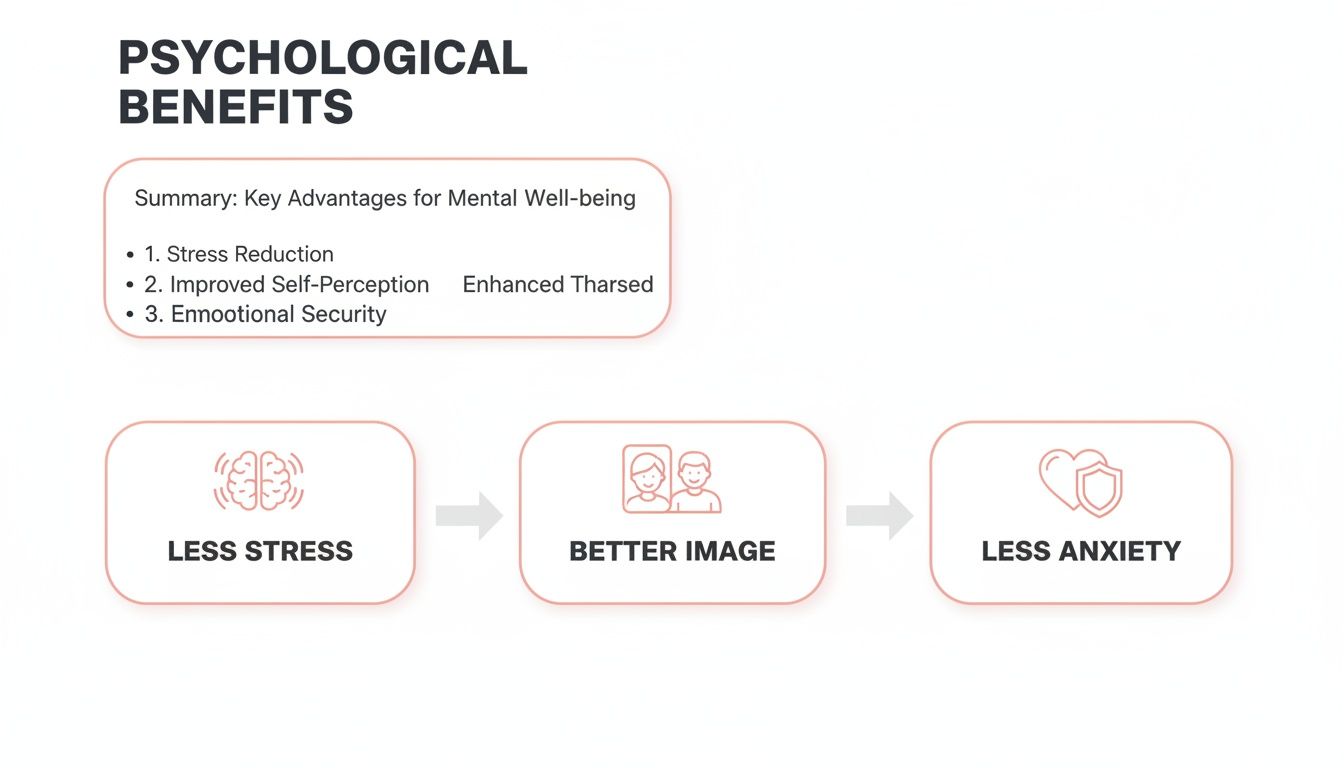
As you can see, mindfulness helps lower stress and anxiety while improving your self-image—all of which reinforces the healthy physical habits you're building.
A Health Snapshot of Mindful vs Mindless Eating
It's amazing how a simple shift in awareness can completely change our physical well-being. This table breaks down the difference between eating on autopilot and eating with intention.
| Health Aspect | Mindless Eating Outcome | Mindful Eating Benefit |
|---|---|---|
| Digestion | Poor nutrient absorption, bloating, and discomfort. | Improved digestion and nutrient uptake. |
| Blood Sugar | Prone to rapid spikes and crashes. | Better blood sugar regulation and stability. |
| Weight | Tendency to overeat past fullness cues. | Natural weight management by honoring satiety. |
| Food Choices | Often driven by emotional cravings or external cues. | More intuitive choices based on the body's actual needs. |
Action Point: The 20-Minute Rule
It takes about 20 minutes for your stomach to signal to your brain that it’s full.
- Challenge: Stretch your next meal to last at least 20 minutes.
- How: Put your fork down between bites, take sips of water, and engage in light conversation if you're with others. This gives your body a chance to catch up and recognize when it's truly satisfied.
This practice isn't about dieting. It’s about listening. It’s about nourishing your body with what it truly needs and finding joy in the process.
Simple Steps to Start Your Mindful Eating Practice

Ready to begin this beautiful practice? The best part about mindful eating is that you can start right now, with your very next meal. There are no complicated rules—just simple, empowering steps that feel good from the very first bite.
Think of this as your personal toolkit for getting started. We’ll focus on manageable actions that build confidence and help you reconnect with your body’s wisdom on your own terms.
Start With the One-Bite Challenge
The easiest way to begin is with the ‘One-Bite Challenge.’ All it asks is that you savor the very first bite of your meal with your full, undivided attention. Before you even pick up your fork, take a deep breath.
Then, for that single bite, engage all your senses:
- See: Notice the colors and shapes.
- Smell: Inhale the aroma. What do you detect?
- Taste: Chew slowly, noticing every flavor that unfolds.
- Feel: Pay attention to the texture. Is it creamy, crunchy, or smooth?
- Hear: Listen to the sound as you chew.
This simple exercise grounds you in the present moment and sets an intentional tone for the rest of your meal.
The journey to mindful eating doesn't require a giant leap. It begins with a single, conscious bite that honors your food and yourself.
Practical Tips for Everyday Mindfulness
Once you’re comfortable with the one-bite challenge, weave other small habits into your mealtimes. Pick one that resonates and see how it feels.
- Action Point: Fork Down: This is a simple but powerful way to slow your pace. Put your fork down between bites. It creates a natural pause, giving your body time to register fullness.
- Action Point: Create a No-Distraction Zone: Try eating one meal a day without your phone, TV, or laptop. When you remove external distractions, you can turn your focus inward and truly listen to your body.
- Action Point: The Hunger Scale: Before you eat, quickly rate your hunger on a scale of 1 (starving) to 10 (stuffed). Check in again midway through your meal. This simple awareness check helps you stop when you're comfortably full (around a 7 or 8), not when you're stuffed.
Cultivating Mindful Eating as a Lifelong Habit
Turning mindful eating into a natural, lasting part of your life is a beautiful journey of self-compassion. It’s not a destination you arrive at overnight.
Instead, it’s about gently weaving moments of awareness into your daily rhythm. Remember, consistency, not perfection, is the goal.
Common challenges like packed schedules and social dinners are not roadblocks; they are opportunities to practice. Forget the all-or-nothing mindset. Starting small is the secret to building momentum that lasts.
Action Points for Long-Term Success
- Dedicate One Meal a Day: Choose just one meal—breakfast, lunch, or dinner—to practice being fully present. This focused effort is far less intimidating than trying to change everything at once.
- Practice for Five Minutes: If a full meal feels like too much, commit to just the first five minutes. Use that time to tune into your senses and savor each bite without distractions.
- Pause Before You Start: Before your first bite, take three slow, deep breaths. This simple ritual acts as a mental reset, shifting you from rushing to calm awareness.
These small, consistent actions create a strong foundation, making it easier to return to your practice even after a hectic day.
Mindful eating isn't about adding another task to your to-do list; it's about transforming an existing one into a moment of peace and self-care.
Extending Mindfulness Beyond the Plate
A true lifelong practice grows beyond the act of eating. Extend your awareness to where your food comes from.
Take a moment to feel gratitude for the earth that grew it, the sun that nourished it, and the hands that prepared it. This shift in perspective transforms meals from a daily necessity into a rich, meaningful experience. By framing mindful eating as an enriching part of your life, you foster a habit that grows with you, nourishing your body and spirit for years to come.
Have Questions? Let's Clear Them Up
As you explore this new relationship with food, it’s normal for questions to arise. Let's walk through a few common ones to help you feel confident on this journey.
Is Mindful Eating Just Another Diet?
Absolutely not. While weight stabilization can be a natural side effect, the true goal is to heal your relationship with food. It is a wellness practice centered on listening to your inner wisdom, not on restricting foods or counting calories.
How Long Until I See the Benefits?
Everyone's journey is unique! You might feel more satisfied after your very first mindful meal. Deeper shifts, like breaking free from emotional eating, often take a few weeks of consistent, gentle practice. Celebrate every small win along the way!
The most significant benefits of mindful eating aren’t measured on a scale. They're found in the peace you feel around food and the trust you build in your body’s wisdom.
Can I Practice With Family or Friends?
Of course! Mindful eating is beautifully adaptable. You don’t need total silence to be present. When eating with others, bring in small moments of awareness—chew thoroughly, put your fork down while you chat, or take a few deep breaths before you begin. It’s about progress, not perfection.
Ready to bring more intention to your daily routines? The planners and journals from Mesmos are designed to help you cultivate mindfulness one day at a time. Explore our collection to find the perfect tool to support your wellness journey at https://mesmos.co.


