


The absolute best planners for goal setting are more than just notebooks; they are your personal coaches, your strategic partners, and the catalysts that transform your biggest dreams into reality. They masterfully blend structured guidance with the creative space you need to turn vague ambitions into clear, actionable steps.
Imagine your planner as the bridge between the life you have and the life you aspire to live. It makes your goals tangible, visible, and thrillingly achievable.
Why a Planner Is Your Most Powerful Goal-Setting Ally
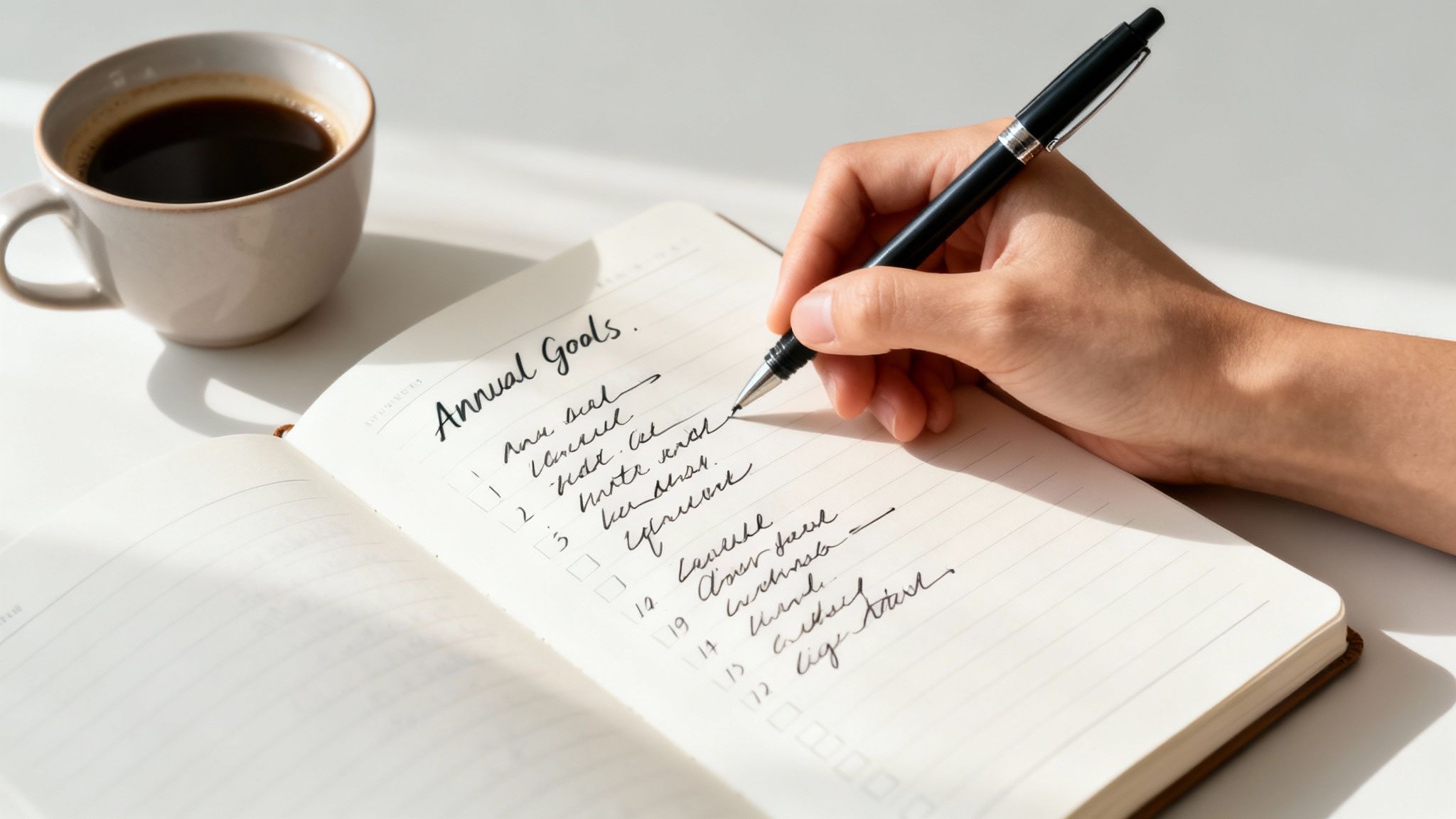
Have you ever felt your dreams were just out of reach, floating like clouds? A simple physical planner is the anchor you need to bring them down to earth. In a world buzzing with digital distractions, the intentional act of putting pen to paper is a powerful form of mindfulness, creating clarity and cementing your commitment to yourself.
This isn't just about another to-do list; it's about forging a real, physical connection to your future. Neuroscientific studies show that the physical act of writing helps embed information more deeply into our memory. This creates a much stronger psychological bond with our goals than simply tapping them into an app.
The Science Behind Writing Down Your Goals
When you write down a goal, you're activating a powerful part of your brain called the Reticular Activating System (RAS). Think of the RAS as your brain's personalized filter. It sifts through the billions of pieces of information you encounter daily and highlights what's truly important to you.
So, when you write, "Launch my online store," you're sending a direct command to your brain: "This is a priority!"
Your RAS then begins to actively scan your environment for opportunities, resources, and ideas that align with that goal—things you might have otherwise missed. It’s a neurological game-changer. The process transforms a vague wish into a concrete objective, moving it from a fleeting thought to a physical presence in your world.
A planner is so much more than an organizational tool; it’s a strategic partner. It provides the framework to break down your grandest visions into a concrete roadmap for success, one day at a time.
More Than Just Organization
There’s a reason millions are returning to analog tools. Planners offer a dedicated, quiet space for intentional living, far from the chaotic energy of a screen. This isn't just a trend; the market reflects this deep human need.
The global goal-setting planner market was valued at USD 2.1 billion in 2024 and is projected to soar to USD 3.18 billion by 2033. This incredible growth signals a collective desire for tools that support not just our productivity, but our mental well-being and long-term fulfillment. You can learn more about these market trends here.
Action Point: This week, find a quiet 15-minute slot. Turn off your phone and write down one major goal. Notice the sense of clarity and commitment that follows.
Core Benefits of a Dedicated Goal-Setting Planner
Here's how a specialized planner can truly ignite your ambitions.
| Benefit | How It Drives Your Success |
|---|---|
| Brings Clarity | Writing forces you to articulate exactly what you want, transforming vague ideas into clear, defined targets. |
| Boosts Motivation | Seeing your progress visually—checking off tasks and milestones—creates a powerful feedback loop that keeps your spirit high. |
| Creates Accountability | Your planner becomes a physical record of your commitment. It's a daily, weekly, and monthly check-in with your future self. |
| Reduces Overwhelm | It helps you break massive goals into small, manageable steps, so you always know exactly what to do next. |
Ultimately, the best planners for goal setting give your ambitions the structure they need to flourish. They are a dedicated space to:
- Define Your Vision: Get crystal clear on what you truly want across all areas of your life.
- Create Actionable Steps: Break down intimidating goals into small, totally doable tasks.
- Track Your Progress: Visually see how far you’ve come—the ultimate momentum builder.
- Reflect and Adjust: Regularly check in, celebrate wins, and make small tweaks to stay on your authentic path.
How to Choose a Goal Planner That Aligns With Your Soul
The best planner for you is the one you can't wait to open each day. It’s not about grabbing the most popular option; it’s about finding a partner for your ambitions. The right fit changes everything.
Your first step is to look past the beautiful cover and discover how the planner helps you think. Does it use a structured framework like SMART goals (Specific, Measurable, Achievable, Relevant, Time-bound)? This is a highly effective, logical system. Or perhaps it uses a model like OKRs (Objectives and Key Results), perfect for breaking a massive vision into smaller, measurable wins.
Finding Your Perfect Layout
Once you know which goal-setting framework resonates with you, the next big decision is the layout. This choice will shape your daily interaction with your dreams.
- Daily Layouts: Perfect if your days are packed with appointments and time-blocked tasks. Each day gets its own page, often with hourly slots, giving you ample room to map out your moves. For parents juggling multiple schedules, a daily layout is a superpower. Find more inspiration in our guide on the best planners for busy moms.
- Weekly Layouts: This is the sweet spot for big-picture thinkers. Seeing your week at a glance makes it easier to balance priorities and plan ahead without getting lost in daily details. It’s a fantastic choice for students or entrepreneurs managing long-term projects.
Action Point: Look at your current calendar. Does the thought of planning every hour feel empowering or restrictive? Your gut reaction will tell you whether a daily or weekly layout is your best starting point.
Tapping into Specialized Sections
Today’s planners are holistic life tools. Look for specialized sections that support the vibrant life you’re building. The best planners for goal setting often include dedicated pages for:
- Habit Trackers: To help you build positive routines that stick.
- Gratitude Logs: A simple, powerful way to cultivate a mindset of abundance.
- Monthly Reflections: To pause, celebrate your progress, and realign your strategy.
- Vision Boards or Mind Maps: To give you space to dream and brainstorm without limits.
This is where you personalize your journey. If wellness is a priority, a planner with meal planning and fitness logs is perfect. If you're an entrepreneur, look for project timelines and milestone trackers.
Undated planners are also rising in popularity because they offer ultimate flexibility. You can start anytime and skip a week without wasting paper. As planner trend insights show, an undated format empowers you to make the planner work for your life, not the other way around.
Matching Your Ambition to the Right Planner Style
Choosing a planner is a deeply personal act of self-discovery. The best planners for goal-setting aren't just about scheduling; they're about syncing with your unique energy and way of thinking. It all boils down to one powerful question: are you driven by structure or fueled by flexibility?
This simple flowchart can help you visualize that first step, guiding you toward a planner that feels like an extension of your own mind.

Understanding whether you crave a clear path or an open road is the secret to finding a system you'll truly love and use.
The Structure-Driven Achiever
Do you find a deep sense of calm in clear timelines and a logical flow? You're likely a structure-driven achiever. You get an energizing rush from checking off a perfectly planned to-do list.
Think of yourself as the architect of your life. You need a planner with a solid foundation.
- For the Project Manager: Look for planners with quarterly overviews and milestone trackers to break huge goals into manageable phases.
- For the Busy Professional or Parent: A daily planner with hourly time slots is your command center, ensuring nothing slips through the cracks.
Dated planners with clear weekly or daily layouts provide the guardrails you need to stay on track and feel empowered.
The Flexibility-Fueled Creator
Does a rigid schedule feel more like a cage than a supportive framework? If you thrive on spontaneity and let your plans evolve with inspiration, you’re a flexibility-fueled creator.
You are the artist of your life, and you need a blank canvas.
The most effective planning system is one that adapts to you, not the other way around. It should serve your ambitions, not dictate them.
- For the Wellness Advocate: Your goals are holistic. Your ideal planner has ample open space for journaling, gratitude lists, and habit tracking.
- For the Creative Entrepreneur: Your best ideas don't follow a schedule. You need a planner that can capture a sudden burst of inspiration. Undated layouts and dot-grid pages are your best friends.
For those who value this freedom, a system like a bullet journal can feel incredibly liberating. If that sounds like you, explore the surprising benefits of bullet journaling for achieving your goals in our detailed guide. These systems offer ultimate creative control.
Which Goal-Setter Persona Are You?
Still unsure where you land? This quick-reference table matches common goal-setter types with the planner features that will serve them best.
| Your Goal Setter Persona | Key Planner Features To Look For | Ideal Layout Style |
|---|---|---|
| The Busy Parent | Hourly schedules, meal planning sections, space for family appointments. | Daily or detailed weekly layouts. |
| The Teacher | Lesson plan templates, monthly overviews, grade tracking pages. | Academic year planners, structured weekly grids. |
| The Wellness Fan | Habit trackers, gratitude prompts, journaling space, mood trackers. | Undated, minimalist, or specialized wellness planners. |
| The Stoicism Lover | Space for daily reflection, quote pages, virtue tracking. | Minimalist journals or perpetual calendars. |
Finding the right style is about being honest with yourself. The perfect planner is out there, waiting to help you bring your unique vision to life.
Turning Blank Pages Into a Strategic Action Plan
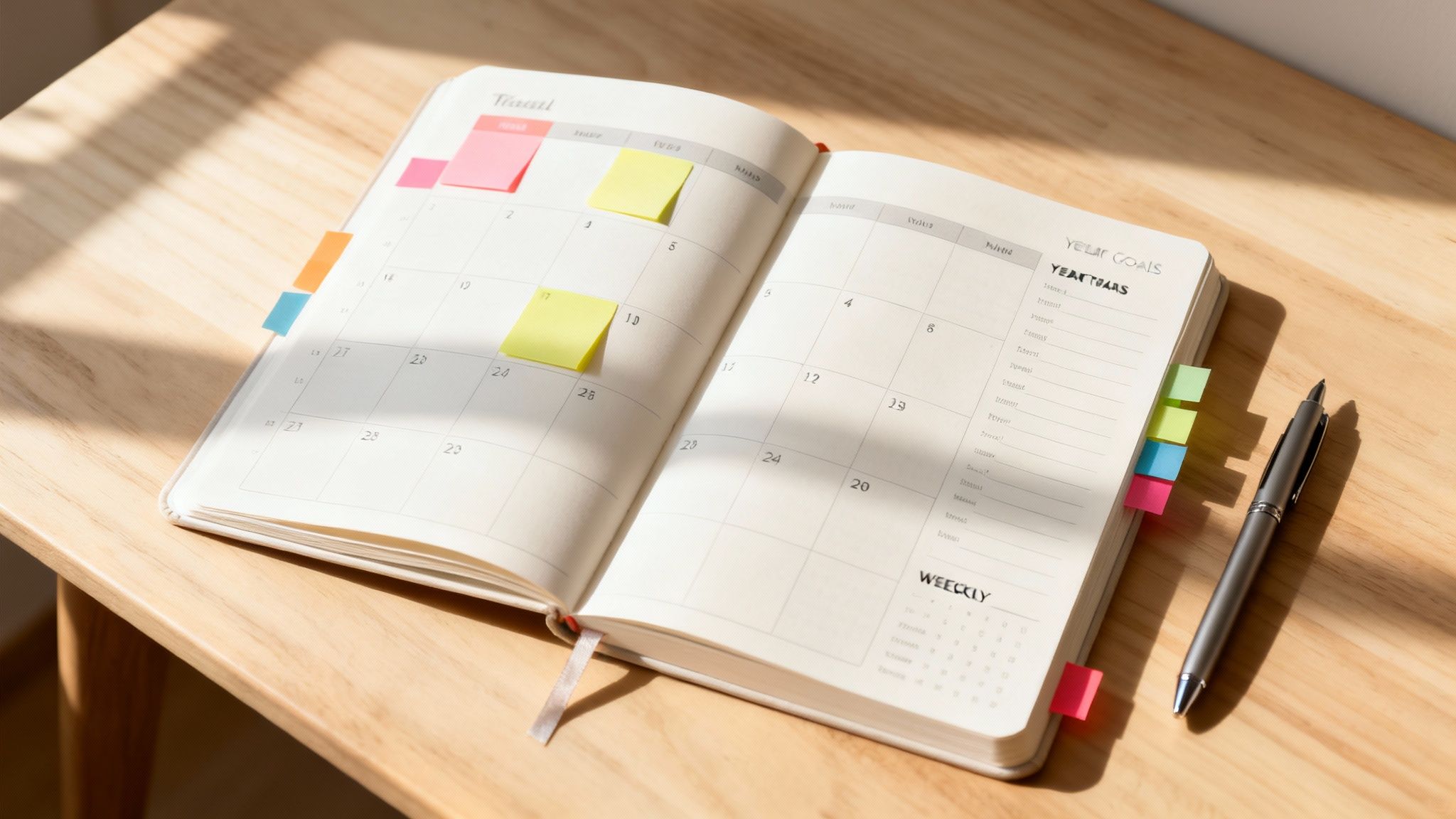
Opening a new planner is a thrill—a blank slate filled with pure potential. But that potential can sometimes feel overwhelming. Where do you even begin?
Let's transform that blank space into your personal command center. The secret is building a foundation that turns vague wishes into a concrete, day-by-day action plan.
Action Point: Start with a 'life audit.' Before setting any goals, reflect on your true priorities. What areas of your life—career, health, relationships, personal growth—are calling for your energy right now? This ensures your goals are deeply aligned with what you truly want.
Deconstructing Your Big Dreams
Now, let's break down those huge annual goals. A goal like "get healthier" is a beautiful intention, but it's not a plan. Let’s translate that dream into smaller, quarterly milestones.
- Q1 Milestone: Run a 5k without stopping.
- Q2 Milestone: Add strength training twice a week.
- Q3 Milestone: Learn five healthy, go-to dinner recipes.
Suddenly, it feels achievable, right? Now, break each quarterly milestone into simple weekly actions. To run that 5k, your first week’s goal might be: "Walk or jog for 20 minutes, three times this week." This is how you conquer overwhelm and build unstoppable momentum.
The magic of a great goal-setting planner isn't just in tracking what you do; it’s in showing you the very next, tiny step to take. This is how you build real momentum.
Consistency comes from ritual, not willpower. Set aside a specific time—perhaps 15 minutes every Sunday evening—to map out the week ahead. Creating this simple system is key to building lasting habits and consistency.
Making Your Planner a Joy to Use
You will use your planner more if you genuinely enjoy the process. Try color-coding your tasks by category (green for health, blue for work) or creating a key with symbols. An asterisk could mean "urgent," while an exclamation point could mark a "brilliant new idea."
This hands-on approach is why physical planners remain so beloved. In fact, the market for premium physical planners is growing at around 7.2% annually because people crave tools that feel like a true partner in their journey.
By building these simple rituals, you transform blank pages into an inspiring and deeply personal roadmap to your best life.
Integrating Digital Tools With Your Physical Planner
It’s easy to get caught in the “analog vs. digital” debate, but what if the most powerful approach isn't about choosing sides? What if it's about creating a hybrid system that gives you the best of both worlds?
Think of your physical planner as your sacred space for deep thinking. It's where you unplug, connect with your goals, set intentions, and reflect on your progress without a single distracting notification.
Digital tools, meanwhile, are champions at handling the fast-paced logistics of life—reminders, shared calendars, and on-the-go tasks.
When you pair them, you create an unstoppable goal-setting ecosystem. Your planner remains the heart of your strategy—your single source of truth—while your phone handles the daily logistics.
Building Your Hybrid Planning System
The magic happens when you assign specific roles to each tool. This prevents confusion and duplicated effort. Think of it as a partnership: your planner is the CEO setting the vision, and your apps are the managers executing the plan.
Here's how this looks in action:
- Your Planner’s Role (The “Why”): Use this for your Sunday planning session. Map out big weekly priorities, track habits, and journal about your journey. This is where you connect with the bigger picture.
- Your Digital Tools’ Role (The “When” and “Where”): Let apps handle the details. Use a calendar for appointments and a to-do list app (like Todoist) for recurring tasks or shared projects.
This approach keeps your planner clean and focused on what truly matters.
The goal isn't to replicate your planner on your phone. It's to create a supportive system where digital tools serve the vision you’ve carefully crafted on paper.
Supercharge Your System with Printables
Another fantastic way to enhance your planner is with custom printables. This is perfect when you need a specific tracker that isn't already included. Maybe you need a savings tracker for a dream vacation or a specialized workout log. Mesmos offers a wonderful library of free printables that you can easily add to your planner, allowing your system to evolve with your goals.
To round out your toolkit, you can explore some of the best free productivity apps designed to complement a physical planner. By thoughtfully combining the tactile power of writing with digital convenience, you build a resilient system that supports your ambitions from every angle.
Common Questions About Goal-Setting Planners
Stepping into the world of intentional planning can bring up a few questions. That's perfectly normal! Getting these sorted out is the final step in building the confidence to turn your new planner into a powerful tool for change.
Let’s clear up some common uncertainties so you can begin your journey with total clarity and excitement.
Goal Planner vs. Regular Planner
What's the real difference? A daily planner is a master of logistics—scheduling appointments and managing your time. Its job is to organize your day.
A goal planner, however, is a master of vision. It helps you define a long-term vision, break it into actionable steps, and track your progress. It has dedicated sections for habit tracking, monthly reflections, and defining your ambitions. It's less about managing your day and more about designing your life.
Staying Consistent After the Initial Buzz
How do you keep the momentum going? The key is to build an enjoyable, low-friction routine. If you miss a day, just pick it back up the next.
Consistency isn’t born from perfection; it’s built from persistence. The goal is to create a ritual that feels rewarding, not a chore that feels demanding.
Try these simple tricks:
- Start Small: Commit to just five minutes a day. A tiny, consistent habit is far more powerful than an inconsistent one.
- Habit Stack: Tie your planning time to an existing daily habit, like right after your morning coffee.
- Make It a Treat: Use pens you love and create a calm, inviting space for your planning session. This turns it into a self-care ritual.
Dated vs. Undated Planners
Which should you choose? A dated planner is excellent if you thrive on structure and your goals align with a calendar year. It provides a clear, linear path.
An undated planner, however, offers incredible freedom. You can start anytime, skip a week without wasting pages, and align the planner to your unique timelines. For most people starting out, an undated planner is a more forgiving and adaptable choice.
Physical vs. Digital Planners
Can an app truly replace a physical planner? While both are effective, research shows the act of writing by hand improves memory and deepens conceptual understanding, creating a stronger psychological connection to your goals. Many find a physical book to be a dedicated, distraction-free space, allowing for deeper, more focused reflection.
Ready to find a planner that feels like a true partner in your journey? Mesmos creates beautifully designed tools to help you connect with your intentions and build a life of purpose. Explore our collection and discover the perfect companion for your goals at mesmos.co.


