

Welcome to the world of bullet journaling—a transformative space where organization meets mindfulness, and productivity pairs with creativity. If you've ever felt overwhelmed by the intricate journals on social media, take a deep breath. The true power of a bullet journal, a system originally designed by Ryder Carroll, lies not in artistic perfection but in its profound simplicity and adaptability. It’s your personal tool, designed for you.
At its heart, a bullet journal is a highly adaptable and effective personal organization system that can bring incredible clarity and control to your daily life. But it's more than just scheduling; it's a form of expressive writing. Groundbreaking research published in Advances in Psychiatric Treatment revealed that this kind of writing can significantly reduce stress and improve overall well-being. What a perfect time to begin your journey.
This guide is your friendly starting point, breaking down essential bullet journal ideas for beginners that will help you organize your life, track your habits, and cultivate inner peace. We'll provide actionable steps and simple layout examples to get you started with confidence. Forget the pressure to be perfect and focus on function. With every page you create, you're not just planning your days—you're designing a more intentional and mindful life. Let’s explore the foundational spreads that will transform your blank notebook into a powerful ally.
1. Monthly Overview Spread
The monthly overview is the cornerstone of your bullet journal, acting as a command center for the weeks ahead. It gives you a bird's-eye view of your commitments, appointments, and goals, empowering you to plan with clarity and intention. This spread is one of the most fundamental bullet journal ideas for beginners because it establishes structure without demanding overwhelming detail, helping you build a consistent and rewarding planning habit.
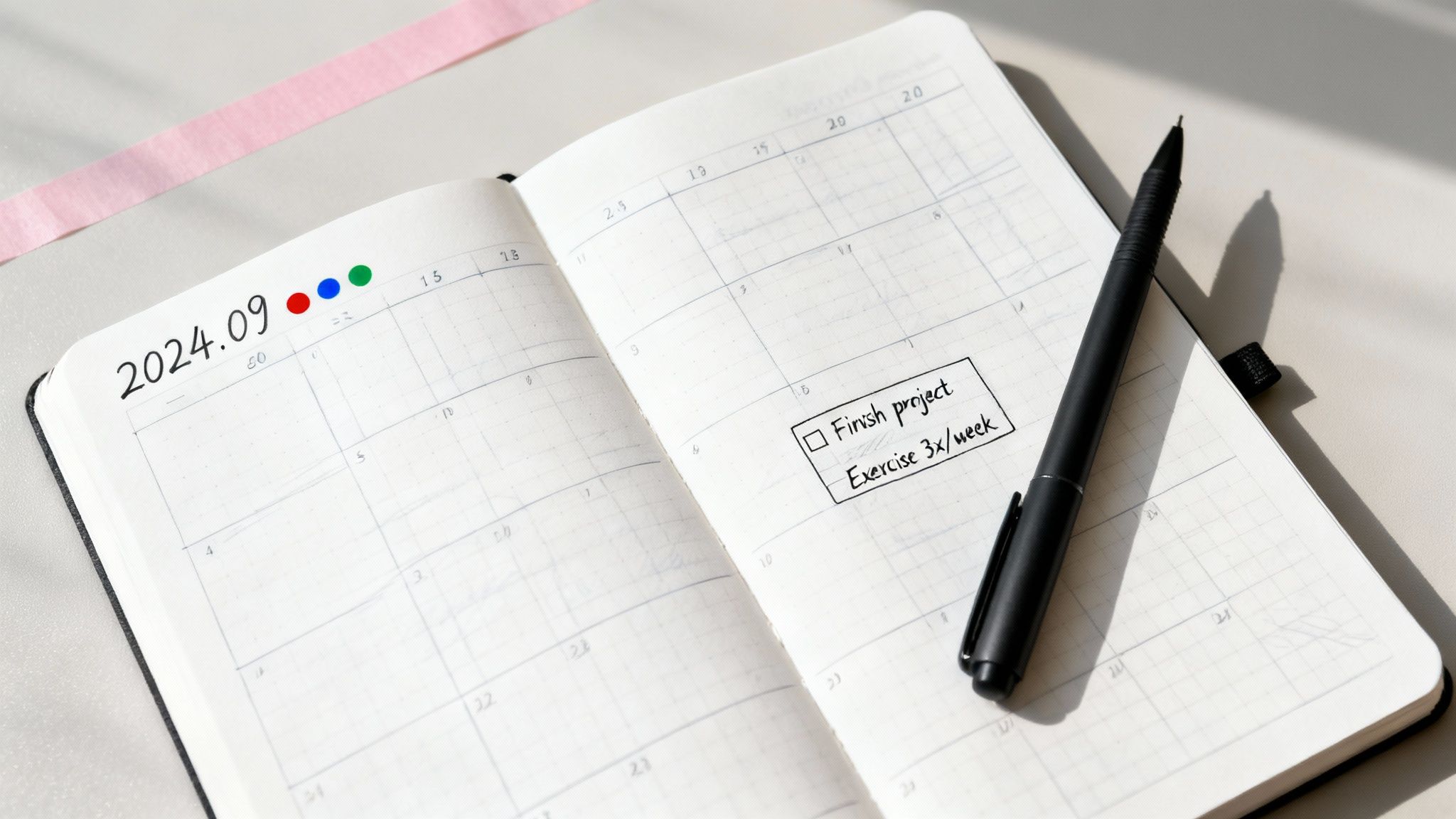
This foundational layout helps you visualize your time, preventing over-scheduling and making space for what truly matters. It’s your first step toward transforming a blank notebook into a powerful tool for mindful productivity.
Why It's a Perfect Starting Point
For beginners, the monthly spread is forgiving and highly functional. It bridges the gap between your big-picture goals and daily tasks. By seeing the entire month laid out, you can identify busy periods, schedule crucial downtime, and track important deadlines effectively. This proactive approach reduces stress and empowers you to take control of your schedule.
How to Create Your First Monthly Spread
Getting started is simple. You don't need to be an artist to create a beautiful and effective overview.
- Choose Your Layout: A classic grid calendar is the most common starting point. Draw a grid with seven columns (for days of the week) and five or six rows.
- Add Key Elements: Designate a section for your top three monthly goals, a to-do list for tasks that aren't date-specific, and a small area for notes or reflections.
- Incorporate Color: Use a color-coding system to categorize your entries. For instance, use blue for work, green for personal appointments, and pink for self-care. This visual distinction makes your calendar scannable at a glance.
Action Point: Before committing with ink, sketch your grid lightly with a pencil. This allows you to adjust spacing and correct mistakes easily, ensuring a neat and organized final result.
Once your basic structure is in place, you can add decorative elements like washi tape or stickers. The goal is to create a spread that you feel inspired to use every day, transforming planning from a chore into a mindful ritual.
2. Weekly Spread
The weekly spread is your week-at-a-glance dashboard, offering the perfect balance between a broad monthly overview and the granular detail of a daily log. It breaks down your goals into manageable, seven-day chunks, helping you stay focused and organized. This layout is one of the most popular bullet journal ideas for beginners because it provides enough space for daily planning without the pressure of creating a new page every single day.
This spread acts as your trusted companion for the week, allowing you to map out appointments, prioritize tasks, and track progress on your goals. It transforms long-term ambitions into immediate, actionable steps, making it an essential tool for mindful productivity and consistent momentum.
Why It's a Perfect Starting Point
For a beginner, the weekly spread is incredibly versatile and less intimidating than daily logging. It allows you to see your entire week's schedule in one view, which is invaluable for balancing work projects, personal appointments, and family commitments. This format encourages you to plan ahead while remaining flexible enough to adapt to unexpected changes, fostering a sense of control and reducing overwhelm.
How to Create Your First Weekly Spread
Designing a functional weekly spread is straightforward and can be customized to fit your unique planning style. You don’t need elaborate artistic skills to make it effective.
- Choose Your Layout: A classic two-page layout is ideal. Divide the pages into eight sections: one for each day of the week and an extra one for weekly goals, a habit tracker, or a notes section. You can use vertical columns for each day or horizontal boxes.
- Add Key Elements: At the top of the spread, create a banner for your top three weekly goals. Designate a specific area for a “brain dump” to capture tasks that don’t have a set day yet.
- Incorporate Time Blocking: For a more structured approach, create a simple time-blocked schedule. List hours down the side of each day's column to assign tasks to specific times. This practice, praised by productivity experts, helps you visualize your capacity and protect your time.
Action Point: Use simple dividing lines or boxes to separate the days. This creates a clean, organized look that’s easy to scan. Sketching the layout with a pencil first ensures you have enough space for everything before committing with a pen.
Once your structure is set, use highlighters or colored pens to categorize entries. The beauty of the weekly spread is its adaptability; it grows with you as your planning needs evolve, making it a sustainable habit for long-term success.
3. Habit Tracker Spread
A habit tracker is a powerful tool for building discipline and making meaningful change, one small action at a time. It provides a visual representation of your consistency, turning abstract goals like “exercise more” or “read daily” into tangible, trackable actions. This spread is one of the most effective bullet journal ideas for beginners because it offers instant feedback and motivation, helping you see your progress build day by day.
This simple grid layout gamifies the process of habit formation. Research on motivation shows that small, immediate rewards reinforce behavior. Each filled-in square provides a small dopamine hit, making you more likely to repeat the action. It’s a clear, simple method for holding yourself accountable and celebrating small wins.
Why It's a Perfect Starting Point
For beginners, the habit tracker is incredibly empowering. It breaks down overwhelming goals into manageable daily tasks and proves that small, consistent efforts lead to significant results. Seeing an unbroken chain of checkmarks is highly motivating, while identifying gaps can help you understand your triggers and adjust your approach without judgment. For those looking to integrate digital tools, exploring digital habit tracking features can offer additional benefits like reminders and automated analysis.
How to Create Your First Habit Tracker
Creating a functional and inspiring habit tracker is straightforward. You only need a pen and a ruler to get started.
- Choose Your Layout: The most common layout is a simple grid. List the habits you want to track down the left side of the page and write the numbers of the days of the month (1-31) across the top.
- Add Key Elements: Start with just 3-5 habits to avoid feeling overwhelmed. Common examples include “Drink 8 glasses of water,” “Read 10 pages,” or “15-minute walk.”
- Incorporate Color: Assign a specific color to each habit category, like green for health, blue for learning, and yellow for mindfulness. This makes your tracker more visually appealing and easier to read at a glance.
Action Point: At the end of each week, take a moment to review your progress. Celebrate what you accomplished and reflect on what got in the way of the habits you missed. This reflection is just as important as the tracking itself.
For more guidance and a ready-to-use template, you can download a free printable habit tracker to get started immediately. The goal is to create a system that keeps you motivated and focused on becoming the person you want to be.
4. Brain Dump or Collection Page
A brain dump is your mind's designated landing zone—a blank page dedicated to capturing every stray thought, idea, and task without judgment or structure. It’s a space to offload mental clutter, freeing up cognitive resources to focus on what's important. This is one of the most liberating bullet journal ideas for beginners because it requires zero artistic skill and serves as a foundational practice for mindful organization.
Inspired by productivity systems like David Allen's "Getting Things Done," the brain dump helps you externalize your internal dialogue. By putting everything on paper—from "buy milk" to "plan dream vacation"—you reduce anxiety and create an inventory of actionable items that can be sorted and scheduled later.
Why It's a Perfect Starting Point
For beginners, the brain dump eliminates the pressure of perfection. There are no rules for how it should look, making it an accessible and stress-free entry point into journaling. It’s a powerful tool for overcoming the "blank page" fear and immediately makes your notebook useful. This practice helps you understand what's on your mind before you attempt to organize it into neat weekly or monthly spreads.
How to Create Your First Brain Dump
Creating a brain dump is an exercise in freedom. The only goal is to write everything down as it comes to you.
- Title Your Page: Simply label a blank page "Brain Dump" or "Mind Sweep" along with the date. This creates a dedicated space.
- Start Writing: List everything you can think of. Use bullet points or simple dashes for quick capture. Mix personal to-dos (call the dentist), work tasks (email a client), creative ideas (gift ideas for a friend's birthday), and worries (research new car insurance).
- Don't Censor or Organize: The key is to let your thoughts flow freely. Don’t worry about neat handwriting, spelling, or categories. The goal is capture, not curation.
Action Point: Schedule a 10-minute "Brain Dump" session at the end of each week. This ritual helps you clear your mind before the weekend and provides a master list of tasks and ideas to migrate into your new weekly spread, ensuring nothing gets forgotten.
Once you’ve emptied your mind, you can go back and add simple symbols to categorize items (e.g., a star for high priority, a box for tasks, a circle for events). This turns your raw list into a powerful resource for building out the rest of your journal.
5. Gratitude or Reflection Spread
The Gratitude or Reflection Spread is a dedicated space for mindfulness, transforming your bullet journal from a simple planner into a tool for mental wellness. It’s a page where you can intentionally record positive experiences, things you're thankful for, or daily reflections. This practice is one of the most impactful bullet journal ideas for beginners because it requires just a few minutes each day but offers profound benefits for your mindset and emotional health.
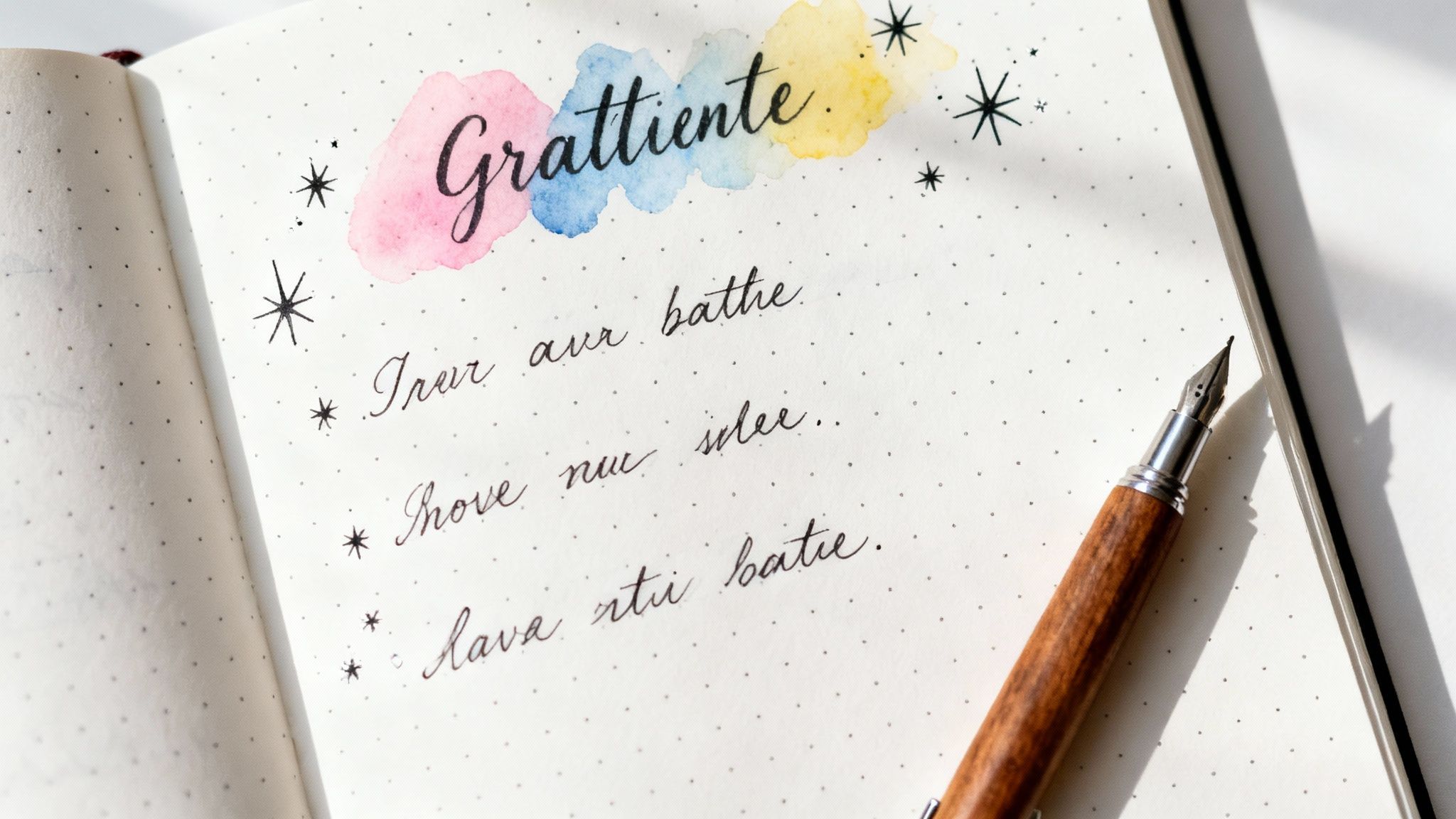
Scientific studies, including research from UC Berkeley’s Greater Good Science Center, have consistently shown that practicing gratitude can lead to greater happiness. The simple act of writing down what went well shifts your focus from life's stressors to its joys, creating a powerful ripple effect on your well-being. It’s your personal sanctuary for acknowledging the good in your life.
Why It's a Perfect Starting Point
For beginners, a gratitude spread is a low-pressure entry into the introspective side of journaling. It doesn't require complex layouts or extensive writing, making it easy to build a consistent and meaningful habit. By dedicating a few moments to reflect, you can reduce stress and increase feelings of happiness, turning your journal into a source of genuine comfort and inspiration. Learn more about how to journal effectively to deepen your practice.
How to Create Your First Gratitude Spread
Creating this space is incredibly simple, and the focus is on function rather than artistic perfection.
- Choose Your Format: You can create a simple list format with the heading "Three Things I'm Grateful For," or dedicate one box for each day of the month. A "Weekly Wins" section is another great option for a broader overview.
- Use Simple Prompts: If you’re unsure what to write, use prompts to guide you. Examples include "A small joy today was…," "Something that made me smile," or "A challenge I overcame."
- Keep It Brief: Don't feel pressured to write long paragraphs. A few words or a single sentence are enough to capture the essence of a positive moment. The key is consistency, not length.
Action Point: Set a specific time each day for this practice, like right before bed. This helps turn reflection into a calming ritual that signals to your mind it's time to unwind and appreciate the day.
Once you have your layout, you can add gentle design elements like a calming color palette or a simple border. The goal is to create a peaceful page that you look forward to visiting, making mindfulness a natural and enjoyable part of your daily routine.
6. Expense or Budget Tracker Spread
An expense or budget tracker is a powerful tool for gaining clarity and control over your finances. It provides a structured space to monitor your income and spending, helping you understand where your money goes and align your habits with your financial goals. This is one of the most practical bullet journal ideas for beginners because it transforms a simple notebook into a functional tool for building financial wellness and mindfulness.
This spread, championed by personal finance communities, helps demystify budgeting and makes financial tracking feel less intimidating. By manually recording your expenses, you create a tangible connection to your spending habits, fostering a more conscious and intentional approach to money management.
Why It's a Perfect Starting Point
For a beginner, financial tracking can seem overwhelming. The bullet journal method simplifies it by allowing you to create a personalized system that fits your exact needs. You can start with a basic expense list and evolve it as you learn more about your patterns. This spread empowers you to identify areas where you can save, track progress toward a savings goal, and reduce financial stress through awareness.
How to Create Your First Budget Tracker
You don’t need complex spreadsheets to manage your money effectively. A simple, hand-drawn layout is all it takes to get started.
- Choose Your Layout: A common layout is a two-column table. One column is for the date and item description, and the other is for the amount. You can also create dedicated sections for categories like "Food," "Transport," and "Entertainment."
- Add Key Elements: Include a section at the top for your monthly income and your savings goal. Add a "Needs vs. Wants" tracker to reflect on your spending decisions. At the end of the month, add a summary section to total your expenses by category.
- Incorporate Color: Use a simple color-coding system to make your tracker easy to read. For example, use green for income, red for fixed expenses (like rent), and blue for variable spending (like dining out). This visual cue helps you see your financial landscape at a glance.
Action Point: Dedicate five minutes each evening to log your expenses for the day. This small, consistent habit prevents you from falling behind and makes the task feel manageable rather than monumental.
Once your tracker is set up, it becomes a space for honest reflection, not judgment. The goal is to build awareness and make small, positive changes that lead to greater financial peace and freedom.
7. Book or Learning Log Spread
A Book or Learning Log is your personal library and classroom condensed onto a single page. It’s where you can track what you’re reading, what you’ve learned, and what you want to explore next. This spread turns your notebook into a record of your intellectual journey, making it one of the most rewarding bullet journal ideas for beginners who love to read or are committed to lifelong learning.
Popularized by vibrant online communities like Bookstagram, this layout helps you mindfully engage with the content you consume. It moves beyond a simple to-do list, creating a space to reflect on new ideas, remember powerful quotes, and celebrate your reading accomplishments.
Why It's a Perfect Starting Point
For beginners, a book log is incredibly motivating and easy to maintain. It doesn’t require daily upkeep and offers a powerful sense of achievement as you fill the page. Watching your list of completed books grow provides tangible proof of your commitment to learning and self-growth, which is a fantastic way to build a consistent journaling habit.
How to Create Your First Book Log
You don’t need an elaborate design to start tracking your reading journey. A simple, functional layout is often the most effective.
- Choose Your Format: A popular and visually appealing layout is the “bookshelf” spread. Draw a simple shelf and add book spines as you finish them, writing the title on each one. Alternatively, a straightforward list or a table format works perfectly.
- Add Key Elements: Create sections for "Currently Reading," "Books Finished," and "To Be Read." For each finished book, include the title, author, completion date, and a simple rating system like five stars.
- Incorporate Learning Notes: Dedicate a small space next to each book entry to jot down one or two key takeaways or a favorite quote. This practice helps solidify what you’ve learned and makes it easier to recall important concepts later.
Action Point: Create a separate “To Be Read” or "TBR" list on another page. When you hear a book recommendation, add it there immediately. This keeps your main log clean and gives you an organized reference for your next literary adventure.
By tracking your reading, you’re not just making a list; you’re creating a personal archive of the stories and ideas that have shaped you. It’s a simple yet profound way to connect more deeply with your learning journey.
8. Goal Setting or Vision Board Spread
A goal setting or vision board spread transforms your aspirations from abstract ideas into a tangible, visual roadmap. It's a dedicated space in your journal to outline what you want to achieve, whether in your career, personal life, or health. This spread is one of the most empowering bullet journal ideas for beginners because it connects your daily actions to your long-term dreams, providing a constant source of motivation.

This practice grounds your ambitions. Instead of just wishing for something to happen, you create a concrete plan, making your goals feel more achievable and keeping them at the forefront of your mind every time you open your notebook.
Why It's a Perfect Starting Point
For beginners, a goal spread provides a powerful "why" behind the daily habit of journaling. It gives your planning a deeper purpose beyond simple task management. According to a Dominican University study, you are 42% more likely to achieve your goals just by writing them down. This spread helps you focus your energy and make intentional choices that align with your future self.
How to Create Your First Goal Setting Spread
You don’t need artistic talent to build a motivating goal page. The focus is on clarity and inspiration.
- Define Your Goals: Start by brainstorming what you want to achieve. To avoid feeling overwhelmed, choose 3-5 key goals for a specific period, like a quarter or six months.
- Break Them Down: For each goal, list small, actionable steps or milestones. For example, if your goal is "run a 5k," your steps might include "run for 15 minutes three times a week" and "find a training plan."
- Add Visuals: Make your spread inspiring! Use stickers, doodles, or print and paste images that represent your goals. This visual reinforcement makes the process more engaging and fun.
Action Point: Frame your goals using the S.M.A.R.T. criteria: Specific, Measurable, Achievable, Relevant, and Time-bound. This simple framework adds structure and clarity, turning a vague wish like "get healthier" into a concrete objective like "walk 10,000 steps a day for the next 30 days."
This spread isn't static; it's a living document. Revisit it monthly to track your progress, celebrate your wins, and adjust your plan as needed. It’s your personal dashboard for growth and achievement.
8 Beginner Bullet Journal Spreads Compared
| Spread | 🔄 Implementation complexity | ⚡ Resources & time | 📊 Expected outcomes | 💡 Ideal use cases | ⭐ Key advantages |
|---|---|---|---|---|---|
| Monthly Overview Spread | 🔄 Easy — basic calendar grid | ⚡ Low — pen/ruler; 15–30 min | 📊 Month-wide visibility; better long-term planning | 💡 Monthly planning, goal-setting, event overview | ⭐ Big-picture clarity; flexible layout; quick setup |
| Weekly Spread | 🔄 Easy — moderate layout choices | ⚡ Low–Moderate — pens; 20–40 min | 📊 Balanced daily detail; improved time management | 💡 Weekly scheduling, task lists, appointments | ⭐ Good detail-to-overview balance; adaptable formats |
| Habit Tracker Spread | 🔄 Very Easy — simple grid | ⚡ Very Low — pen; 10–20 min | 📊 Visual consistency; habit formation insights | 💡 Habit building, wellness routines, accountability | ⭐ Motivating progress visualization; minimal upkeep |
| Brain Dump / Collection Page | 🔄 Very Easy — free-form capture | ⚡ Very Low — pen; 5–15 min | 📊 Reduced mental clutter; idea aggregation | 💡 Capturing tasks/ideas, pre-planning, weekly review | ⭐ Fast capture; low pressure; highly flexible |
| Gratitude / Reflection Spread | 🔄 Easy — open-ended format | ⚡ Very Low — pen; 5–15 min | 📊 Increased mindfulness and positivity over time | 💡 Daily reflections, mood tracking, journaling | ⭐ Boosts wellbeing; customizable prompts and depth |
| Expense / Budget Tracker | 🔄 Easy — structured lists/charts | ⚡ Low — pen, simple math; 15–25 min | 📊 Clear spending patterns; budgeting awareness | 💡 Monthly budgets, expense monitoring, savings goals | ⭐ Improves financial awareness; simple to customize |
| Book / Learning Log | 🔄 Easy — list and note layout | ⚡ Very Low — pen; 10–20 min | 📊 Reading progress and retention; learning archive | 💡 Track reads, notes, reading goals, summaries | ⭐ Encourages consistency; useful quick reference |
| Goal Setting / Vision Board | 🔄 Easy–Medium — visual + planning | ⚡ Moderate — markers, images; 30–45 min | 📊 Clear goals, milestones, sustained motivation | 💡 Long-term planning, quarterly goals, motivation boards | ⭐ Clarifies priorities; visual motivation; milestone tracking |
Your Next Chapter: Turning Ideas into Action
You have journeyed through eight powerful yet simple bullet journal ideas for beginners. From structuring your months to tracking your aspirations, each layout is more than just a page—it's a tool designed to bring clarity, intention, and structure to your life.
The true magic of the bullet journal lies in its infinite flexibility. What begins as a simple weekly spread can evolve into a wellness journal, a project manager, or a creative outlet. Your bullet journal is a personal sanctuary, built by you, for you.
From Inspiration to Implementation
The biggest barrier for beginners is often the pursuit of perfection. The fear of making a "messy" page can be paralyzing. Let’s reframe this: every smudge and crossed-out word is not a flaw. It's evidence of a life being lived and a mind at work.
Key Insight: Progress, not perfection, is the goal. Your bullet journal is a tool for living, not a museum exhibit. Embrace the imperfections as part of your unique journey.
To translate these ideas into tangible action, follow these simple next steps:
- Select Your Starting Point: Don't try to implement all eight ideas at once. Choose one or two spreads that resonate most with your current needs. Feeling overwhelmed? The Weekly Spread is an excellent starting point. Need to clear your head? A Brain Dump is your best friend.
- Gather Your Essential Tools: All you truly need is a notebook and a pen you love. Using a quality tool, like a smooth-gliding pen from Mesmos, can transform writing from a chore into a delightful ritual.
- Schedule Your Practice: Dedicate a small, consistent block of time to your journal. Ten minutes with your morning coffee or fifteen before bed is all it takes. Consistency builds the habit and unlocks the long-term benefits of clarity and mindfulness.
The Lasting Impact of a Simple Habit
Embracing these bullet journal ideas for beginners is an investment in your well-being. Studies have consistently shown that expressive writing and structured journaling can reduce stress, improve mood, and enhance working memory. By externalizing your thoughts, you free up valuable mental real estate for deeper focus and greater peace of mind.
This practice is an act of self-care—a declaration that your time, goals, and mental health are priorities. Each page is a step toward a more intentionally designed life. You are not just organizing tasks; you are building a personal archive of your growth.
So, take a deep breath. Let go of the pressure to do it "right" and simply begin. That blank page isn't an intimidating void; it's an open invitation. It’s your space to plan, to dream, to reflect, and to become the architect of your days. What will you create today?
Ready to put pen to paper with a tool that inspires action and supports a greater cause? The beautifully crafted pens from Mesmos are designed for a smooth, effortless writing experience, making them the perfect companion for your new bullet journal. Explore our collection at Mesmos and join us in our mission to empower women with every purchase.


