

Feeling the familiar storm of racing thoughts? You are not alone. It can feel overwhelming, but a simple coloring book for anxiety might just be the quiet anchor you need to find your footing in this very moment. This isn't just about revisiting a childhood hobby; it's about embracing a scientifically-backed wellness practice that empowers you to find peace and clarity.
Find Your Calm, One Colorful Page at a Time
Imagine turning down the volume on anxious thoughts. Instead of being swept away by a tidal wave of "what ifs," you ground yourself with the simple, satisfying friction of a colored pencil on paper. That is the beautiful, uncomplicated power of coloring—a practice that transforms a nostalgic pastime into a genuinely effective tool for your mental well-being.
The best part? It's incredibly easy to begin. You don’t need special skills, expensive supplies, or hours of free time. This is something you can do right now to reclaim your peace, one thoughtful color choice at a time.
Why This Simple Activity Works So Well
Coloring works because it gently pulls your focus from abstract worries toward a simple, tangible task. The process of picking colors and watching a pattern come to life is a form of light mindfulness. It softly interrupts the looping track of negative thoughts that so often fuels anxiety.
"The rise of adult coloring books is not just a trend; it's a response to a collective need for unplugged, mindful activities that soothe an overstimulated nervous system. It's permission to play, create, and just be."
This simple act gives your brain a much-needed break. It allows you to step away from daily stressors and enter a creative space free of judgment—where the only thing that matters is the quiet satisfaction of making something beautiful.
How Coloring Immediately Reduces Anxiety
Here’s a quick look at the core mechanisms that make coloring an effective and immediate tool for anxiety relief, helping you grasp its powerful benefits.
| Mechanism | How It Helps Calm Your Mind |
|---|---|
| Mindful Focus | Moves your attention from internal worries to the external act of coloring. |
| Repetitive Motion | The steady, rhythmic hand movements have a self-soothing, almost meditative effect. |
| Amygdala Relaxation | According to a 2012 study, structured art activities can reduce activity in the brain's fear center. |
| Creative Engagement | It taps into your creative side, replacing anxious energy with a sense of accomplishment. |
Ultimately, coloring provides a structured yet creative outlet that quiets the mind without requiring intense concentration, making it one of the most accessible mindfulness tools available.
Your Invitation to a More Peaceful You
The movement toward using a coloring book for anxiety is backed by more than just personal stories. As our collective understanding of mental health grows, so does our appreciation for simple, accessible therapeutic tools.
It's no surprise that the therapeutic segment of the adult coloring book market is growing at 8.1% annually worldwide. This isn't just a fad; it's a practice that has earned its place in modern wellness routines. Some art therapy research has even shown that focusing on patterns can reduce anxiety symptoms. If you're curious to learn more about the science and benefits behind this practice, you might find an expert guide on coloring books for stress relief to be a great resource.
Consider this your invitation to explore a powerful and beautiful path to inner calm. Let's begin this colorful journey to a more peaceful you.
The Science Behind Why Coloring Calms Your Brain
Have you ever settled in with a coloring book and felt the day's stress just melt away? It’s not magic—it's neuroscience. The simple act of choosing a color and filling in a pattern is a powerful way to quiet the noise in your head and soothe your nervous system.
Think of it as a mini-vacation for your brain. The focused, repetitive motions give your mind a break from the stressful, looping thoughts that feed anxiety. It shifts you out of that high-alert state and brings you into the present moment. Coloring is the perfect blend of creative freedom and predictable structure. You're making small, low-stakes decisions—should I use blue or green?—that are just engaging enough to capture your attention and gently guide you toward calm.
Quieting Your Brain’s Fear Center
When you color, you’re actively calming your amygdala, your brain's alarm system. When you're anxious, the amygdala goes into overdrive, triggering the "fight or flight" response. Coloring helps turn down that alarm. The act of coloring within lines gives your brain a sense of order and control, which is incredibly comforting when you're feeling overwhelmed. This simple task signals to your amygdala that you’re safe, allowing your body’s stress response to stand down.
It’s a process similar to meditation. Both practices encourage mindfulness, anchoring your attention to the present moment.
By focusing on the simple, sensory details—the feel of the pencil on the paper, the gentle scratching sound it makes, the sight of the colors filling the page—you create a mental space where anxiety can’t thrive.
This isn’t just a distraction; it’s an active form of emotional regulation. You are consciously guiding your brain toward peace, proving you have the power to positively influence how you feel.
The Chemical Shift Toward Calm
It gets even better. Beyond just calming your fear response, coloring also triggers a wonderful chemical reaction in your brain. A 2005 study by Nancy A. Curry and Tim Kasser found that coloring mandalas reduced anxiety more than free-form coloring, suggesting that the structure is key. This focused, enjoyable activity can help lower your levels of cortisol, the body's main stress hormone.
At the same time, it can boost the release of serotonin and dopamine—neurotransmitters that help stabilize your mood and make you feel good. That feeling of contentment after a coloring session? That’s your brain rewarding you for taking a moment of focused peace. For a deeper dive, you can explore the broader art therapy benefits for mental health.
The science is backed by incredible numbers. North America accounts for 40% of global sales in the adult coloring market. This boom is fueled by coloring's acceptance as a therapeutic tool—in fact, 70% of psychologists now recommend it for anxiety. This makes sense when you consider the 28% increase in anxiety prevalence since 2015, and studies showing that coloring can reduce symptoms on par with 20 minutes of meditation.
Practical Brain-Calming Actions You Can Take
Ready to unlock these benefits? Here are a few simple, actionable steps to get started.
- Action Point 1: Choose Repetitive Patterns. Look for a coloring book for anxiety filled with mandalas or other intricate, repeating designs. Their symmetry is especially effective at helping you enter a meditative flow state.
- Action Point 2: Engage Your Senses. Pay attention to the physical experience. Notice the texture of the paper, the smoothness of the pencil, and how the colors pop on the page. This anchors you in the present.
- Action Point 3: Let Go of Perfection. The goal is to enjoy the process, not to create a masterpiece. When you color without judgment, your brain can truly relax and soak up the therapeutic benefits.
Every stroke of your pencil is an intentional act of self-care, helping retrain your brain's response to stress.
How to Choose the Right Coloring Book for You
Finding a coloring book to help with anxiety is a wonderfully personal journey. Think of it less like shopping and more like choosing the perfect key to unlock a quieter, more focused you. The right book should feel like a trusted friend—inviting, encouraging, and always there to help you leave your worries on the page.
Designs That Guide Your Mind to Calm
The art inside your coloring book plays a huge role in its therapeutic effect. Different patterns connect with your brain in different ways, so choose one that feels right for you.
Here’s a quick look at popular styles and what they offer:
- Mandalas and Geometric Patterns: These are incredible for tapping into a meditative state. The symmetry and repetition in mandalas can guide you into a state of "flow," where you're so absorbed that anxious thoughts just melt away.
- Nature and Landscape Scenes: There's something so grounding about coloring serene forests, oceans, or gardens. These designs are perfect when you need a gentle escape from the noise of everyday life.
- Abstract and Free-Form Designs: If intricate patterns feel stressful, abstract art is your friend. There are no rules—just the freedom to explore color and emotion without the pressure of staying inside tiny lines.
Sometimes, seeing the process helps it click. The simple flowchart below shows how coloring can be a powerful tool to break the cycle of anxious thoughts.
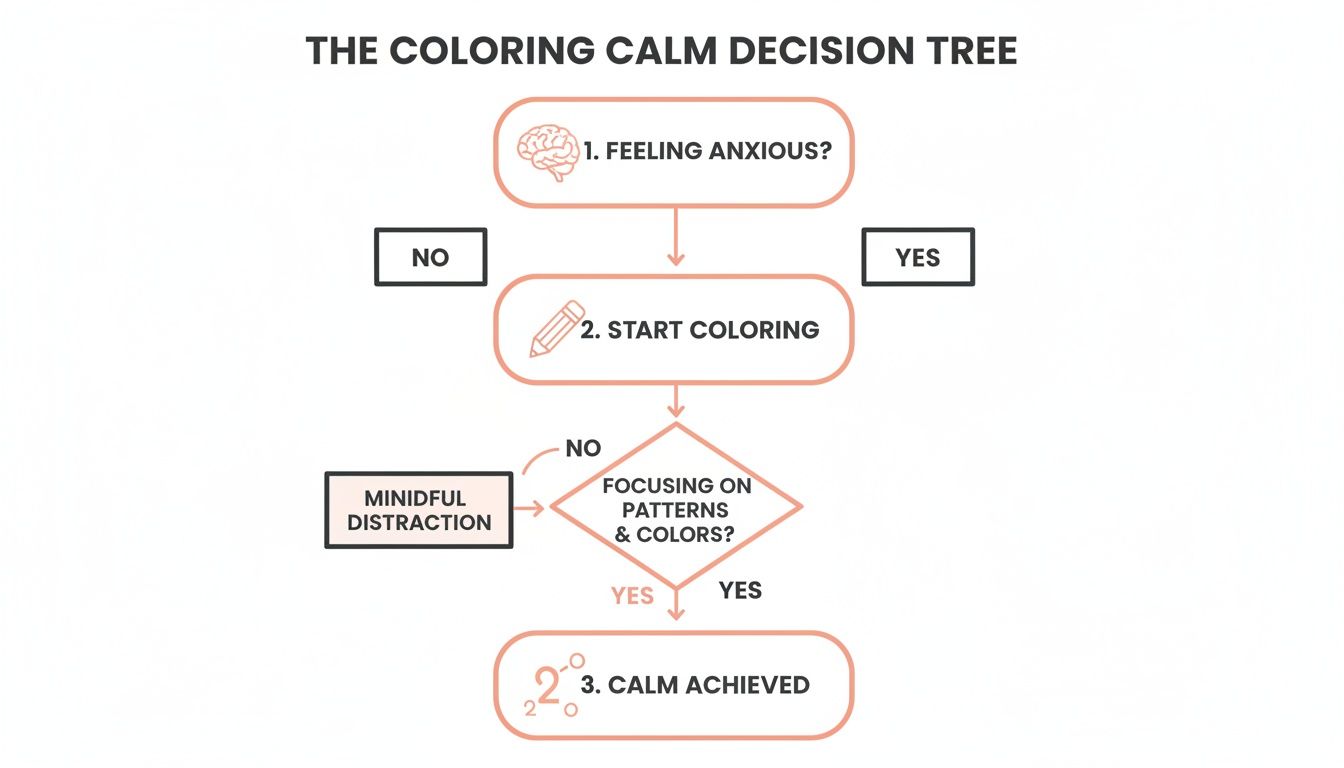
As you can see, coloring acts as a direct, simple intervention, giving your mind a gentle off-ramp from the spiraling highway of anxiety.
The Practical Side: Paper Quality and Portability
Beyond the designs, a few practical details can make or break your coloring experience. Since the last thing you want is frustration creeping into your mindfulness practice, paying attention to the small stuff matters.
Paper quality is a big one. Thicker paper is a must to prevent markers from bleeding through or to handle the pressure of colored pencils. A pesky bleed-through can instantly disrupt your flow.
Also, think about the book’s size. A small, portable book might be perfect for finding calm on your lunch break. A larger book could be better for dedicated "me-time" sessions at home. You can find more tips on creating a meaningful coloring practice in our article on mindfulness coloring.
Choosing Your Ideal Anxiety Relief Coloring Book
A comparison to help you decide which coloring book design best suits your personal needs for mindfulness and stress reduction.
| Design Type | Best For | Psychological Benefit |
|---|---|---|
| Mandalas & Geometric | Achieving a meditative "flow" state and quieting a racing mind. | Repetitive patterns can lower cortisol levels and promote deep focus. |
| Nature & Landscapes | Escapism, grounding, and reconnecting with a sense of peace. | Evokes feelings of calm and connection, reducing feelings of stress. |
| Abstract & Free-Form | Creative expression without the pressure of perfection or rules. | Encourages emotional release and reduces performance anxiety. |
The adult coloring book trend took off around 2015, transforming a hobby into a global wellness movement. In 2014, U.S. sales were just 1 million units. By 2015, that number exploded to 12 million—a staggering 1,200% increase! This boom was fueled by experts highlighting how coloring intricate patterns can help lower cortisol.
Ultimately, the best coloring book for anxiety is the one that speaks to you. Trust your intuition and choose the one that makes you feel instantly at ease.
Simple Coloring Techniques to Calm Your Mind
You’ve got the perfect coloring book for anxiety in hand. Now, let’s transform this simple activity into a powerful, intentional practice for calming your mind. Think of these techniques as gentle invitations to connect with yourself. They are simple rituals designed to transform coloring from a hobby into an active tool for managing those tough, anxious moments.
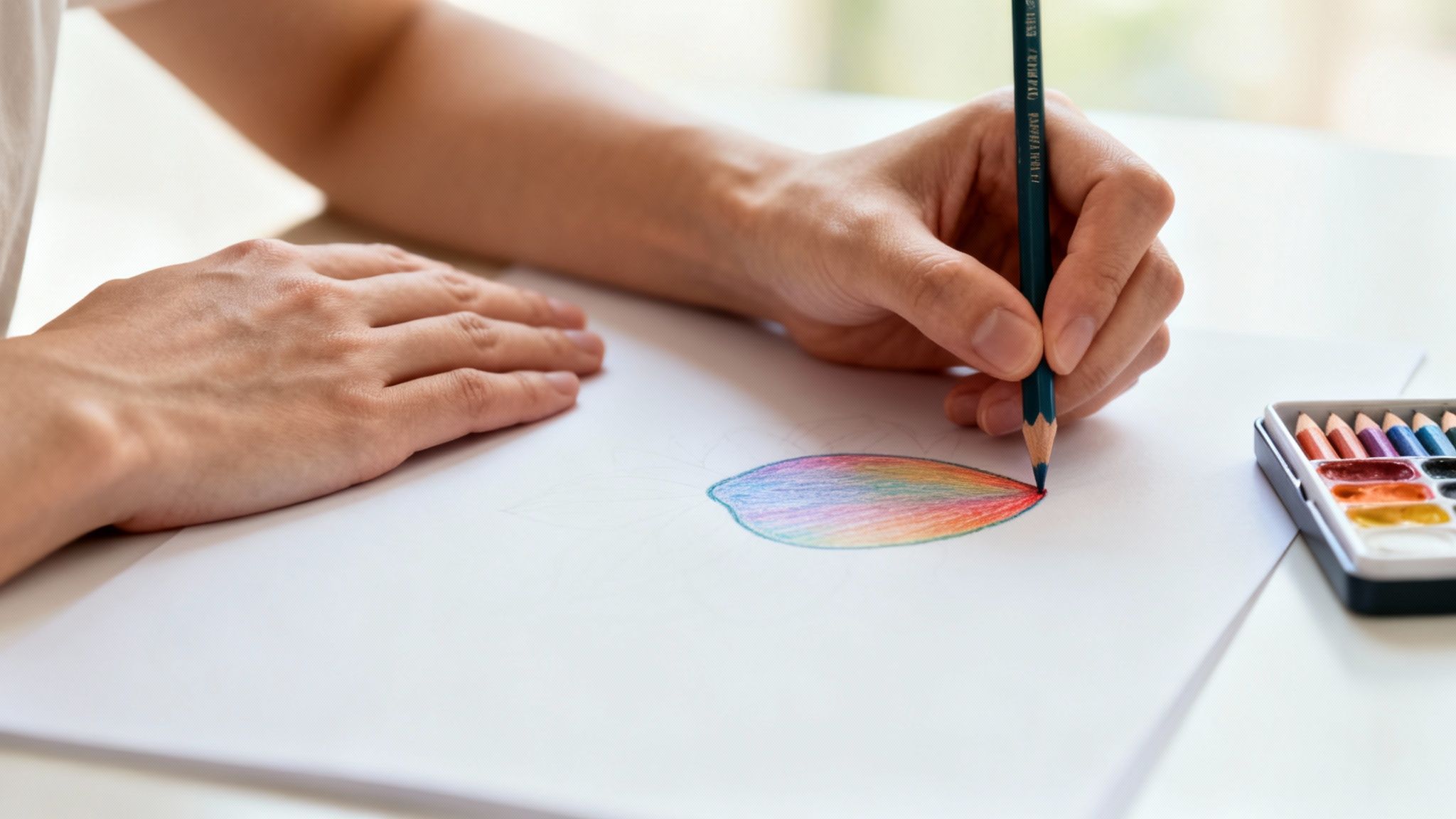
The best part? These exercises are incredibly simple. There’s no right or wrong way to do them. The only goal is to guide your focus away from racing thoughts and anchor it firmly in the present.
The Mindful Coloring Technique
This is the foundation. It’s all about paying deep attention to the feeling of coloring. Instead of worrying about the final picture, you bring all your awareness to the process itself.
Action Point: Practice Mindful Coloring
- Settle In: Find a quiet spot. Take a few deep breaths to signal to your body that it’s time to relax.
- Choose Intuitively: Let your hand drift toward a color that feels right in this moment without overthinking.
- Engage Your Senses: As you color, notice everything—the soft sound of the pencil, the feeling of its texture, the sight of the color blooming on the page. When your mind wanders, gently guide it back to these sensations.
This practice is effective because it gives your mind a simple, concrete job. Research shows that activities that get you into this kind of "flow state," where you're completely absorbed, are fantastic for reducing anxiety.
The Color Breathing Exercise
This technique merges the calming power of deep breathing with the mindful act of coloring. It syncs your body and mind, creating a powerful rhythm that can soothe an agitated nervous system.
Action Point: Try Color Breathing
- Inhale Slowly: As you breathe in deeply through your nose for a count of four, prepare to make a stroke.
- Exhale and Color: As you breathe out slowly through your mouth for a count of six, draw a long, smooth line. Match the length of your stroke to the length of your exhale.
- Repeat: Continue this pattern, linking each breath to a deliberate movement.
This exercise is like biofeedback. By consciously slowing your breath and pairing it with a gentle, repetitive motion, you send a direct signal to your brain that it’s safe to relax.
The Emotional Expression Exercise
Sometimes, anxiety isn't just thoughts; it's a tangle of emotions. This exercise gives you a safe outlet to express what you’re feeling without words.
Action Point: Express with Color
- Identify the Feeling: Take a quiet moment. What emotion is most present for you?
- Assign it a Color: Without judgment, pick a color that feels like that emotion.
- Color Without Rules: Fill a section of your book with that color. Forget staying in the lines. Press hard if the emotion is intense, or softly if it’s more subtle.
This technique is a form of non-verbal processing. By externalizing the emotion, you often find it has less power over you, creating space for calm to return.
Building a Lasting Wellness Routine with Coloring
A single coloring session is a breath of fresh air, but the real magic happens when you turn this simple act into a consistent practice. It's about weaving coloring into the fabric of your life, transforming it from a one-time fix into a sustainable wellness routine. This isn't another chore; think of it as a cherished appointment with yourself.
The key is consistency over intensity. A dedicated ten-minute ritual each day can be far more powerful than a long, sporadic session. This commitment trains your brain to anticipate and welcome these moments of calm. Over time, simply picking up your coloring book for anxiety can become a powerful cue for your nervous system to relax.
Crafting Your Personal Coloring Ritual
Creating a ritual elevates coloring into a meaningful practice you look forward to. The goal is to make it an easy, inviting part of your day.
Action Point: Create Your Ritual
- Morning Calm: Place your coloring book next to your coffee maker. Spend ten minutes coloring as you sip your morning brew to set a peaceful tone for the day.
- Workday Decompression: Use coloring as a buffer between your workday and your evening. Take a few moments to color and leave the day's tensions on the page.
- Evening Wind-Down: Swap scrolling on your phone for coloring before bed. The focused activity helps quiet a racing mind and prepares you for more restful sleep.
A wellness routine isn’t about perfection; it’s about intention. It’s the conscious choice to show up for yourself and honor your need for peace and creative expression.
By integrating coloring into these moments, you make it a foundational part of your self-care. For more ideas, our daily self-care checklist is full of inspiration.
Creating Your Calm Corner
To make your new ritual feel even more special, set up a dedicated "calm corner." This can be a cozy chair, a clean corner of your desk, or your favorite spot on the sofa.
Action Point: Design Your Sanctuary
- Choose a Space: Find a small, quiet area that you can dedicate to relaxation.
- Gather Your Supplies: Keep your favorite coloring book and pencils easily accessible in this spot.
- Make it Inviting: Add a soft blanket, a favorite scented candle, or a small plant. This little sanctuary makes your coloring practice feel like a destination—a place you can go to find stillness whenever you need it.
Common Questions Answered
Ready to dive into this colorful world of calm? It's normal to have a few questions. Let’s clear up any doubts so you can pick up your pencils with total confidence and embrace this powerful way to find peace.
Do I Need to Be an Artist to Color for Anxiety?
Absolutely not! That’s one of the most beautiful things about it. The goal is the process, not a perfect outcome. You're not trying to create a masterpiece; you're giving your mind a gentle, focused task. Your only job is to enjoy the simple feeling of a pencil gliding on paper. Anyone can tap into the mindfulness benefits this practice offers.
What’s the Difference Between Coloring for Fun and for Therapy?
It all comes down to intention. When you use a coloring book for anxiety, you’re mindfully choosing an act of self-care. It's a conscious decision to soothe your nervous system.
Therapeutic coloring is about:
- Being Present: Paying attention to your breath and the physical feeling of coloring.
- Emotional Awareness: Noticing what feelings come up as you pick colors, without judgment.
- Letting Go: Releasing the need to be perfect and just letting the process unfold.
How Long Should I Color to Feel Calmer?
You don’t need to set aside hours! Research and personal stories show that even 10-15 minutes of focused coloring can be enough to kickstart your brain’s relaxation response. Consistency is more important than duration. A short, daily practice often does more for your long-term well-being than one long session a week.
What Are the Best Art Supplies to Use?
The best supplies are the ones you genuinely enjoy using. The last thing you want is to feel frustrated by your tools! Choose high-quality colored pencils that glide smoothly or fine-tip markers that won't bleed through the paper. When you love your tools, your coloring ritual feels even more special, making you want to come back to it again and again.
At Mesmos, we believe in the power of small, intentional acts of self-care. Our thoughtfully designed products are created to inspire mindfulness and bring a little more peace into your everyday life.
Ready to start your journey? Explore our collection of wellness tools and find the perfect companion for your path to inner calm at Mesmos.co.


