


In a world buzzing with digital notifications, a handwritten note is a quiet rebellion—a powerful act of intention. Sending one is a chance to slow down, create something real, and connect with someone in a way a text or email never could. With custom stationery note cards, that connection becomes an authentic reflection of you.
Rediscover the Power of a Handwritten Note

In an age of overflowing inboxes, the simple gesture of sending a handwritten note stands out as an extraordinary act of thoughtfulness. It’s a deliberate choice to connect on a deeper level, transforming a simple "thank you" or "thinking of you" into a cherished memory.
This guide is your invitation to rediscover that meaningful connection. We'll inspire you to create custom stationery note cards that feel authentically you—a personal tool for building more genuine and heartfelt relationships.
A Tangible Connection in a Digital World
A physical note card holds a special kind of energy. It can be propped up on a desk or pinned to a board, serving as a gentle, constant reminder of your kindness. This move toward personalization isn’t just a fleeting trend; it reflects a deep human need for unique, tangible communication.
The science backs this up: studies in haptics—the science of touch—show that physical objects can create stronger emotional connections than their digital counterparts. This desire is so powerful that the global personalized stationery market, valued at USD 15.02 billion, is projected to soar to USD 22.3 billion by 2035, highlighting our collective return to intentional, personal interactions.
A handwritten note is a gift. It’s a piece of you—your time, your thoughts, and your unique handwriting—offered to another person without expectation.
The Mindful Act of Writing
Beyond the joy it brings the recipient, the act of writing a note is a beautiful mindfulness practice. It invites you to pause, gather your thoughts, and focus completely on one person and one message. Research shows that expressive writing can reduce stress and cultivate gratitude. Exploring the pleasure of writing reveals just how this simple act can foster a greater sense of connection.
Action Point: This week, set aside 15 minutes. Choose one person you appreciate and write them a short note. Notice how the act of focusing on gratitude makes you feel.
Choosing the Right Paper and Size
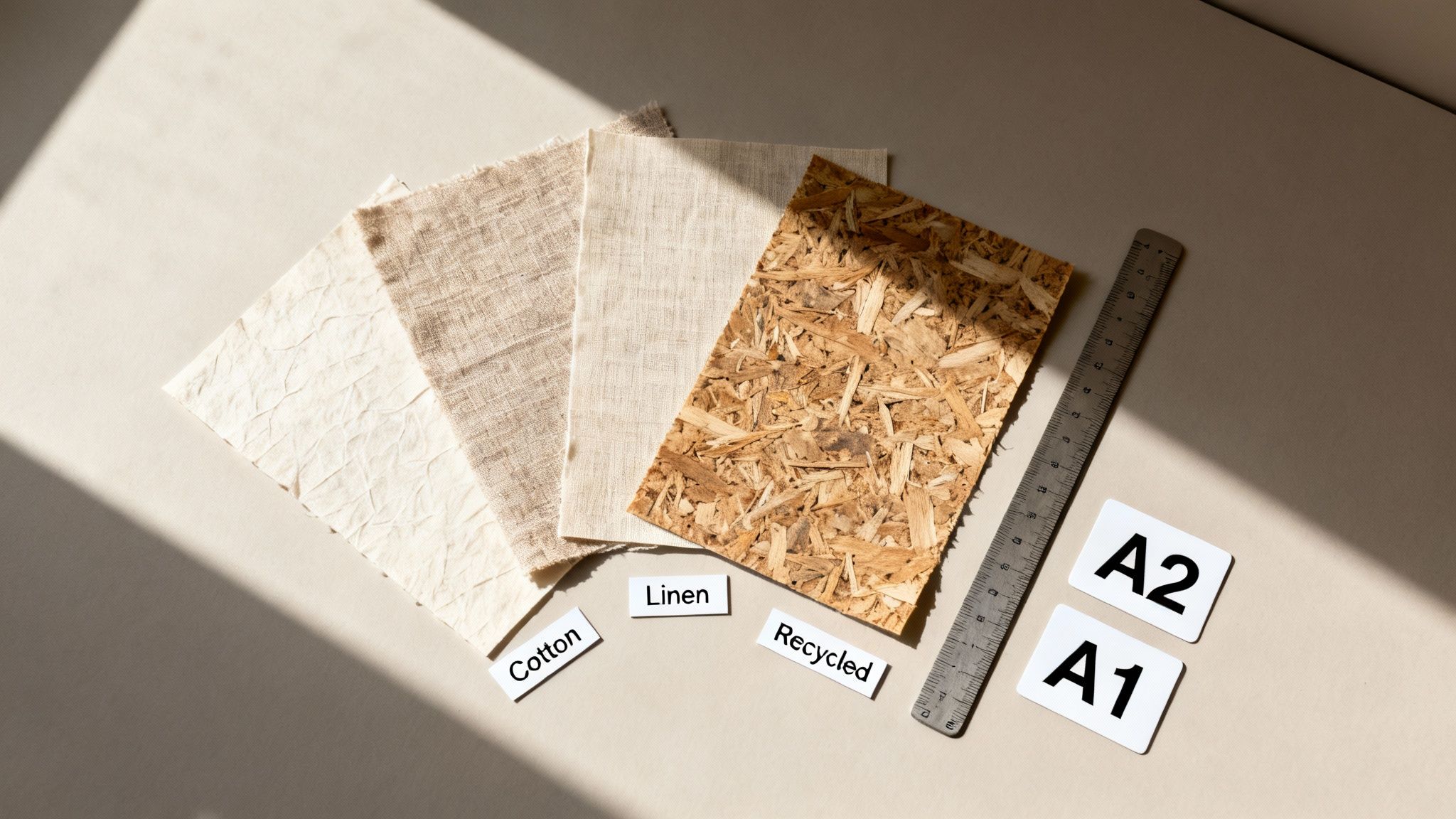
Before you dream of fonts or colors, let’s talk about the very foundation of your custom stationery note cards: the paper. The material you choose is a sensory experience, turning a simple note into something special from the moment it’s touched. It’s the first impression your heartfelt words will make.
A quality paper stock speaks volumes. Imagine the substantial feel of a thick cotton card or the quiet elegance of a linen finish. Each choice tells a story about your personal style and the care you put into your message. This desire for thoughtful, personal connection is powerful; the stationery market is expected to grow by a massive USD 64.9 billion over the next five years, all driven by our love for custom products that feel uniquely us.
Understanding Paper Weight and Texture
One of the first things you'll notice is paper weight, measured in GSM (grams per square meter) or pounds (#/lb). A higher number means a thicker, sturdier card that feels premium and prevents ink from bleeding through.
For note cards, anything over 250 GSM (or about 100 lb cover stock) is a fantastic starting point. This gives your stationery a satisfying heft and ensures it holds up beautifully. For a deep dive into how different weights impact the feel of your cards, explore a comprehensive paper weight guide.
Texture also plays a huge part in the overall experience. Here are a few popular options:
- Smooth: Classic and versatile, providing a flawless surface for any pen.
- Cotton: Incredibly soft and absorbent, a timeless pick for high-end stationery.
- Linen: A subtle, crosshatch pattern that adds a touch of classic sophistication.
- Recycled: Eco-friendly options featuring unique flecks that add character.
Your choice of paper is a silent ambassador for your message. A heavier, textured stock communicates importance and thoughtfulness before a single word is read.
Selecting the Perfect Note Card Size
Just as paper sets the tone, the size of your note card helps define its purpose. While you can create any custom size, a few standards have become favorites for their charm and practicality.
- A2 (4.25" x 5.5"): The classic greeting card size, perfect for thank-you notes and personal letters.
- A1 (3.5" x 4.875"): Often called a "reply card," this smaller size is ideal for short-and-sweet notes or gift enclosures.
A Quick Guide to Note Card Paper and Sizes
Use this reference to select the ideal paper weight and card size for any occasion.
| Element | Common Options | Best Used For |
|---|---|---|
| Paper Weight | 100-110 lb Cover (270-300 GSM) | Quick notes, everyday stationery |
| 120-140 lb Cover (325-380 GSM) | Formal invitations, thank-you cards | |
| Double Thick (200+ lb Cover) | Luxury stationery, save-the-dates | |
| Texture | Smooth | Versatile, modern designs |
| Linen | Traditional, professional correspondence | |
| Cotton | Elegant, high-end, and formal notes | |
| Card Size | A1 (3.5" x 4.875") | Gift enclosures, brief messages |
| A2 (4.25" x 5.5") | Standard thank-you notes, personal letters | |
| A7 (5" x 7") | Formal invitations, longer correspondence |
Action Point: Visit a local paper store to feel different paper weights and textures in person. This tactile experience will help you discover what truly resonates with your personal style.
Infusing Your Personality into the Design
This is where the magic happens. It's the moment your custom stationery note cards transform from beautiful paper into a genuine piece of you. Forget generic templates—this is your chance to create a design that feels like your own signature.
Think of it as your personal brand. Are you classic and traditional, or modern and minimalist? The elements you pick, from a simple monogram to a quirky illustration, tell your story before a single word is written.
Find Your Signature Style
Personalizing your stationery is about choosing a style that truly resonates with who you are. What feels most like you?
- The Timeless Monogram: A classic for a reason. A beautifully designed monogram radiates sophistication and timeless elegance.
- The Full Name Script: There's something warm and inviting about a full name in a flowing, elegant script. It’s like a friendly handshake in paper form.
- The Custom Illustration: For a touch that’s completely unique, a small illustration is perfect. It could be a sketch of your pet or a favorite flower, turning each note card into a mini work of art.
The Language of Typography
The font you choose has a personality all its own. Just like your handwriting, it's a form of self-expression. To explore this personal touch further, check out our guide on how to change your penmanship.
A classic serif font (like Times New Roman) conveys tradition and reliability, perfect for formal notes. In contrast, a clean sans-serif font (like Helvetica) offers a sleek, modern feel, fantastic for friendly correspondence.
Your design choices—from font to illustration—are visual cues that express your personality. They create an emotional connection and make your recipient feel they’ve received something truly special.
The Psychology of Color
Color is pure emotion. The hues you pick can instantly set a feeling. Understanding the power of color in visual identity is key to shaping the mood of your note cards. Color psychology shows that blues can evoke calm and trust, while yellows can inspire optimism and energy.
- For Family Stationery: A warm navy or deep forest green creates a cohesive, unified look.
- For Professional Thank-Yous: A simple design in a neutral slate gray or black on bright white paper communicates sincerity.
- For a Creative Soul: Don't be afraid of a pop of color! A vibrant cherry red or a cheerful marigold can perfectly express your energetic spirit.
Action Point: Create a small mood board. Gather 3-5 images, colors, and font styles that you feel represent you. Use this as your inspiration when designing your cards.
From Digital Design to Printed Perfection
There's a special magic in seeing a design you created on-screen come to life as a beautiful, tangible note card. This is where your vision becomes a physical tool for connection.
The custom stationery printing market, currently valued at USD 2,488.0 million, is projected to reach USD 4,135.8 million by 2030. This growth is thanks to new technologies making premium, personalized printing accessible to everyone. You can dive deeper into this expanding market with this detailed industry analysis.
Choosing Your Printing Method
The printing method you choose dramatically shapes the final look and feel of your custom stationery note cards. Each technique brings a unique character to the paper.
- Digital Printing: Versatile and vibrant, perfect for designs with lots of color or photos. It's budget-friendly for smaller batches.
- Letterpress: For timeless elegance, this classic technique presses an inked plate into thick paper, leaving a gorgeous, deep impression you can feel.
- Foil Stamping: Adds a touch of glamour by applying a thin layer of metallic foil—think gold, silver, or rose gold—for a stunning, eye-catching effect.
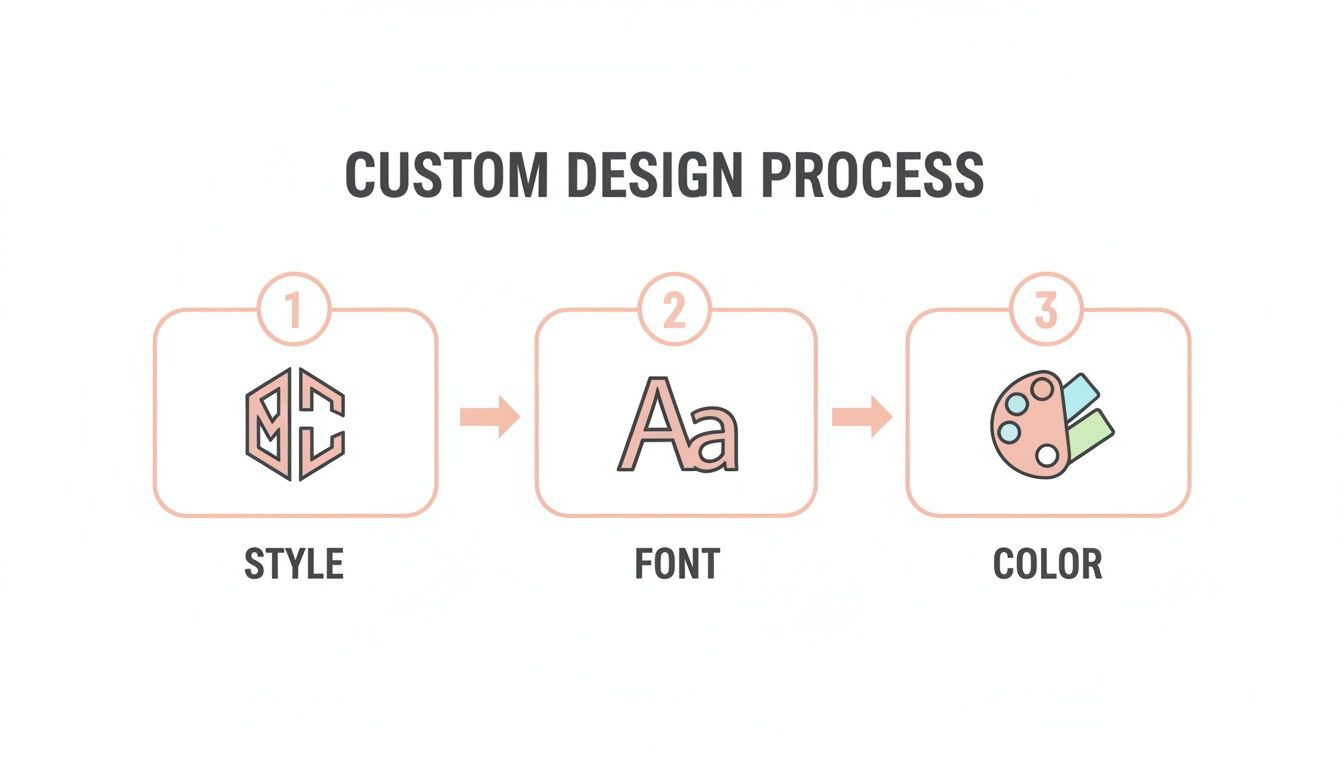
Thinking through these three core elements—style, font, and color—is what ensures your final printed note card is a true reflection of you.
The Crucial Step: Proofing Your Design
Before you give the final "go," there’s one step you cannot skip: proofing. A digital proof is your last chance to catch any mistakes. It’s a tiny moment of mindfulness that saves you from potential headaches later.
“Think of the proof as your final dress rehearsal. Taking a few extra minutes to review every detail with fresh eyes is the single best thing you can do to guarantee your stationery is exactly as you imagined.”
Action Point: When you receive your proof, read every word out loud, backwards. This trick forces your brain to focus on each word individually, making it easier to spot typos.
Here’s a quick checklist to guide you:
- Check all text for spelling and grammar, especially names and dates.
- Confirm your font styles, sizes, and colors are correct.
- Verify the placement and alignment of all elements.
- Examine image quality to ensure it's sharp and clear.
Once you’ve confidently approved your proof, you’re ready for the best part—turning your idea into a real tool for connection.
The Simple Joy of Sending Your Note
With a beautiful stack of custom stationery note cards on your desk, the real adventure begins. Shift your mindset: writing a note isn’t a chore, but a joyful, mindful moment. It’s about sharing a genuine piece of your attention and kindness.
Each card is a small ambassador of your thoughtfulness, strengthening the bonds you have with friends, family, and colleagues. It’s a beautiful way to spread more positivity in the world, one heartfelt message at a time.
Crafting a Message from the Heart
Knowing what to write doesn’t have to be complicated. An authentic message will always mean more than a “perfect” one. The key is to be specific and sincere.
Start by picturing the person. What was your last conversation? What small, real moments can guide your words?
True connection is found in the small, sincere acknowledgments of another person’s presence in your life. A few thoughtful words can make someone feel truly seen and appreciated.
To get your ideas flowing, here are a few simple prompts:
- Celebrate a Win: "I was so thrilled to hear about your promotion! I’ve seen how hard you've worked, and no one deserves it more."
- Offer Encouragement: "I know things have been challenging lately. I just wanted to let you know I'm thinking of you."
- Share a Memory: "Seeing that old photo of our trip reminded me how much I value our friendship. Thank you for being you."
- Express Simple Gratitude: "Thank you for that wonderful dinner. Your hospitality always makes everyone feel so welcome."
The Etiquette of Authenticity
Modern note-writing is all about warmth and sincerity. The most important rule? Be yourself. Your personality is what makes your message special.
- A Warm Greeting: Start with "Dear [Name]," or a more casual "Hi [Name],"—whatever feels right.
- A Timely Send: Pop your note in the mail within a week or two of an event.
- A Kind Closing: End with "With gratitude," "Warmly," "All the best," or simply, "Yours."
Ultimately, sending a handwritten note is a powerful wellness practice. It encourages you to slow down, practice gratitude, and actively nurture the relationships that bring joy to your life.
Action Point: Keep your stationery, a good pen, and stamps in one visible, accessible place. This removes friction and makes it easy to act on a thoughtful impulse.
Common Questions About Custom Note Cards
As you get ready to create, a few questions may arise. This guide will help you nail down those final details with confidence, so your custom stationery note cards become a perfect reflection of you.
Every choice you make, from paper to font, helps tell your story. Getting these details right is what makes your stationery an extension of the warmth you want to share.
What Is the Best Paper for Custom Stationery Note Cards?
The best paper depends on the feeling you want to create. For a timeless, luxurious touch, you can’t go wrong with a heavy cotton cardstock—around 300 GSM or higher. It has a premium feel and absorbs ink beautifully, a dream for fountain pen lovers.
For more character, a paper with a subtle texture like linen can add quiet elegance. For those who prioritize sustainability, high-quality recycled papers offer an eco-friendly option that doesn’t compromise on style.
Your paper choice is the handshake of your message. A quality stock conveys thoughtfulness and care before a single word is read, making the recipient feel truly valued.
How Many Note Cards Should I Order at First?
Think about how you'll use your stationery. For general personal use, starting with 50 to 100 cards is the perfect sweet spot. This gives you plenty for various occasions without a huge commitment.
If you're ordering for a specific event like a wedding or for business, count your recipient list and add 10-15% extra. This buffer is a lifesaver for addressing mistakes or last-minute additions. Plus, printers often offer better per-card pricing on larger quantities.
What Are the Most Common Design Mistakes to Avoid?
A few simple guidelines can help you create a design that's clean, elegant, and totally you.
- Overcrowding the Design: White space is your friend! It gives your design room to breathe and creates a sophisticated, uncluttered look. Embrace simplicity.
- Poor Legibility: Your message is the star. Ensure your font choice and size are easy to read. A great trick is to test your design by looking at it from a distance.
- Skipping the Final Proofread: This is crucial. Before you approve, always double-check your proof for any spelling errors. Reading it out loud helps catch tiny mistakes you might otherwise miss.
Ready to create stationery that truly reflects your spirit? Explore the beautiful, mindfully designed collections at Mesmos and start crafting connections that last. Find your perfect set at https://mesmos.co.


