


Welcome to your ethical shopping guide—not just a set of rules, but a powerful way to ensure the things you buy reflect your deepest values. This is your invitation to transform everyday shopping into a joyful act of kindness, fairness, and respect for our planet. Think of it as a journey to align your choices with the world you want to create.
Why Ethical Shopping Matters More Than Ever
Have you ever paused to wonder about the story behind your favorite t-shirt or morning coffee? Every single product has a journey—from the hands that made it to the resources that shaped it. Ethical shopping is the beautiful and empowering practice of choosing stories that resonate with your heart. It's about becoming a more conscious, powerful consumer.
Instead of a rigid checklist, view this as an adventure in mindfulness. You aren't sacrificing anything; you're adding profound meaning to your life and the lives of others. Let this guide inspire you, showing that your decisions, no matter how small, can create powerful ripples of positive change.
The Ripple Effect of a Single Purchase
Imagine buying a gift for a dear friend. You find a beautifully crafted journal from a company that pays its artisans a fair wage and uses recycled paper. When you give that gift, you’re not just handing over an object. You’re sharing a story of empowerment and sustainability.
Your friend feels the thoughtfulness behind the choice. The artisan earns a dignified living, helping them support their family and community. The environment benefits from sustainable materials. This single, mindful purchase sends waves of positivity far beyond what you can see.
Ethical shopping isn’t about perfection. It’s about intention. It’s the conscious decision to vote with your wallet for a world that is more just, sustainable, and compassionate.
More Than a Trend, It's a Movement
The shift toward conscious consumerism is gaining incredible momentum. People everywhere are awakening to the reality that their spending habits have a real-world impact. In fact, a 2021 study by Simon-Kucher & Partners found that 85% of global consumers have shifted their purchasing habits towards being more sustainable in the past five years.
This isn’t just about feeling good; it’s about doing good. By joining this movement, you contribute to a collective force that demands better from companies. You champion brands that prioritize people and the planet, not just profit. This ethical shopping guide will help you navigate this path with confidence and joy, turning every purchase into a statement of purpose.
Understanding The Four Pillars Of Conscious Consumerism
Diving into ethical shopping can feel overwhelming at first, but it's simpler than you might think. We can break down the big idea of "ethical" into four clear, easy-to-remember pillars. Imagine them as the four legs of a sturdy table—each one is crucial for building a conscious, supportive lifestyle.
This isn't a fleeting trend; it’s a powerful movement. The global ethical fashion market alone reached $7.5 billion in 2022 and is projected to grow to $11.1 billion by 2027, according to the Business Research Company. That growth says it all: people are demanding that their purchases truly matter.
Here's what these four pillars really mean and what to look for when you shop.
A Quick Guide to the Four Ethical Pillars
This table is your at-a-glance reference to understand the core principles of ethical shopping and the questions that empower you to make conscious choices.
| Pillar | What It Means for You | Key Questions to Ask Brands |
|---|---|---|
| Fair Labor & Human Dignity | Ensuring the people who made your product were treated with respect, paid a living wage, and worked in safe conditions. | "Can you tell me about your factory conditions?" "Do you ensure workers are paid a fair, living wage?" |
| Sustainable & Kind Materials | Choosing products made from materials that are gentle on the planet, like organic cotton, recycled fabrics, or renewable resources. | "What materials do you use in your products?" "Are your materials certified organic or recycled?" |
| Environmental Impact & Responsibility | Looking at the entire lifecycle of a product—from how it's made and packaged to how it impacts the planet over time. | "What are you doing to reduce your carbon footprint?" "Is your packaging recyclable or compostable?" |
| Brand Transparency & Honesty | Supporting brands that are open about their supply chain, manufacturing processes, and ethical commitments. | "Do you have a transparency report?" "Are you certified by third-party organizations like Fair Trade or B Corp?" |
Think of these pillars not as a rigid checklist, but as a guide to help you align your purchases with your values. Let's explore each one.
1. Fair Labor And Human Dignity
This first pillar is all about remembering the human hands behind every product. It’s a commitment to ensuring that every single person involved in creating an item—from the farmer growing the cotton to the artisan stitching the seams—is treated with dignity and respect.
It means they earn a living wage that can support their families, work in safe environments, and are free from exploitation. Think of it like a group project where everyone gets fair credit and pay for their part. When a brand champions fair labor, it’s a clear sign they put people first.
2. Sustainable And Kind Materials
Next up, we have Sustainable Materials. Think of this like cooking a nourishing meal. You'd naturally reach for fresh, wholesome, and responsibly sourced ingredients. The same idea applies to the products we buy.
This pillar encourages us to look for materials that are kind to our planet. Some great examples include:
- Organic Cotton: Grown without harmful pesticides, protecting both the soil and farmers.
- Recycled Fabrics: Gives new life to materials that would otherwise sit in a landfill.
- Hemp or Linen: These incredible plants grow quickly, requiring far less water than conventional crops.
Choosing sustainable materials is a direct and powerful way to reduce our collective footprint. It's about using resources that can be replenished without causing harm.
This concept map is a great way to visualize how your purchase connects your values with its impact on people and the planet.
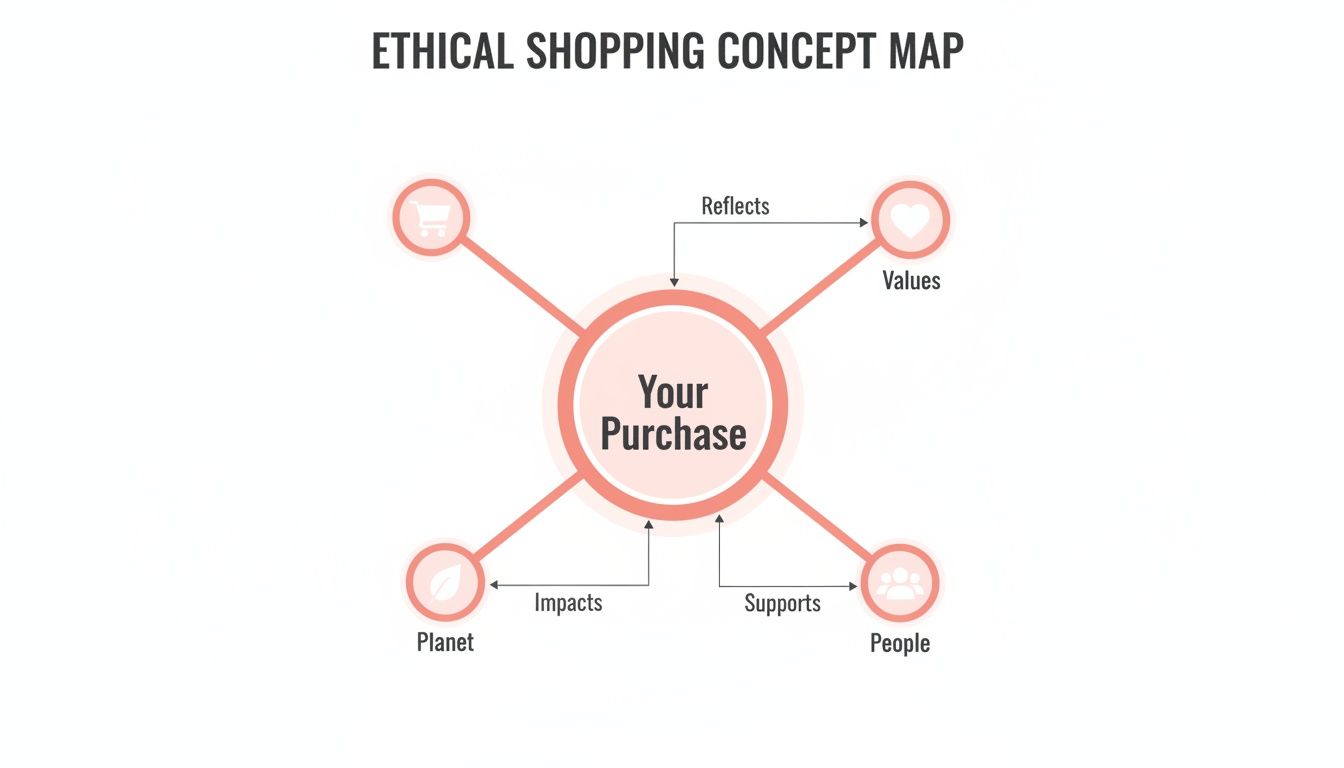
It’s a beautiful reminder that every shopping decision is a chance to support the well-being of our world and everyone in it.
3. Environmental Impact And Responsibility
The third pillar, Environmental Impact, invites us to think about a product's entire journey. It’s like being a thoughtful hiker on a beautiful trail—your goal is to leave it just as you found it. This means looking at how an item is made, packaged, shipped, and what happens when its life is over.
A brand that takes its environmental responsibility seriously will actively work to minimize waste, reduce carbon emissions, and conserve water. They don’t just say they're "green"—they show you exactly how they're doing it.
This pillar ties directly into the idea of living with purpose. By supporting brands that tread lightly on the earth, you’re practicing a form of intentional living where your daily actions align with your bigger values for a healthier planet. You can explore more about this beautiful lifestyle in our guide on what is intentional living.
4. Brand Transparency And Honesty
Finally, we have Brand Transparency, the pillar that holds all the others together. Think of it as a company with an open-door policy, inviting you in to see exactly how things are run. A transparent brand isn’t afraid to share the nitty-gritty details of its supply chain, labor policies, and environmental efforts.
They won’t hide behind vague buzzwords like "eco-friendly." Instead, they’ll offer concrete proof, like third-party certifications (think Fair Trade or B Corp) or detailed sustainability reports. This honesty builds trust and empowers you to make a truly informed choice. When a brand is transparent, it shows they have nothing to hide.
How to Spot Greenwashing and Avoid Fast Fashion Traps
Diving into the world of ethical shopping can sometimes feel like trying to navigate with a confusing map. You have the best intentions, but misleading signs can point you in the wrong direction. This is especially true when you run into two of the biggest hurdles: greenwashing and fast fashion.
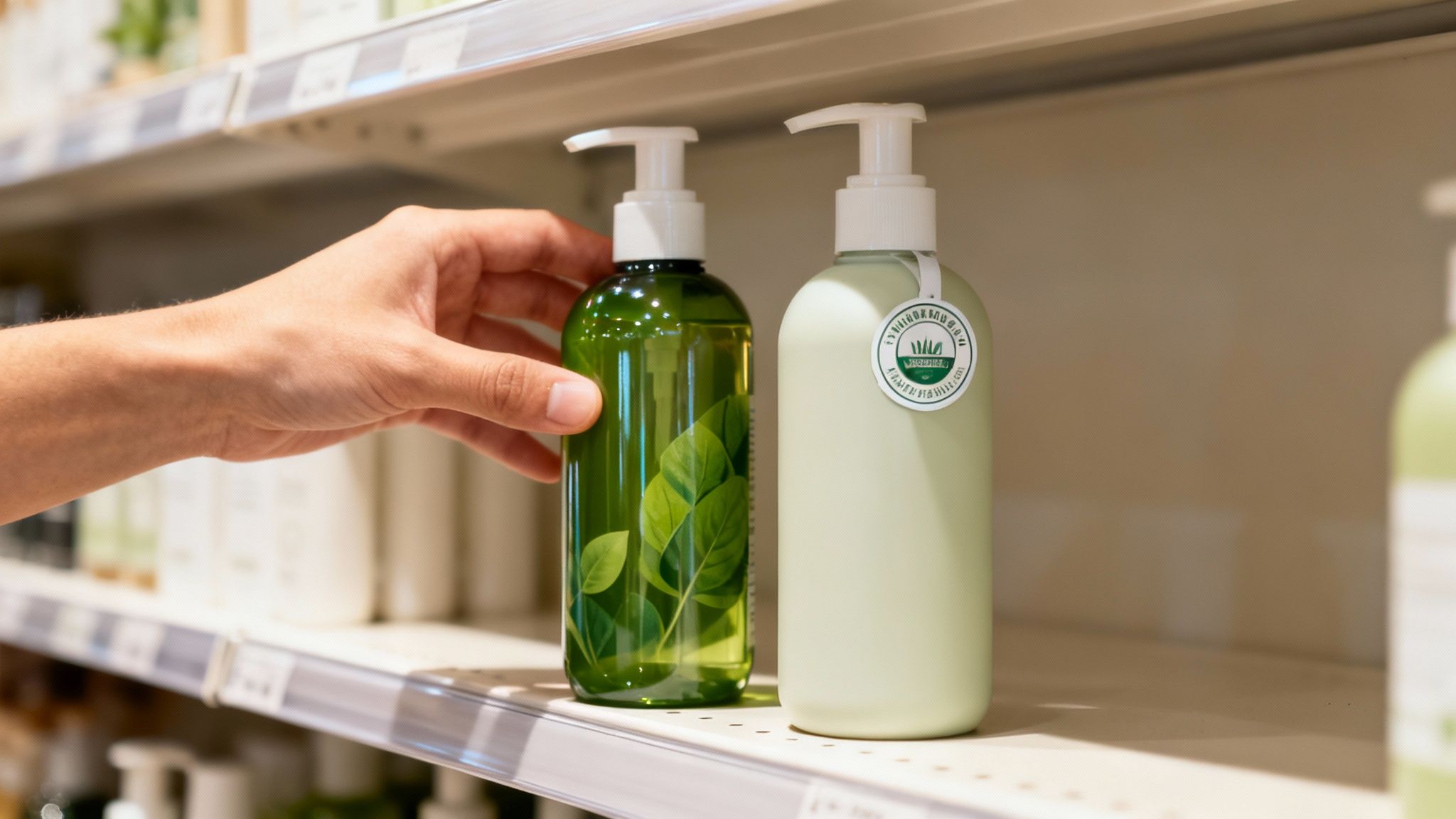
Think of greenwashing as a product in beautiful, earthy packaging that whispers sweet nothings about being "eco-friendly." But a closer look reveals a different story. It’s a marketing gimmick designed to make a company look more sustainable than it is, and it’s everywhere.
Seeing Through the Green Fog
The good news is that spotting greenwashing is a skill you can build. It starts with looking past fluffy buzzwords and demanding real proof. A truly ethical brand will back up its claims with facts. It's a real problem—the European Commission found that 42% of online green claims were exaggerated, false, or deceptive.
Here are a few red flags to watch for:
- Vague Language: Be wary of words like "eco-friendly," "natural," or "green" without specifics. What exactly makes it eco-friendly?
- Irrelevant Claims: A product proudly labeled "CFC-free," even though CFCs were banned decades ago. It’s a trick to seem responsible without doing anything new.
- The "Eco" Collection: Some fast fashion giants launch a tiny collection from recycled materials, while 99% of their products are made unsustainably. This is classic greenwashing.
The most powerful question you can ask is simple: "Where's the proof?" A transparent company will happily point you to its certifications, supply chain data, or sustainability reports. If they can’t—or won’t—that’s a major warning sign.
The Alluring Trap of Fast Fashion
Now, let's talk about the magnetic pull of fast fashion. These brands serve up the latest trends at prices that seem too good to be true. It’s tempting, but this model comes at a huge hidden cost to people and our planet.
The entire industry is built on a dizzying cycle of speed and volume. It encourages a "buy, wear, toss" mentality that creates mountains of waste—the Ellen MacArthur Foundation reports that one garbage truck of textiles is landfilled or incinerated every second. This puts unbelievable pressure on garment workers, who are often paid less than a living wage to keep up with impossible demands.
To break free from this cycle, you can explore wonderful options like designer consignment stores as an alternative to fast fashion. This simple shift helps support a circular economy and lets you discover unique, high-quality pieces made to last.
Your Practical Checklist for Ethical Shopping
Ready to turn those good intentions into real-world action? This simple checklist will empower you on your next shopping trip. It’s not about perfection—it’s about making small, mindful shifts that feel right for you.
Let's break this down into three simple, actionable phases you can start using today.
Phase 1: The Pre-Purchase Pause
Before you add something to your cart, take a moment for a gentle, mindful pause. This is where the real magic happens.
Your Action Points:
- Ask: Do I truly need this? Often, the most ethical choice is realizing you already have what you need.
- Ask: Will I use or wear this at least 30 times? This "30 Wears Test," popularized by Livia Firth, encourages buying for longevity, not for a single occasion.
- Ask: Is it built to last? Prioritize quality over fleeting trends to save money and reduce waste.
This thoughtful moment is the foundation of conscious shopping, moving you from impulse buys to intentional choices.
Phase 2: In-the-Moment Research
Once you've decided a purchase is needed, it’s time for some quick detective work. This doesn't have to take long!
Your Action Points:
- Check the "About Us" or "Sustainability" Page: Look for real details about their supply chain, materials, and labor policies. Vague claims are a red flag.
- Look for Third-Party Certifications: Trustworthy labels like B Corp, Fair Trade, or GOTS (Global Organic Textile Standard) are signs a brand is truly committed.
- Read the Material Tag: What is it made of? Look for sustainable materials like organic cotton, linen, hemp, or recycled fabrics.
By asking these questions, you’re sending a clear message to brands: honesty and responsibility matter. Your curiosity is a powerful force for change.
Phase 3: Post-Purchase Care and Consideration
Your journey as a conscious consumer doesn't end at checkout. Now you can maximize your item's value and minimize its impact.
Your Action Points:
- Follow Care Instructions: Simple steps like washing clothes in cold water and air-drying can dramatically extend their lifespan and save energy.
- Repair, Don't Replace: A missing button or a small tear is an opportunity to mend. Learning basic repair skills is an empowering act of sustainability.
- Embrace Secondhand First: When you're ready for something new-to-you, consider thrifting! You can find amazing treasures when you master pro thrift store shopping tips.
- Dispose of Thoughtfully: If an item has reached the end of its life, find a responsible way to recycle or donate it.
Making Every Gift Matter with Mindful Gifting
Gift-giving is one of life’s most beautiful rituals. It’s a chance to share not just an item, but a piece of your heart and your values. When you weave ethical principles into how you give, you transform a simple present into a powerful story of connection, kindness, and purpose.

This approach, called mindful gifting, is about choosing presents that carry meaning far beyond their physical form. It’s about celebrating the recipient, the maker, and the planet all at once. Every gift becomes a thoughtful expression of love for both the person receiving it and the world we all share.
Weaving Values into Every Present
Imagine selecting a gift from a company that champions a cause you deeply believe in—a business that empowers female artisans, supports fair trade communities, or donates profits to environmental conservation. Suddenly, that gift is no longer just a beautiful object—it’s a symbol of positive change.
This adds a profound layer of significance that both you and your loved one can feel good about. It turns a moment of generosity into an act of solidarity. At Mesmos, for example, every purchase helps support single parents in need, making each gift a part of a larger circle of care.
Mindful gifting is the art of choosing presents that tell a story. It’s about finding items that are not only beautiful and useful but are also crafted with integrity, compassion, and respect for the earth.
This shift in perspective encourages us to prioritize quality craftsmanship over sheer quantity, choosing timeless items made to be cherished for years.
Inspiring Ideas for Mindful Gifting
Bringing more mindfulness into your gift-giving doesn't have to be complicated. It’s a joyful and creative process that deepens the connection between you and the recipient.
Your Action Points:
- Give Gifts That Nurture Well-being: Choose items that encourage self-care and mindfulness, like a beautifully designed journal, calming essential oils, or a plant that brings nature indoors.
- Give Experiences Over Objects: Tickets to a concert, a gift certificate for a pottery class, or a planned day trip create lasting memories together.
- Give Handmade and Local Treasures: Support local artisans and small businesses. A hand-thrown mug, a piece of unique jewelry, or locally made honey feels special and strengthens your local economy.
- Give Gifts That Give Back: Seek out brands with a clear social or environmental mission. Your gift creates a positive ripple effect, contributing to causes you both care about.
For more inspiration, explore our collection of eco-friendly gift ideas that are both thoughtful and kind to the planet.
Join the Movement, One Thoughtful Purchase at a Time
Stepping into the world of ethical shopping is a beautiful act of hope. It’s a quiet, powerful declaration that your choices—no matter how small they seem—are votes for a more compassionate and sustainable world.
This guide isn’t about chasing perfection. It’s about celebrating progress and realizing the immense power you hold every single day.
You’ve learned to see beyond the price tag and connect with the real stories behind the things you buy. From championing fair labor to choosing sustainable materials, every conscious decision sends a ripple of positive change across the globe. You’re now part of a growing movement of people choosing to buy better, not just more.
Your Choices Create the Future
Never underestimate the impact of a single thoughtful purchase. When you support a brand that puts people and the planet first, you’re not just buying an item—you’re investing in the kind of future you want to see. You're sending a clear message to the entire industry that transparency, dignity, and responsibility are non-negotiable.
The path of a conscious consumer is built one small step at a time. It’s about celebrating the little wins and giving yourself grace along the way. Maybe your journey starts with swapping your usual coffee for a Fair Trade blend or choosing a gift that gives back. Each action is a building block for a more just and beautiful world.
You are joining a global community dedicated to making a difference. Every ethical purchase is a collective cheer for fairness, a stand for our planet, and a commitment to a future where everyone can thrive.
Embrace Your Power to Inspire
Your journey doesn't end with a purchase—it’s just getting started. By living your values out loud, you naturally inspire others. When a friend asks where you got that beautiful, handcrafted journal, you get to share the story of the artisan who made it. Your mindful choices become a catalyst for conversation and change.
This isn't about pressure; it's about empowerment. Feel proud of every step you take. Together, our individual choices weave a powerful tapestry of collective action, creating a world that is more just, sustainable, and connected for everyone. Your thoughtful purchases are helping to write that new story.
Your Questions About Ethical Shopping, Answered
Diving into ethical shopping is exciting, but it’s normal to have questions. This is your space to get clear, simple answers so you can move forward with confidence and joy.
Think of this as a friendly chat to clear up any confusion. Every question is a step toward becoming a more mindful, empowered shopper.
Is Ethical Shopping More Expensive?
This is a common question, and the answer isn't a simple yes or no. Sometimes, an ethically made item might have a higher price tag, but that reflects the true cost of paying someone a fair wage and using high-quality, sustainable materials.
However, the heart of this ethical shopping guide is about a mindset shift: "buy less, but buy better." Instead of grabbing five trendy, low-quality tops that won't last a season, you invest in one timeless piece you'll love for years. When you think in terms of cost-per-use instead of the initial price, you often save money in the long run.
It’s not about spending more; it's about spending with more intention. You’re investing in durability, craftsmanship, and a story you can feel good about—which means you won’t need to replace things nearly as often.
This approach is kinder to your wallet and your values, filling your life with things you truly cherish.
How Can I Know if a Brand Is Really Ethical?
In a world full of marketing buzzwords, it can be tough to know who to trust. The secret is to look for proof beyond a brand's own pretty words. A genuinely ethical company will be proud to share the details.
Think of yourself as a friendly detective. Here are a few reliable clues to look for:
- Third-Party Certifications: These are like a trusted stamp of approval. Look for well-known labels like B Corp, which reviews a company's entire social and environmental impact; Fair Trade, which guarantees fair pay for workers; or GOTS (Global Organic Textile Standard) for organic materials.
- Radical Transparency: Check the brand’s website for a "Sustainability" or "Our Impact" page. Do they tell you about their factories? Do they publish reports on their progress? The more they share, the more you can trust them.
- Just Ask! If you can’t find the answers, reach out. Send an email or a message on social media. A brand with nothing to hide will be happy to hear from you.
What If I Can’t Afford or Find Ethical Options?
Please hear this: this journey is about progress, not perfection. The goal isn’t to change everything overnight—that’s a recipe for burnout. It’s about making small, steady choices that feel right for you.
Don’t let the idea of being a “perfect” ethical shopper stop you from making a good choice today. Every single conscious decision adds up to a huge, positive impact.
Start where you are. Maybe your first step is buying secondhand instead of new. Perhaps you switch to a sustainable coffee brand or choose to support a local maker for your next gift. Celebrate every small win, because each one is a vote for a kinder, more beautiful world for all of us.
At Mesmos, we believe every purchase can be a source of inspiration and positive change. We create beautiful, wellness-focused gifts that not only nurture the soul but also give back to the community by supporting single parents in need. Discover meaningful gifts that tell a story of kindness at https://mesmos.co.


