


What’s the real difference between a fountain pen and a ballpoint? It’s not just in the ink or the tip. It’s in the feeling. A fountain pen invites you into a mindful, expressive ritual with an effortless glide, while a ballpoint delivers pure, unstoppable reliability for the fast-paced modern world. The choice isn't just about a tool; it's about discovering the kind of writer you want to be.
The Ultimate Showdown: Fountain Pen Vs. Ballpoint
Welcome to the definitive showdown in the world of writing instruments. In one corner, you have the elegant fountain pen—a timeless symbol of craft and deliberate thought. And in the other, the ever-dependable ballpoint, the true workhorse of our modern lives.
This guide is more than a simple comparison. It's an exploration of two distinct writing philosophies. We'll dive deep into the sensory experience, the true lifetime cost, maintenance, and even the environmental story each pen tells.
By the end, you won’t just know which pen is “better.” You’ll have discovered the perfect instrument to bring your unique thoughts to life.
Comparing Core Characteristics
Let’s begin by understanding the heart of each pen. The way they work dictates their feel, performance, and purpose. A fountain pen uses a delicate nib and feed system, drawing water-based ink from a reservoir onto the page through capillary action—a scientific marvel of physics. According to a study in the Journal of Fluid Mechanics, this process allows for an incredibly smooth ink flow with minimal effort.
In contrast, a ballpoint uses a tiny rotating ball coated in a thick, oil-based ink. It requires pressure to get the ink flowing, making it a rugged and versatile option. This single mechanical distinction is the source of every other difference we’re about to explore.
The choice between a fountain pen and a ballpoint is an invitation to be more intentional. Do you seek the flow of mindful creation or the power of immediate action?
To make things simple, here’s a quick summary of the core differences to help you see the key characteristics of each at a glance.
Fountain Pen Vs Ballpoint At a Glance
| Feature | Fountain Pen | Ballpoint Pen |
|---|---|---|
| Writing Feel | Effortless glide, requires minimal pressure, expressive lines | Firm control, requires more pressure, consistent lines |
| Ink Type | Liquid, water-based ink in vast color options | Thick, oil-based paste ink in limited colors |
| Maintenance | Requires regular cleaning and careful handling | Virtually zero maintenance required |
| Best For | Journaling, calligraphy, signature writing, long sessions | Quick notes, filling forms, everyday carry, reliability |
| Cost | Higher initial investment, economical refills (bottled ink) | Low initial cost, disposable or requires specific refills |
| Hand Fatigue | Low, ideal for reducing strain during extended writing | Can be high due to the pressure needed to write |
This table makes it clear that neither pen is universally "better." They each serve a distinct purpose, shaped entirely by their design.
This idea of comparing tools based on personal needs and preferences comes up everywhere. For a different but similarly structured analysis, you might find a comparison of digital vs. traditional calendars interesting. It also gets into how our workflows and values shape the tools we choose.
Ultimately, understanding these foundational differences is the first step toward finding the instrument that best tells your story. Let’s rediscover the profound joy of writing together.
The Writing Experience: A Deep Dive Into Feel and Flow
The true measure of a pen is found in the quiet conversation between your hand and the page. This is where the sensory differences between a fountain pen and a ballpoint really come alive, moving beyond mechanics into the world of personal expression and mindfulness.
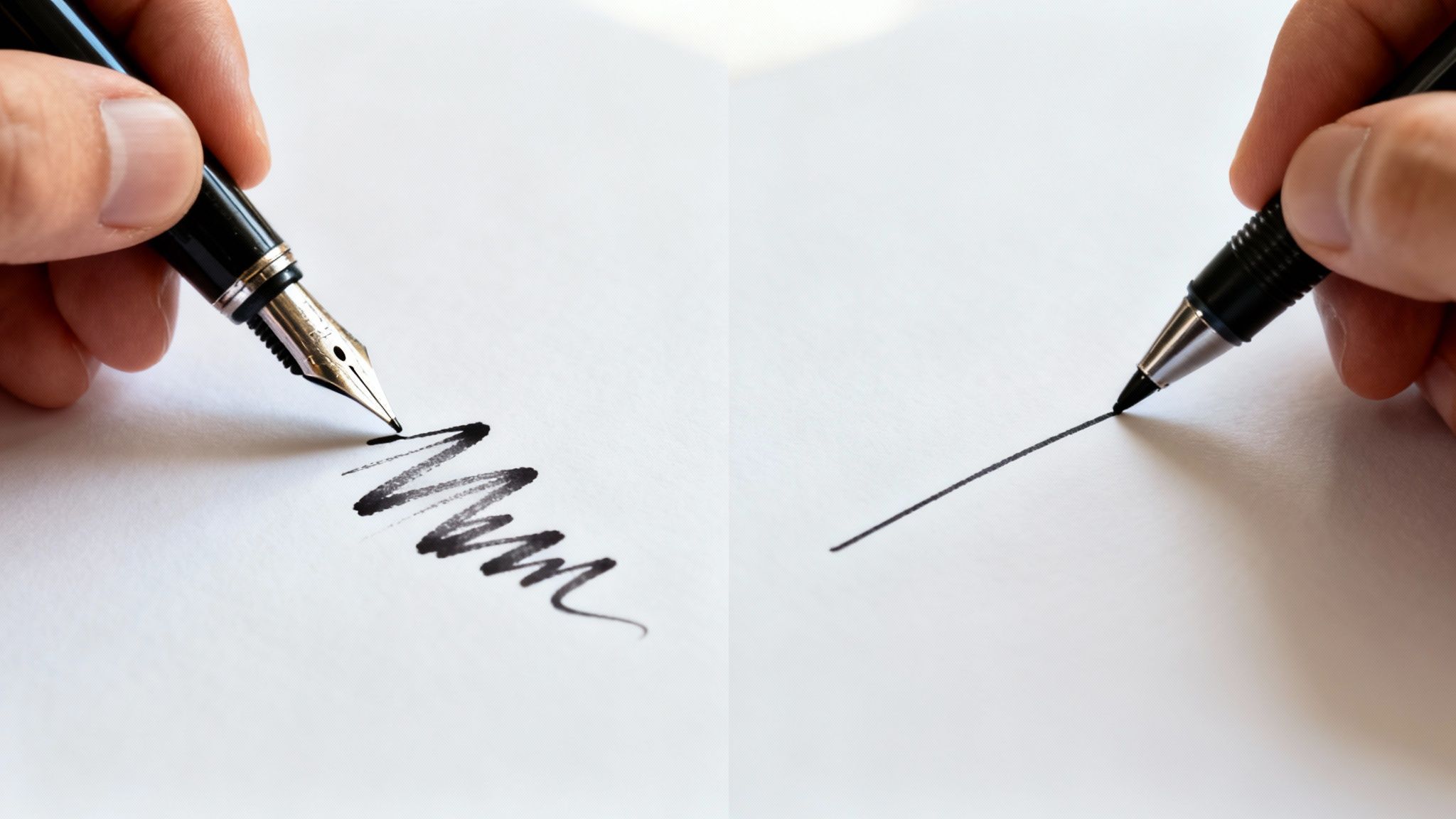
A fountain pen doesn’t just write; it glides. Its design is a little marvel of physics, using capillary action to pull liquid ink from a reservoir down to a delicate metal nib. Because of this, the ink flows with the slightest touch, requiring almost no downward pressure from your hand.
This effortless glide is more than just a pleasant sensation. Research into ergonomics highlights that reducing muscular effort can significantly decrease hand fatigue. For anyone who loves long writing sessions—whether you're journaling, drafting a novel, or taking study notes—a fountain pen can be a game-changer, turning a chore into a mindful, almost therapeutic ritual.
The Nuance of Pressure and Connection
The ballpoint pen, on the other hand, works on a completely different principle. It uses a tiny rotating ball coated in thick, oil-based ink. To get the words on the page, you have to apply direct pressure to roll that ball.
This pressure-based system is what makes the ballpoint so rugged and dependable. It can write on almost any surface, at any angle—even on old-school carbon copy forms where you need that force. But that same mechanism can create resistance, leading to hand cramps and strain over time. The experience is all about control and practicality, built for speed and getting things done.
"A ballpoint gets the job done. A fountain pen makes you want to find more jobs to do. One is a tool of necessity; the other is an instrument of joy."
This core difference in pressure fundamentally changes your connection to the act of writing. The fountain pen encourages a relaxed grip and a more deliberate pace, while the ballpoint is there for quick, on-the-go notes.
Exploring the Sensory Experience
Let's break down the distinct feeling each pen gives you. It’s not just about what you see on the page; it’s about what you feel through your fingertips.
- Fountain Pen Feel: People often describe this as "writing on a cushion of ink." The nib skates across the paper with a unique sound and feel—a soft whisper that connects you directly to the words you're forming.
- Ballpoint Pen Feel: This is a more direct and sometimes even scratchy experience. You feel the texture of the paper through the rolling ball, a practical feedback loop that lets you know the pen is working.
Ultimately, the choice comes down to your goal. Are you jotting down fleeting thoughts in a fast-paced meeting, or are you carving out quiet time to explore your ideas with intention?
Actionable Insight: Which Feel Fits Your Flow?
To find your perfect match in the fountain pen vs ballpoint debate, think about the physical act of your most common writing tasks.
- For Mindful Journaling: Choose a fountain pen. Its effortless glide and expressive lines encourage slower, more thoughtful writing, turning your journal into a sanctuary for reflection.
- For Rapid Note-Taking: Grab a ballpoint pen. Its reliability and quick-drying ink are perfect for capturing information quickly without worrying about smudges or interruptions.
- To Reduce Hand Strain: If you experience writing fatigue, a fountain pen is the clear winner. The minimal pressure it requires can offer immediate relief and make writing comfortable again.
- For All-Surface Versatility: When you need a tool that works on receipts, glossy paper, or multi-part forms, the ballpoint pen is your indispensable ally. Its tough, pressure-driven system performs where a fountain pen can't.
The writing experience is deeply personal. One pen inspires deliberation; the other enables action. The best way to really understand the difference is to try both and listen to what your hand—and your mind—tells you.
When you pick up a pen, you’re doing more than just choosing a way to write. You're stepping into one of two completely different worlds, each with its own culture, value, and global story. Understanding this difference is key to appreciating why one is a daily workhorse and the other a cherished craft.
The ballpoint pen is, without a doubt, the titan of the writing world. Its success is built on a simple, powerful formula: it’s accessible, reliable, and incredibly affordable. From classrooms in Mumbai to boardrooms in New York, the ballpoint is the go-to tool for getting things done.
This global dominance is no accident. It’s the result of a manufacturing powerhouse built for massive scale.
The Ballpoint Pen: A Global Commodity
The sheer scale of the ballpoint market is staggering. According to industry reports, China alone manufactures an incredible 38 billion ballpoints every year, making up a massive 80% of the world's total supply. This level of production drives costs way down, making ballpoints an easy, disposable choice for billions of people.
The numbers tell the story. While the global writing instruments market was valued at $23.06 billion in 2024, the ballpoint pen market alone hit $13.2 billion. This isn't just a market; it's a worldwide system designed to power education, commerce, and daily life with pure, practical efficiency.
The fountain pen, on the other hand, lives in a much more intimate and specialized space.
The Fountain Pen: A Niche of Artisanal Prestige
The fountain pen market operates on a completely different philosophy. It’s a world driven by craftsmanship, heritage, and the art of a beautiful writing experience. Its value isn't measured in billions of units sold, but in the quality of its materials, the precision of its nib, and the story behind its brand.
This focus on craft creates a smaller, more dedicated community. The global fountain pen market was valued at $955.94 million in 2024—just a fraction of the ballpoint’s empire. Where ballpoints thrive on volume, fountain pens thrive on value. They appeal to enthusiasts, collectors, and anyone looking for a "digital detox" through the mindful act of writing. You can discover more insights about these market differences from Verified Market Research.
A $2 disposable ballpoint offers convenience. A $200 heirloom fountain pen offers connection. The value is entirely different—one is about completing a task, the other is about elevating an experience.
Understanding this huge difference helps you see beyond the price tag. The choice between a fountain pen vs ballpoint is also a choice between a system of mass utility and one of artisanal prestige.
Practical Takeaways For Your Decision
So, what does this all mean for you? When you buy a pen, you’re not just getting a tool; you're buying into a specific value system.
- Choose a Ballpoint When: Your priority is pure function. You need a reliable, low-cost tool that works anywhere, anytime, without any fuss. The market is designed to give you exactly that—a dependable commodity.
- Choose a Fountain Pen When: You value the experience more than just utility. You're investing in craftsmanship, sustainability, and a more personal connection to your writing. Its market is built to deliver an exceptional, lasting tool.
Ultimately, knowing these dynamics empowers you to make a more informed choice. It helps you understand why one pen is a disposable workhorse and the other a potential heirloom, so you can align your purchase with what you truly value.
Analyzing Lifetime Cost And Environmental Impact
When you're deciding between a fountain pen and a ballpoint, the price tag is just the first page of a much longer story. To really get the full picture, we need to look past the upfront cost and think about the lifetime expenses and the environmental footprint each pen leaves behind. This isn't just about buying a pen; it's about making a conscious choice about sustainability and long-term value.
This side-by-side visualization shows just how different the market is for these two types of pens.
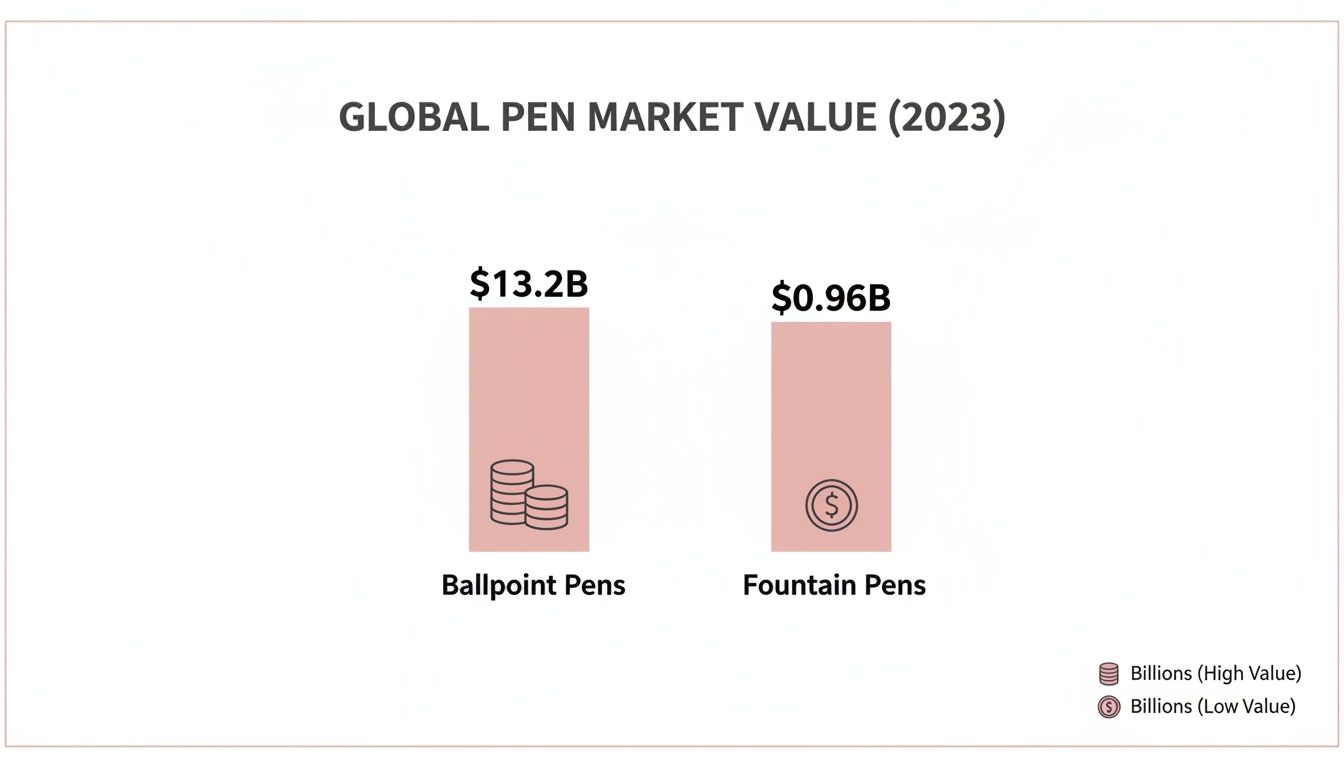
The numbers make it clear: ballpoints dominate the market through sheer volume, while fountain pens hold a smaller, more value-driven corner.
The True Cost of Convenience
At first glance, ballpoint pens seem like the obvious budget-friendly choice. You can grab a whole pack for a few dollars, making them incredibly accessible. But that low entry fee hides a cycle of disposability.
Most ballpoints are made to be used up and tossed out. This creates a constant need to buy more, and those small purchases really add up. While a single refill might be cheap, the cost of replacing entire pens over and over again can become surprisingly high over a lifetime of writing.
On the other hand, a quality fountain pen is a one-time investment in a tool built to last for generations. Yes, the initial cost is higher, but the ongoing expenses are incredibly low. A single bottle of ink can give you hundreds of refills for just a fraction of what you'd spend on disposable pens.
Calculating Your Long-Term Savings
Let's break down the economics with a real-world example. Say you use one disposable ballpoint pen every month. Over five years, that’s 60 pens headed straight for the landfill.
Now, imagine buying a single fountain pen and one bottle of high-quality ink. That initial purchase can easily last you those same five years—and probably many, many more. The savings aren't just in your wallet; you’re investing in one beautiful, durable tool instead of a constant stream of plastic.
Choosing a fountain pen is an act of economic foresight. It's shifting from a model of constant consumption to one of sustainable ownership, where a single quality tool serves you for years, not weeks.
This long-term value is at the heart of the fountain pen philosophy. It’s about buying better, not buying more often.
The Environmental Toll of Disposable Culture
The environmental impact is where the fountain pen vs ballpoint debate gets really interesting. The convenience of ballpoints comes at a huge ecological cost. China produces a staggering 38 billion ballpoint pens every year, which is about 80% of the world's supply. This massive scale supports the ballpoint market’s $13.2 billion valuation, which is more than 13 times larger than the fountain pen market.
Every one of those discarded pens, made from non-biodegradable plastic and metal, adds to our growing landfill and pollution problems.
A fountain pen, however, champions a "buy it for life" mindset. Here’s how it makes a difference:
- Refillable by Design: Using bottled ink completely eliminates the plastic waste from disposable pens and single-use cartridges.
- Durable Materials: Often crafted from metal, resin, or wood, these pens are built for longevity, not for the trash can.
- Repairable Parts: Many fountain pens can be repaired. With regular upkeep, like learning how to properly clean a fountain pen, your instrument will last a lifetime.
By choosing a refillable system, you actively reduce your plastic consumption and take a stand against disposable culture. It's a small but powerful step toward aligning your daily habits with your values, proving that a thoughtful choice can create a lasting positive impact.
Choosing The Right Pen For The Right Task
The perfect pen isn't about which one is universally "best"—it's about which one is best for the moment. Your writing tool should feel like a natural extension of whatever you're doing, whether you're jotting down a quick idea or sitting down for a deep, reflective journaling session.
Think of it like building a small "pen wardrobe." Having the right instrument ready for every part of your life makes all the difference.
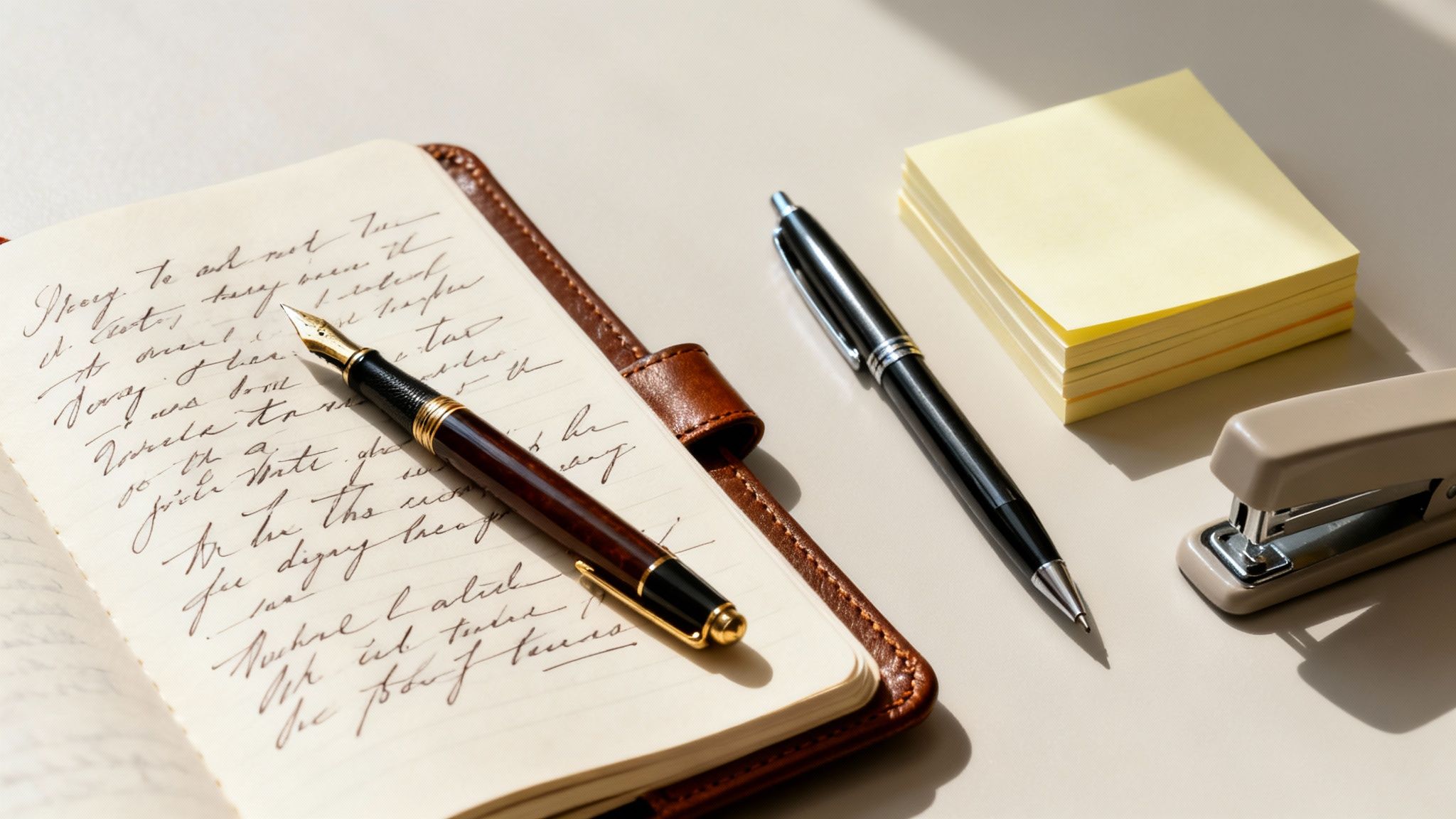
This approach ensures you’re always equipped, turning everyday writing tasks into more mindful and effective experiences. It’s all about choosing the right tool for the job, every single time.
The Fountain Pen For Deliberate Creation
A fountain pen truly shines when you need thoughtfulness, creativity, and a personal touch. Its effortless flow and expressive lines make it the perfect partner for tasks where the journey is just as important as the destination.
- Mindful Journaling and Gratitude: The smooth, pressure-free glide of a fountain pen encourages a slower, more intentional pace. This helps you connect deeply with your thoughts and turns journaling into a truly therapeutic ritual. For guidance on finding the perfect pen for this practice, check out our article on the ultimate writing companion for your journal.
- Creative Writing and Brainstorming: With a huge spectrum of ink colors available, you can spark inspiration and organize your ideas visually. Try assigning different colors to characters, themes, or plot points to bring your creative process to life.
- Personal Correspondence and Signatures: Writing a heartfelt letter or signing an important document with a fountain pen adds a layer of elegance and sincerity that a simple click pen just can't match. The unique character of the nib makes your signature truly your own.
Think of a fountain pen as your instrument for quiet moments. It’s for the times you want to slow down, connect with your inner voice, and create something that feels truly meaningful.
The Ballpoint Pen For Unstoppable Action
When life is moving fast and you need a tool that can keep up, the ballpoint pen is your reliable workhorse. Its rugged design and instant-dry ink are built for pure efficiency and performance under pressure.
- Rapid Note-Taking in Meetings: In a fast-paced environment, you need a pen that starts instantly and won't smudge. The ballpoint is perfect for capturing key points without missing a beat.
- Filling Out Forms and Carbon Copies: The firm pressure required for a ballpoint is essential for multi-part forms, ensuring your writing transfers cleanly through every layer.
- Everyday Carry (EDC): Tucked into a pocket, clipped to a planner, or tossed in a bag, a ballpoint is always ready to go. It writes on almost any surface and can handle the bumps of daily life without leaking or drying out.
The global market reflects this practical dominance. While pens hold a 36% revenue share in the writing instruments industry, it's the ballpoint that leads the charge in daily use. A recent study even found that 83% of people use a ballpoint daily, cementing its status as the ultimate tool for getting things done.
Situational Recommendations
The debate over fountain pen vs ballpoint is best settled by the situation. Instead of picking one over the other, learn to select the right one for the task at hand. This guide on how to choose the right pens for note-taking offers more practical advice for matching pens to your needs.
By understanding where each pen excels, you can elevate every writing task, from the most mundane to the most meaningful.
You've Got Questions, We've Got Answers
Diving into the world of beautiful writing tools can bring up a few questions, especially when choosing between two very different philosophies like the fountain pen and the ballpoint. Let's clear up some of the most common uncertainties to help you find the perfect partner for your story.
Aren't Fountain Pens Messy and Hard for Beginners to Use?
This is one of the most persistent myths, but modern fountain pens are designed with pure reliability in mind. While there's a small, graceful learning curve, it’s far more approachable than you might think.
Many beginner-friendly pens use simple cartridge systems, which means you can pop in a new ink supply without ever touching a bottle. It makes refilling clean, quick, and completely effortless.
Leaks are also incredibly rare in a well-maintained pen. The secret is starting with a trusted model known for its smooth nib, holding it at a natural 45-degree angle, and letting the pen’s own weight do the work. With just a little practice, using a fountain pen becomes a deeply satisfying ritual, not a chore.
Which Pen Is Better For Left-Handed Writers?
This is a fantastic question, as left-handed writers face unique challenges like smudging. The great news is that both pen types can be excellent choices, but they require slightly different strategies to master.
Ballpoint pens are often the go-to because their oil-based ink dries almost instantly, which dramatically cuts down on smearing. However, some lefties find the "pushing" motion across the page can make the ball feel a bit scratchy or inconsistent.
A fountain pen can actually offer a far superior experience for left-handers. The secret lies in pairing a fast-drying ink with a fine or extra-fine nib. This beautiful combination lays down a crisp, thin line with less ink, minimizing dry time and preventing smudges. Plus, the pressure-free glide can feel much more comfortable and natural than pushing a ballpoint.
For left-handed writers, the fountain pen vs. ballpoint decision isn't about which is "better," but about finding the right combination of ink and nib to create a seamless, smudge-free experience.
Is Investing In An Expensive Pen Actually Worth It?
This is such a personal question, and the answer depends entirely on what you value. The "worth" of a beautiful writing tool is measured in experience, longevity, and personal connection—not just pure function.
For a ballpoint, spending more usually gets you a more robust and comfortable body, a smoother clicking mechanism, and a higher-quality refill that writes like a dream. You're paying for better design and durability.
With a fountain pen, the investment is in pure craftsmanship. A higher price often means premium materials like resin or precious metals, intricate design details, and most importantly, a superior nib. Gold nibs, for instance, offer a softer, more responsive feel that actually adapts to your unique writing style over time.
A quality pen can be so many things:
- A "buy it for life" tool that reduces waste and offers incredible long-term value.
- A piece of functional art that brings a little joy to your daily tasks.
- An heirloom to be passed down through generations, carrying stories with it.
If you value the sensory experience of writing, appreciate fine craftsmanship, and believe in owning things that last, then a quality pen is an incredibly worthwhile investment. If you simply need a tool that gets the job done and you wouldn't mind losing it, a more affordable option is the smarter choice.
At Mesmos, we believe the tools you use every day should inspire mindfulness and bring beauty to your routine. Discover our collection of thoughtfully designed writing instruments and gifts that help you connect with your inner voice and tell your unique story. Explore our collection at https://mesmos.co.


