

Imagine having a personal coach for happiness, a gentle guide leading you toward more joy in your everyday life. That's the beautiful promise of a guided gratitude journal. It's a simple yet profound tool that swaps the pressure of a blank page for thoughtful prompts and a clear path forward, making it easier than ever to build a consistent, life-changing habit of appreciation.
How a Guided Gratitude Journal Unlocks a Happier You
Ever feel the weight of a busy schedule, struggling to find just a moment of calm? Whether you're a hardworking mom juggling a million things or a wellness advocate looking to deepen your practice, the blank page of a regular notebook can sometimes feel more intimidating than inspiring.
A guided gratitude journal is designed to solve that exact problem. It acts as a gentle roadmap for your thoughts, giving you just enough structure to nurture reflection instead of demanding it. Think of it as a quiet conversation with your most optimistic self, where thoughtful questions lead you to discover the good that's already in your life. This isn't about ignoring challenges; it's about training your focus to see the pockets of light, no matter how small they seem.
The Power of Prompts
The real magic of a guided journal is in the prompts. These are carefully crafted questions designed to spark reflection and guide your awareness. Instead of sitting there wondering, "What should I write about?" you’re greeted with gentle nudges like:
- "What is one small thing that brought you joy today?"
- "Describe a recent challenge and what you learned from it."
- "Who is someone you are thankful for, and why?"
This structured approach makes the practice feel doable and sustainable. Research shows that when we make gratitude a deliberate choice—not just a fleeting feeling—it has incredible benefits for our mental and emotional health. It helps shift your perspective from what’s missing to what’s already there.
A guided practice provides the framework to build a resilient and positive mindset. It’s not just about writing; it’s about intentionally rewiring your brain to see the good.
Guided Gratitude Journal vs Blank Notebook
So, what really sets a guided journal apart from a simple blank notebook? Sometimes seeing the difference side-by-side makes it all click.
Here’s a quick comparison to show you how a guided gratitude journal stacks up.
| Feature | Guided Gratitude Journal | Blank Notebook |
|---|---|---|
| Structure | Provides daily prompts and organized sections. | A completely blank canvas requiring self-direction. |
| Consistency | The structure encourages a regular, daily habit. | Requires more discipline to maintain momentum. |
| Focus | Directs your thoughts toward specific areas of gratitude. | Offers freedom but can lead to unfocused writing. |
| Beginner-Friendly | Ideal for newcomers, removing the "blank page" anxiety. | Can be overwhelming for those new to journaling. |
While a blank notebook offers total freedom, a guided journal gives you the support and direction to build a meaningful, lasting gratitude practice with ease.
The Science Behind Why Gratitude Rewires Your Brain
Ever wonder why saying "thank you"—and truly feeling it—leaves you with such a warm, lasting glow? It’s not just a passing mood. It’s a powerful mental workout that quite literally reshapes your brain for happiness and resilience.
When you consistently practice gratitude, you’re strengthening the neural pathways tied to positivity. Think of your brain like a garden. The thoughts you dwell on are the seeds you plant. Focusing on stress or frustration is like watering weeds. A guided gratitude journal helps you intentionally plant and nurture seeds of appreciation, which, over time, bloom into a more positive and peaceful mind.
How Gratitude Changes Your Brain Chemistry
The science here is truly inspiring. When you pause to feel and express gratitude, your brain releases a rush of feel-good neurotransmitters. These are your body’s natural mood-lifters and stress-reducers.
- Dopamine: Often called the "reward chemical," dopamine gets a little boost when you find something to be grateful for, creating a wonderful feeling of pleasure and motivation.
- Serotonin: This is the neurotransmitter that helps regulate your mood. A regular gratitude practice has been shown to increase its production, leading to lasting feelings of well-being.
This chemical shift does more than just make you feel good in the moment. It also helps lower cortisol, the body's primary stress hormone. One study from the University of California found that people who practiced gratitude consistently had 23% lower cortisol levels in the morning! This can lead to better sleep, a stronger immune system, and a calmer outlook—a game-changer for anyone navigating the daily pressures of life.
The structured prompts in a guided journal essentially act as your personal trainer for this mental workout, making it easy to build the habit and strengthen those positive connections.
Gratitude is a conscious choice, not just a fleeting feeling. By choosing to focus on what you’re thankful for, you are actively participating in your own well-being and building a foundation for lasting happiness.
The Proven Impact of a Structured Practice
The real magic happens with consistency, and that's where a guided journal shines. It turns gratitude from a random thought into a deliberate daily ritual—an approach that’s backed by some serious psychological research.
A comprehensive meta-analysis published in the Journal of Happiness Studies found that gratitude interventions consistently boost well-being and reduce depressive symptoms. This effect is especially noticeable when the practice is woven into daily life, becoming a small but mighty ritual.
This visual map shows exactly how the core pieces of a guided gratitude journal—prompts, structure, and happiness—all work together.
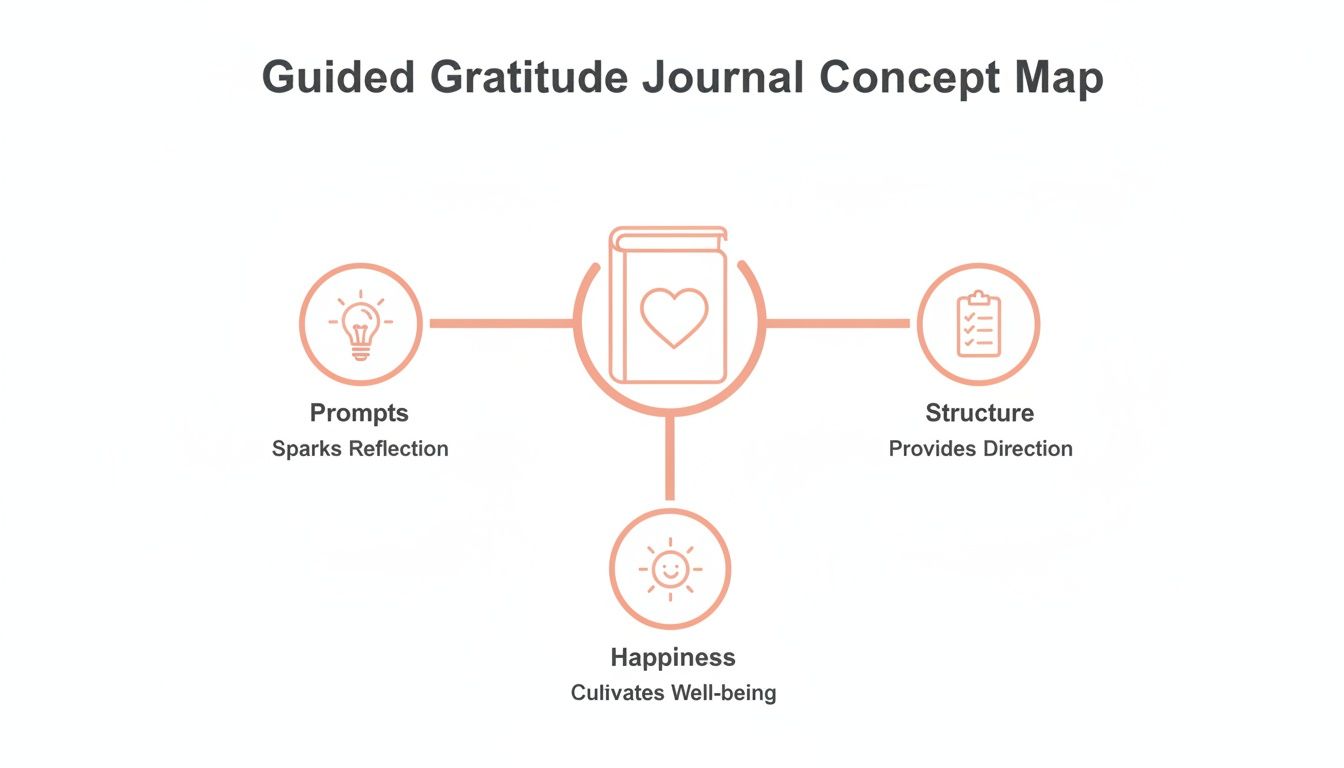
As you can see, the deliberate structure and thoughtful prompts are the engines that drive the ultimate outcome: a genuine increase in happiness.
Building Resilience One Entry at a Time
This brain-rewiring process doesn't just boost your mood; it builds profound emotional resilience. When you train your mind to scan for the good, you become much better equipped to handle life's inevitable curveballs. You start to see setbacks as opportunities and find strength in appreciating what remains constant.
For example, after a tough day at work, a gratitude practice can help shift your focus from a single negative moment to the supportive coworker who offered help or the project you’re genuinely proud of. It’s a small shift, but it’s a powerful one.
This ability to reframe your perspective is a cornerstone of mental fortitude. The benefits of a gratitude practice ripple out far beyond the pages of your journal, influencing how you navigate your entire life. Just a few minutes of guided reflection each day can create a significant, scientifically-proven shift in your overall well-being.
Starting Your Guided Gratitude Practice Today
Ready to turn that spark of inspiration into a beautiful, lasting habit? Starting your journey with a guided gratitude journal is so much simpler and more joyful than you might think. It’s not about finding a perfect moment or writing flawless entries; it’s about gently inviting a few minutes of peace and reflection into your day.

The first step can feel like the hardest, but we’re here to make it feel effortless. Let's explore how you can weave this practice into your life with grace and ease, starting right now.
Weave Gratitude into Your Day with Habit Stacking
One of the most powerful ways to build a new habit is to link it to one you already have. This clever technique, known as habit stacking, takes willpower out of the equation and makes your gratitude practice feel like a natural part of your routine. Instead of trying to carve out extra time, you simply attach your new habit to something you already do without thinking.
Think about your daily rituals. Do you always start your day with a cup of coffee? Or maybe you have a skincare routine you follow every night before bed? These are the perfect anchors for your new practice.
Action Point: Identify one daily habit you never miss (like brushing your teeth or making coffee). For the next week, place your journal right next to where you do that habit. The existing habit is now your trigger to open your journal for just two minutes.
The secret to consistency isn't finding more time; it's linking your new intention to an established routine. By doing this, your existing habit becomes the trigger for your gratitude practice.
This simple connection makes journaling feel less like a chore and more like a cherished moment of calm. To get started, you can also explore some simple ways to practice gratitude daily.
Your Simple 5-Minute Gratitude Routine
The key is to start small. You don’t need to set aside hours to feel the benefits; just five consistent minutes can create a profound shift in your mindset. Here’s a simple routine to get you started, perfect for pairing with your morning coffee or evening tea.
- Find Your Anchor: Choose a consistent time and place. Will you journal at your kitchen table with your morning coffee or in a comfy chair before you sleep?
- Minimize Distractions: Put your phone on silent and find a quiet spot. Give yourself just a few minutes of uninterrupted peace.
- Open Your Journal: Take a deep breath as you open your guided gratitude journal. Let this simple action signal to your mind that it’s time to reflect.
- Engage with a Prompt: Read the day's prompt and just see what comes up. Don't overthink it—just write whatever comes to mind first.
- Write Freely: Spend a few minutes putting your thoughts on paper. It could be a single sentence or a few short paragraphs. There are no rules here.
- Close with Intention: Reread what you wrote and let that feeling of gratitude settle in. Close your journal feeling a little lighter and more centered.
This brief but meaningful ritual can easily become the most peaceful part of your day—a small act of self-care that recharges your spirit.
Creating a Peaceful Space for Reflection
Your environment plays a huge role in your mindset. While you can absolutely practice gratitude anywhere, creating a designated space can make your ritual feel even more special and intentional. This doesn't mean you need a major overhaul—just a few thoughtful touches can make all the difference.
Action Point: This weekend, find one small corner in your home to make your own. Add one comforting item—a soft pillow, a small plant, or a favorite candle. Use this as your dedicated space for your five-minute gratitude practice.
By creating this simple sanctuary, you’re sending a clear message to yourself: this time is sacred, and you are worthy of it. This small setup makes starting your practice feel less like an effort and more like a retreat.
Powerful Prompts to Deepen Your Gratitude Practice
The real magic of a guided gratitude journal isn’t just about writing—it's about the prompts. Think of them as gentle nudges, the kind of thoughtful questions that unlock deeper reflection and turn a simple habit into a meaningful practice of self-discovery. They are your personal guide, helping you notice the little pockets of joy and strength that so often get lost in our busy lives.

This variety is what keeps the journey feeling fresh and alive. It ensures that whether you’re navigating a tough week or celebrating a personal win, your journal remains a powerful tool for finding perspective and peace.
Prompts for Self-Compassion and Inner Strength
It’s easy to be kind to others, but we often forget to show ourselves the same grace. Gratitude can be a powerful act of self-love, reminding you of just how resilient and worthy you are.
These prompts are designed to help you turn that focus inward and appreciate the incredible person you are, right now.
- What is a recent challenge you navigated, and what strength did it reveal in you?
- Describe a quality about yourself that you are genuinely proud of.
- What is one thing your body does for you every single day that you are thankful for?
- Recall a mistake you made and what it taught you about growth and forgiveness.
Engaging with these questions builds a quiet but strong foundation of self-respect. It’s a beautiful reminder that you are capable, resilient, and deserving of your own appreciation.
Gratitude isn't just about acknowledging the external world; it's also about honoring your own journey and the strength you've cultivated along the way.
Appreciating the People in Your Life
Our connections are one of life’s greatest sources of happiness. A guided practice helps you move beyond a simple "I'm grateful for my friends" to truly explore the depth and beauty of your relationships. This kind of specific reflection can strengthen your bonds and fill you with a profound sense of connection.
While prompts are powerful for individual reflection, exploring various journal prompts for couples can also be a wonderful way to enhance shared gratitude and strengthen your bond.
For your individual practice, try these prompts to focus on the amazing people in your life.
- Think of someone who has supported you recently. What specific action did they take that made a difference?
- Describe a favorite memory with a loved one. What made that moment so special?
- Who is someone who always makes you laugh? What do you appreciate about their sense of humor?
- What is a piece of advice a friend or family member gave you that you still carry with you?
Finding Gratitude in Everyday Moments
So much of life’s beauty is hidden in the small, ordinary details we tend to overlook. A core purpose of a guided gratitude journal is to train your mind to notice these simple joys, shifting your entire perspective to find wonder in the mundane.
The impact of this daily practice is remarkable. Scientific studies from institutions like the Greater Good Science Center at UC Berkeley have consistently shown that gratitude journaling reduces stress and improves sleep quality for a significant number of participants.
Here are a few prompts to help you zoom in on the small wonders of your day.
- What was the best thing you ate or drank today? Describe the experience.
- Notice something in nature that caught your eye—a colorful sunset, a unique flower, or the sound of rain.
- What song did you listen to that instantly lifted your spirits?
- Describe a moment of comfort you experienced, like the warmth of a blanket or a quiet cup of tea.
Here are a few more ideas to get you started on your weekly practice.
Sample Gratitude Prompts for Your Week
| Day | Prompt Focus | Example Prompt |
|---|---|---|
| Monday | Your Inner World | What is one thing you’re proud of yourself for accomplishing recently? |
| Tuesday | Relationships | Who made you smile today, and why? |
| Wednesday | The Little Things | Describe a simple pleasure you enjoyed today, like the smell of coffee or a good book. |
| Thursday | Past & Growth | What lesson from your past are you grateful for now? |
| Friday | The Senses | What was the most beautiful thing you saw today? |
| Saturday | Comfort & Joy | What part of your home are you most grateful for? |
| Sunday | Future Hopes | What is one thing you are looking forward to in the coming week? |
By consistently answering questions like these, you build a rich inner library of positive moments to draw from. Your journal becomes a testament to the fact that even on the hardest days, there is always something good to be found.
Choosing a Journal That Reflects Your Values
Your journal is so much more than paper and binding—it’s a trusted partner on your wellness journey. Picking a guided gratitude journal that really clicks with you is an act of intention, one that can deepen your practice and make you excited to open its pages day after day. The right one just feels like an extension of your commitment to yourself.

When you hold a journal that’s been thoughtfully designed and crafted from materials that feel good, it elevates the entire experience. It becomes a physical reminder of why you started, making each entry feel just a little more special.
Look for Quality and Thoughtful Design
Let's be honest, the physical details of your journal really do matter. A beautiful, well-made journal is a joy to use and can be the little push you need to stay consistent. Look for features that make your daily ritual feel effortless, not complicated.
- Durable Cover: You want a sturdy cover that protects your thoughts and holds up to daily life, whether it’s tucked into a bag or sitting on your nightstand.
- High-Quality Paper: Look for thick, smooth paper that prevents ink from bleeding through. It just makes the act of writing so much more pleasant.
- Lay-Flat Binding: A journal that opens flat is a game-changer. It’s so much easier to write in, letting you use the entire page without wrestling with the spine.
- Inspiring Aesthetics: Choose a design that brings you a little spark of joy. Its visual appeal can be a surprisingly powerful motivator.
When a journal feels good in your hands, you’re far more likely to reach for it. This small detail can be the difference between a fleeting intention and a lasting, cherished habit.
The Power of a Purpose-Driven Purchase
Choosing your journal can also be a chance to support a mission you truly believe in. When you pick a brand that aligns with your personal values, the journal itself becomes a symbol of the positive change you want to see in the world. This turns a simple purchase into a deeply meaningful act.
Your choice of journal can be a reflection of your gratitude in action. By supporting brands that give back, you extend the positive impact of your practice beyond your own life and into the community.
For example, at Mesmos, every purchase helps fund initiatives that empower women and support single parents in need. This means that with every page you fill, you’re not only cultivating your own well-being but also contributing to someone else's.
That connection adds a profound layer of significance to your practice. You’re investing in your own growth while simultaneously investing in a cause that matters.
A Meaningful Gift for Others
This idea of value-aligned purchasing also makes a guided gratitude journal an incredibly thoughtful gift. It's clear people are looking for more personalized wellness tools. For instance, search trends show that interest in a 'gratitude journal for kids' is twice as high as for a 'gratitude journal for women,' which points to wonderful gifting opportunities for teachers and families. If you're curious, you can explore the full report on digital journaling interest.
When you give a journal from a brand with a purpose, you're offering more than just a notebook—you're sharing a story and a chance to make a difference. It’s a gift that says, "I care about your well-being, and I care about our world." This thoughtful approach makes the act of giving just as rewarding as the gift itself.
Your Lifelong Journey with Gratitude
You now have the keys to a more joyful and resilient life. This journey with your guided gratitude journal isn’t about reaching some perfect, final destination—it's about learning to see the beauty in the path itself, one heartfelt entry at a time. The tools and ideas we've talked about are your first steps in what can become a beautiful, lifelong practice.
The power behind this simple habit is profound. As we've seen, it's a practice deeply rooted in science, capable of rewiring your brain to build resilience, lower stress, and find a deep, lasting sense of happiness. Every prompt you answer is an act of intention, training your mind to seek out the good that’s already all around you.
From Daily Habit to Lifelong Perspective
With a little consistency, this practice will grow from a daily activity into a new way of seeing the world. Gratitude stops being a chore to check off your to-do list; instead, it becomes the lens through which you view your life. It’s the art of finding significance in the ordinary and uncovering strength even in your challenges.
Gratitude turns what we have into enough, and more. It transforms denial into acceptance, chaos into order, and confusion into clarity. It makes sense of our past, brings peace for today, and creates a vision for tomorrow.
This shift in perspective is where the real magic happens. You start to appreciate the small wins, the quiet moments, and the simple comforts with a real sense of wonder. Your journal becomes a testament to your growth—a personal record of all the light you’ve learned to see.
Your Journey Begins Now
You have everything you need to begin. Just remember to be gentle with yourself. There’s no perfect way to do this. Simply open your journal, pick a prompt that speaks to you, and let your thoughts flow without judgment.
You are ready to embrace gratitude not just as a practice, but as a cornerstone of your life. Consider this your personal invitation to begin a wonderful journey of self-discovery and joy, one word at a time.
Your Questions, Answered
Stepping into a new practice like gratitude journaling always brings up a few questions. That’s a beautiful sign that you’re ready to grow! If you're wondering about the practical side of using a guided gratitude journal, you're definitely not alone.
Let's walk through some of the most common questions to help you start your journey with clarity and confidence. Think of these as gentle reassurances, clearing the path so you can focus on what truly matters—cultivating more joy in your life.
How Much Time Should I Spend Journaling Each Day?
The best part of this practice is how wonderfully flexible it is. You don’t need to block out huge chunks of your day to feel the benefits. In fact, just 5 to 10 minutes is more than enough to start rewiring your mindset for the better.
The goal isn't to hit a specific time limit, but to create a consistent, gentle rhythm. A guided journal makes this so much easier by providing prompts, so you can spend your time on meaningful reflection instead of wondering what to write. Start small and find a pace that feels nurturing—never like another chore on your to-do list.
What if I Don’t Feel Grateful Every Day?
This is such an important question, and the feeling is completely normal. Life is full of ups and downs, and gratitude isn't about forcing happiness or ignoring real challenges. On tough days, your journal can be a source of comfort, not pressure.
The prompts are there to help you shift your focus, even just a little. Instead of searching for something big and monumental, you can appreciate something beautifully simple: the comfort of a warm blanket, a quiet moment to yourself, or the taste of your morning coffee.
The practice is about finding small pockets of light, especially on cloudy days. It’s a tool for resilience, not a demand for constant positivity.
Can a Guided Journal Really Improve My Mental Health?
Absolutely. While it’s not a substitute for professional medical advice, a mountain of research shows a powerful link between a consistent gratitude practice and improved well-being. Think of it as a proactive way to care for your mind.
Engaging with a guided gratitude journal has been shown to reduce symptoms of stress, promote better sleep, and increase your overall sense of happiness. By intentionally training your brain to notice and appreciate the good, you're actively building emotional resilience and cultivating a more optimistic outlook. This small daily habit creates ripples of positive change that extend far beyond the page.
Ready to begin your own journey? The Mesmos guided gratitude journal is designed with a purpose—to help you find joy in your daily life while making a positive impact on the world. Discover the perfect journal to support your practice and our mission at https://mesmos.co.


