

Does your to-do list ever feel like a cage? A horizontal weekly planner can completely transform that feeling, laying out your days not as rigid, boxed-in columns but as an open, flowing landscape. It’s a simple shift that offers a panoramic view, inspiring you to map out your week with profound intention and a touch of creative spirit.
Find Your Flow With A Weekly Horizontal View
Imagine turning your weekly planning session from a stressful chore into a quiet, mindful ritual. That’s the true gift of a horizontal planner. Unlike vertical layouts that often feel restrictive and hyper-focused on back-to-back appointments, the horizontal format gives your week essential breathing room.
This approach is less about cramming tasks into tiny time slots and more about designing a week that feels balanced and aligned with what truly matters. Research from the Journal of Consumer Research suggests that the act of writing plans by hand—a process known as "embodied cognition"—deepens our commitment to our goals. The horizontal layout encourages this by providing an open canvas to connect work deadlines, personal goals, and quiet moments in a natural, harmonious way.
It’s a subtle but powerful difference, isn't it? Before we go deeper, let's quickly see how these two popular layouts stack up side-by-side.
Horizontal vs Vertical Planner At a Glance
This quick comparison table breaks down the core differences between horizontal and vertical weekly planner layouts. Think of it as a cheat sheet to help you decide which style best fits your life.
| Feature | Horizontal Planner | Vertical Planner |
|---|---|---|
| Best For | Task-based planning, journaling, creative notes, habit tracking. | Appointment-heavy schedules, time-blocking, hourly planning. |
| Layout | Days of the week are in rows, running left to right across the page. | Days of the week are in columns, running top to bottom. |
| Space | Ample, unstructured space for each day. Great for lists and notes. | Structured time slots (e.g., 8 AM, 9 AM) for detailed scheduling. |
| Feel | Flexible, open, and narrative-driven. Like reading a story of your week. | Structured, linear, and time-focused. Like looking at a calendar. |
Ultimately, the best choice is the one that empowers you to feel more organized and less overwhelmed. For many, the open canvas of a horizontal layout is the clear winner for intentional living.
The Power of Perspective
The simple left-to-right flow of a horizontal planner weekly layout mirrors how we read. This familiar, narrative style helps reduce mental friction, making planning feel more intuitive and calm. It’s an open invitation to write a week you’re genuinely excited to live, not just one you have to survive.
This perspective is resonating with more people than ever. The growing planner market reflects a collective search for tangible ways to find calm in the chaos.
A horizontal planner doesn't just organize your time; it organizes your thoughts. By giving you an open canvas, it encourages you to think more expansively about your week, blending your productivity with your well-being.
The image below captures the core ideas that make this layout so effective for living with intention.

As you can see, creating that "breathing room," gaining a panoramic view of your commitments, and turning planning into a mindful ritual are the foundational pillars of the horizontal method.
Why This Simple Layout Works Wonders for Your Brain
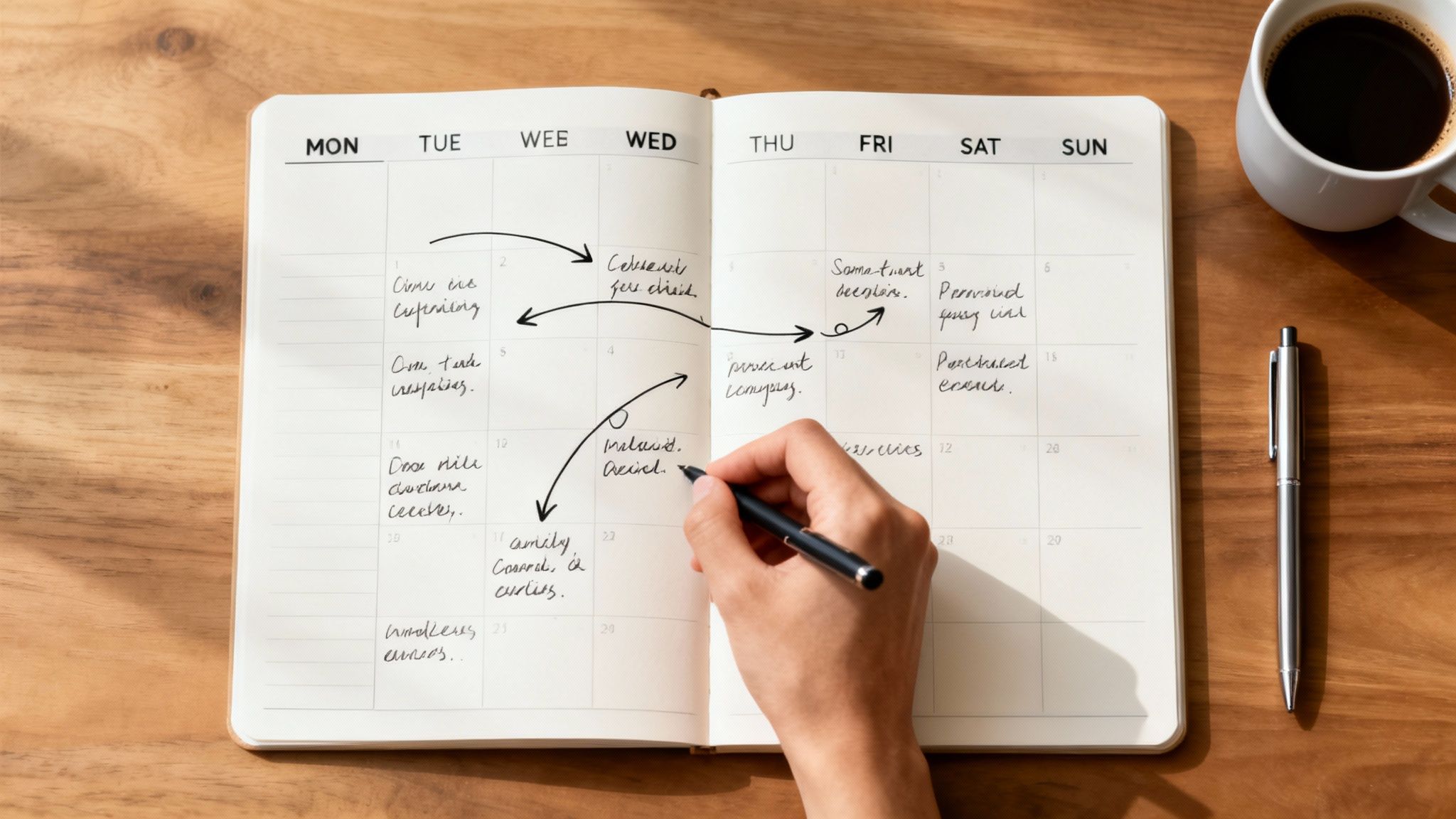
Have you ever picked up a tool and it just felt right? That’s the magic of a horizontal weekly planner. Its real power lies in how perfectly it aligns with the way our brains are naturally wired. We tend to think in a narrative flow, processing information from left to right.
A horizontal layout mirrors that exact journey. It lays out your week like a story unfolding, not a jumble of disconnected boxes. This simple visual narrative makes planning feel intuitive and far less overwhelming. It's a small shift in design that brings a huge amount of clarity.
The Science of Pen to Paper
There's something transformative about physically writing things down. When you put pen to paper, you activate a complex neural network that typing simply can't touch. This is called embodied cognition—the powerful link between your physical movements and your mental processes. Studies from Princeton University found that students who took notes by hand demonstrated better conceptual understanding than those who typed.
This mind-body connection makes your plans feel more real and solidifies your intentions, making you much more likely to follow through. It’s like making a powerful contract with yourself, turning abstract goals into something you can see and touch.
By physically writing in a horizontal planner, you are not just organizing tasks; you are actively programming your brain for success and clarity, turning abstract intentions into concrete action plans.
This is exactly why so many of us still cherish our physical planners, despite the resilience of physical planners in a digital age. Many people use their phones for quick reminders but turn to physical planners, like Mesmos' horizontal layouts, for mindful, intentional planning.
Cultivating Control and Inner Peace
Ultimately, using a horizontal weekly planner is about so much more than managing your schedule. It’s a practice in clearing mental clutter and taking back control over your life. Every week, you’re handed a beautiful blank canvas to design a life that feels truly yours.
This simple ritual can be transformative. It’s a form of what psychologists call "self-regulation," where you actively direct your attention and energy toward your goals. This practice is scientifically linked to reduced stress and a greater sense of well-being. You’re not just fitting in appointments; you’re intentionally carving out space for what matters most—your peace, your purpose, and your growth.
Practical Ways to Master Your Horizontal Weekly Planner
So, you have this beautiful new planner. Now what? It's time to transform those blank pages into a blueprint for a week filled with purpose. A horizontal planner weekly layout is your canvas, and we're moving beyond just appointments. Let's explore simple, powerful ways to design a week that truly serves you.
Think of each day’s row as a container for your intentions. A fantastic way to fill it is with time blocking, a technique where you assign a specific job to every part of your day. Instead of a messy to-do list, you create a clear visual map for your time and energy.
It’s as simple as blocking out 9 AM to 11 AM for "Deep work on project X" or 3 PM to 4 PM for "Mindful walk." This act creates boundaries, protects your focus, and silences that nagging voice wondering what to tackle next.
Build Better Routines With Habit Tracking
Your planner is the perfect partner for building habits that stick. The spacious horizontal layout has plenty of room to add a small habit tracker each week. You can list routines you’re building—like "Morning Meditation," "Hydrate," or "Read 10 Pages"—and get the satisfaction of checking them off.
Seeing progress visually is incredibly motivating. As explained in James Clear's Atomic Habits, this creates a "chain of success" you won’t want to break, turning tiny actions into lasting change. For extra inspiration, incorporate a daily habit tracker printable into your weekly spread.
The secret to mastering your planner is to see it not just as a tool for what you have to do, but as a space for who you want to become. Use it to schedule your priorities, track your growth, and celebrate your progress.
Action Point: Your First Creative Planning Session
The magic of a horizontal layout is its flexibility. It's an invitation to design a system that fits your unique life. Ready to start? Try one of these this week:
- Meal Planning: Dedicate a small corner each day for dinner ideas. This removes daily decision fatigue and streamlines grocery shopping.
- Gratitude Journaling: At the end of each day’s row, write down one thing you’re grateful for. This simple practice is proven to shift your mindset toward positivity.
- Creative Brainstorming: Use the open space to mind-map project ideas or sketch out a new design. Let it be a home for possibilities, not just obligations.
Your horizontal weekly planner is ready to be so much more than a scheduler. Take a look at these inspiring ideas to transform it into a powerful tool for personal growth.
| Technique | How It Works | Best For |
|---|---|---|
| Mindful Moments | Dedicate a small box each day to write down a single word or feeling you want to focus on. | Anyone looking to bring more presence and intention to their day-to-day life. |
| Quote of the Week | Write an inspiring quote at the top of your weekly spread to set a positive tone. | Creatives, students, or anyone needing a little boost of motivation. |
| Expense Tracking | Use a small section to log daily spending to stay on top of your budget. | Anyone focused on financial wellness and saving for a big goal. |
| Workout Log | Quickly note down your daily exercise, whether it's a gym session, a yoga class, or a walk. | Fitness enthusiasts or anyone trying to build a consistent exercise routine. |
These are just a jumping-off point. The more you experiment, the more you'll discover what works for you.
By mixing structured methods like time blocking with mindful practices like gratitude journaling, your horizontal planner weekly layout becomes more than just an organizer. It evolves into a personalized command center for a well-designed life, bringing clarity, intention, and a sense of calm to even your busiest weeks.
Choosing the Perfect Horizontal Planner for Your Lifestyle
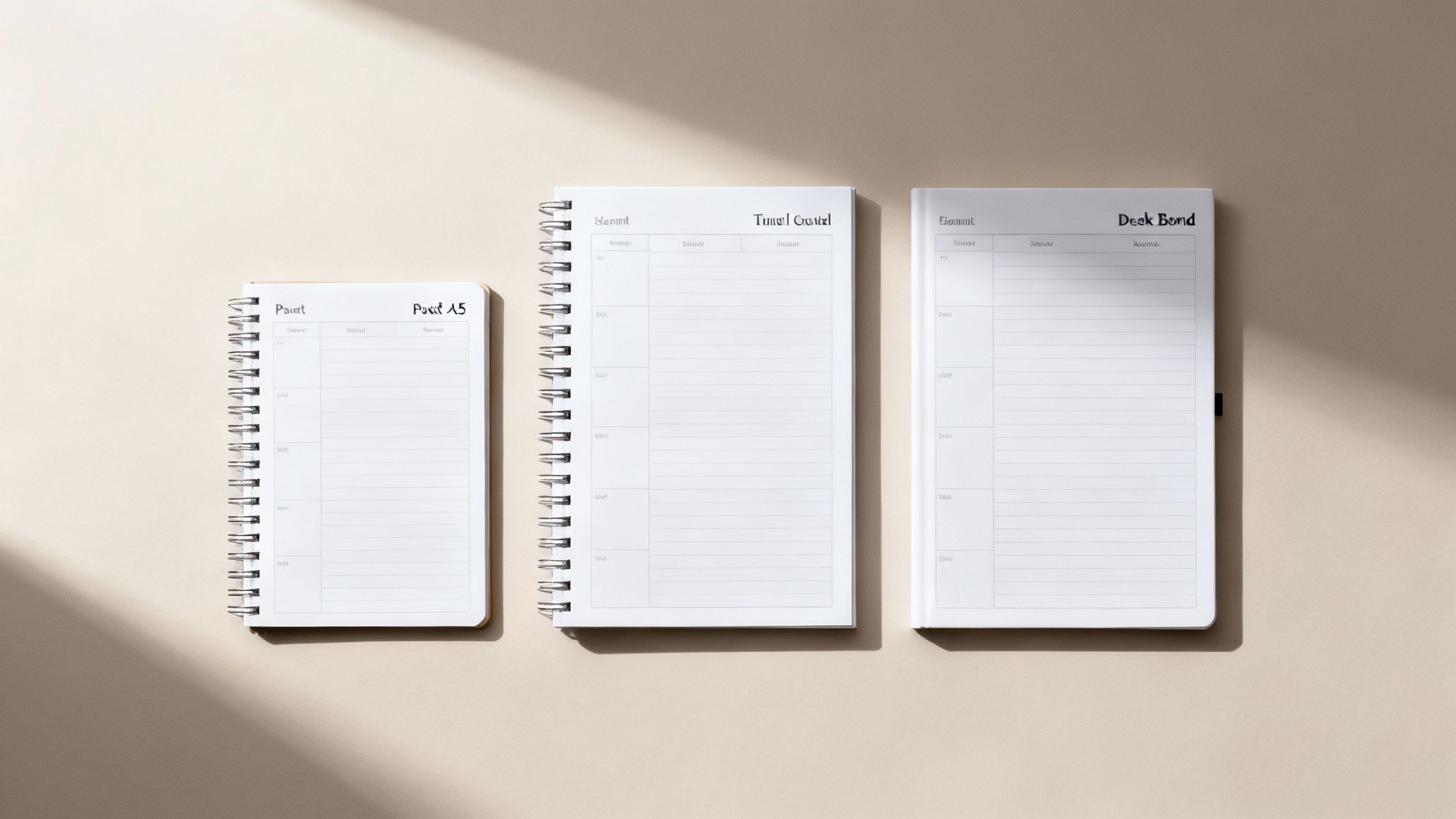
Finding the right planner is an incredibly personal journey. The perfect horizontal planner weekly layout for you should feel like a natural extension of your thoughts, a trusted friend you can’t wait to open each day. This isn’t just about picking a pretty cover; it’s about understanding your daily rhythms and choosing a tool that genuinely supports them.
The goal is to discover a planner that turns organizing your life into a joyful and inspiring ritual. Let’s walk through the key things to look for.
Size and Portability
First, think about where your planner will live. Will it be a permanent fixture on your desk, acting as a command center for your life? Or will it travel with you everywhere you go?
- Larger planners (A5 or B5): Fantastic for your desk. They offer abundant writing space for detailed notes, time-blocking, and creative journaling.
- Smaller planners (A6 or pocket-sized): If you're always on the move, a compact planner is a lifesaver. It’s perfect for capturing ideas and managing tasks on the fly.
This choice directly impacts how you'll use your planner. For busy parents juggling a million things, finding the right fit is a game-changer. You can even explore some of the best planners for busy moms to see how size and layout can make all the difference.
Your planner isn't just a book; it's your personal space. Choosing the right size, paper, and binding is like choosing the perfect canvas for the masterpiece of your week.
Paper Quality and Binding Style
The feel of a planner matters more than you might think. High-quality paper prevents ink bleed-through and makes writing a delightful, sensory experience.
Likewise, the binding determines how your planner lays on a surface. A spiral-bound planner can be folded back on itself to save space, while a sewn or book-bound planner offers a sleek look. The best sewn-bound planners are designed to lay completely flat—a must-have for comfortable, frustration-free writing.
Action Point: Find Your Fit
Before you buy, ask yourself these three questions:
- Where will I use this most? (Desk, bag, or both?)
- What will I write with? (Do I need thicker paper for my fountain pen?)
- What feels more inspiring? (A sturdy, lay-flat book or a flexible, spiral-bound notebook?)
Ultimately, your horizontal planner weekly layout should be a reflection of you. By thinking through these details, you’ll find a planner that doesn’t just organize your life—it truly inspires it.
Planning with Purpose The Mesmos Way
At Mesmos, we believe planning is a beautiful act of self-care. It’s about more than managing your time; it’s about carving out space for what truly matters—mindfulness, gratitude, and personal growth. Our philosophy is built around connecting the elegant simplicity of a horizontal weekly planner to our core mission.
Each of our products is designed to be more than just pretty stationery. They’re crafted to inspire creativity, spark joy, and help you find a quiet moment of peace in a noisy world. And that commitment goes far beyond the pages of your planner.
More Than Just a Planner
We’re dedicated to making a real, meaningful difference. When you choose a Mesmos planner, you’re joining a community that supports women's empowerment and provides financial help to single parents in need. Every single purchase you make helps us contribute to this cause.
This mission is woven into the fabric of everything we do. It’s a reflection of our belief that small, intentional acts can create a powerful ripple effect of kindness.
“Planning with a purpose means aligning your daily actions with your deepest values. When your planner reflects not just what you do, but who you are and what you stand for, it becomes a powerful tool for intentional living.”
We also stand firmly behind the quality of our products. Your journey deserves a companion that lasts, which is why we offer a lifetime replacement warranty on our planners. We want your Mesmos planner to be a reliable and beautiful tool you can count on, year after year.
This is an invitation to plan your week with purpose. It’s a chance to join a community that values beautiful design, meaningful impact, and the simple, grounding power of putting pen to paper. It’s not just about getting organized—it's about designing a life you absolutely love.
Your Questions About Horizontal Weekly Planners Answered
Diving into the world of horizontal weekly planners is exciting, but it’s natural to have questions. How do you get started without feeling overwhelmed? And can it really work with the digital calendar you already rely on?
We’ve gathered the most common questions to give you clear, simple answers. Think of this as your friendly guide to making this new system feel like it was made just for you.
How Do I Start Without Overthinking It?
That feeling of staring at a fresh, empty page is all too real. It's often called "blank page paralysis," and the best way to move past it is to start small. Don't try to build your perfect system in the first week.
Action Point: Your First Entry
This week, choose just ONE thing to focus on in your planner.
- Write down your top three priorities for each day.
- Or, simply track your appointments.
The goal is to build a simple habit, not to create a masterpiece. Once that feels natural, you can add another layer, like meal planning or habit tracking.
The best planning systems are built, not born. Start with a single, simple action and let your system grow organically with your needs. Perfection isn't the goal—progress is.
Can a Horizontal Planner Work with My Digital Tools?
Absolutely! They work beautifully together. A hybrid approach is the secret to staying on top of everything without feeling glued to a screen. The key is to give each tool a specific job.
Here’s a simple system that just works:
- Digital Calendar (like Google Calendar): Use this for time-sensitive appointments, meetings, and shared events. It’s perfect for anything that needs a reminder.
- Horizontal Weekly Planner: This is your space for intention. Use it to set weekly goals, map out creative tasks, track habits, or jot down gratitude. It’s for the what and the why, while your digital calendar handles the when and where.
This method gives you the best of both worlds—the convenience of digital and the mindful, tactile benefits of a physical planner.
Is This Layout Good for Goal Setting?
A horizontal weekly planner is fantastic for goal setting because it gives you a narrative view of your week. Instead of seeing isolated blocks of time, you see a continuous flow, making it easier to connect your daily actions to your bigger ambitions.
You can dedicate a spot at the top of the weekly spread to your main goal. Then, as you plan each day, break that goal into smaller, actionable steps and slot them into the daily rows. Seeing that visual connection is an incredible motivator.
How Does It Compare to a Daily Planner?
A daily planner is wonderful for highly detailed, hour-by-hour scheduling. The only catch is that you can sometimes feel like you’re planning with blinders on, focusing so intently on today that you lose sight of the week as a whole.
A horizontal weekly planner, on the other hand, gives you that all-important "zoom-out" perspective. It lets you see the rhythm of your entire week at a glance, helping you create more balance. You can make sure you aren't cramming all your hard tasks into Monday or forgetting to schedule downtime by Friday. It’s less about micromanaging every hour and more about orchestrating a week that feels productive and peaceful.
Ultimately, the best planner is the one that brings you clarity and calm control. We hope this leaves you feeling inspired and ready to embrace the open, intentional space of a horizontal layout.
Ready to start planning with purpose? Discover the beautiful and thoughtfully designed planners at Mesmos. Each purchase supports our mission to empower women and help single parents in need, all while being backed by our lifetime warranty. Find your perfect planning companion and begin designing a life you love at https://mesmos.co.
