


Ready to ignite your team's potential? The secret lies in three powerful pillars: Recognition, Connection, and Empowerment. When you consistently celebrate effort, foster genuine bonds, and grant the autonomy your team craves, you create an unstoppable force—an environment where people feel valued, supported, and inspired to achieve greatness together.
Getting a Real Read on Your Team's Vibe
"Team morale" can sound a bit sterile, can't it? Let's call it what it really is: the emotional heartbeat of your company. It’s that invisible energy that fuels creativity, resilience, and a shared passion for the mission.
This isn't about forced happiness or superficial perks. True morale blossoms in a culture of psychological safety, where people feel respected, heard, and deeply connected to their purpose. It’s the force that carries a team through challenges, prevents burnout, and makes collaboration feel effortless.
Why does this matter so much? A landmark 2022 Pew Research Center study revealed that feeling respected at work was a primary reason people stay in their jobs—outranking even their salary. This confirms a fundamental truth: how people feel directly fuels their performance and loyalty.
This guide provides practical, human-centered strategies to build a workplace where people feel seen, supported, and genuinely inspired. A huge part of this is understanding the bigger picture, so learning how to improve workplace culture is a fantastic place to start.
The Three Pillars of a Thriving Team
Instead of random initiatives, ground your strategy in principles that create lasting change. The most powerful approaches always come back to making your people feel genuinely valued. These three pillars—Recognition, Connection, and Empowerment—form a simple but profound foundation for incredible team morale.
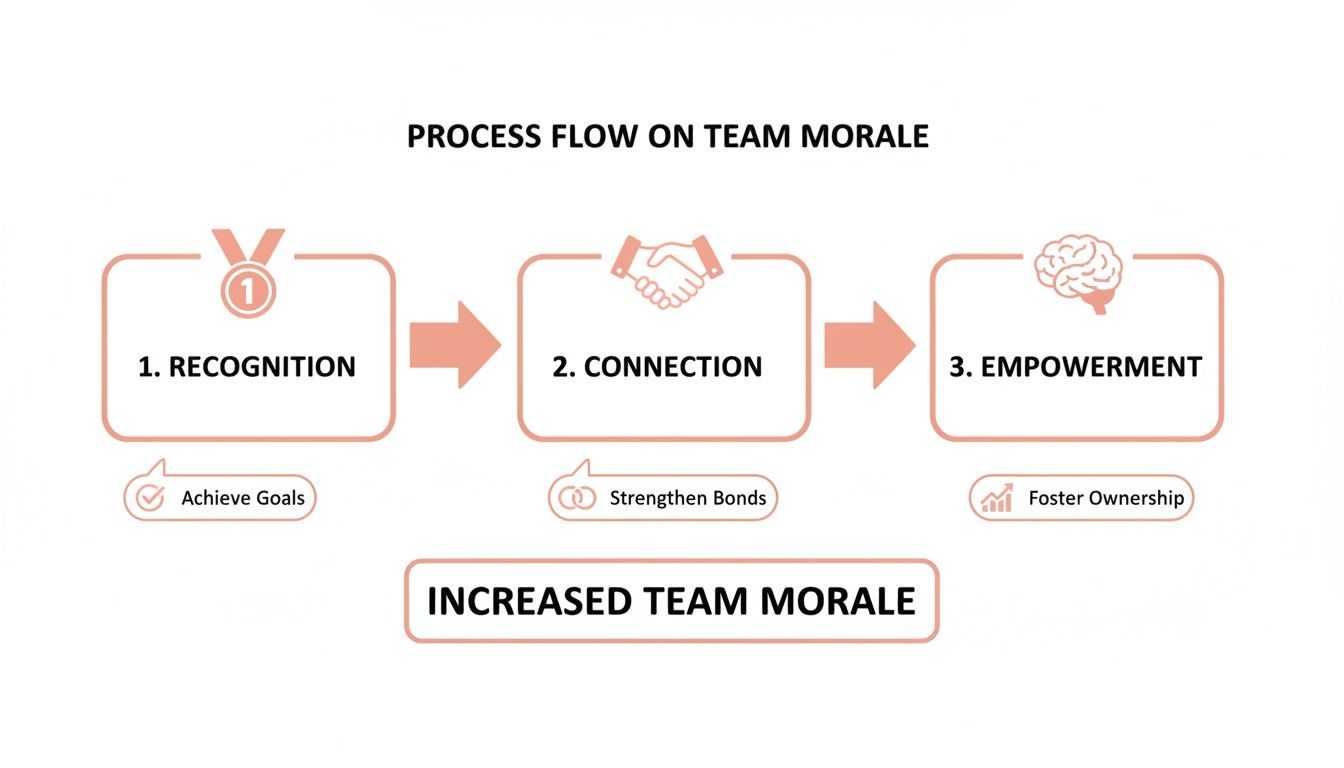
Think of it as a continuous cycle, not a checklist. Each pillar reinforces the others, creating a positive feedback loop that strengthens your entire team.
For a quick overview, this table breaks down how these pillars work in practice.
The Three Pillars of High Team Morale
| Pillar | Core Principle | Practical Action Point |
|---|---|---|
| Recognition | People thrive when they feel seen and appreciated for their specific contributions. | Implement consistent public and private praise. Celebrate wins and effort, not just outcomes. |
| Connection | Strong bonds and a sense of belonging create the trust needed for exceptional teamwork. | Carve out time for team members to connect as people, not just colleagues, through both structured and informal activities. |
| Empowerment | Autonomy and ownership ignite creativity, investment, and accountability. | Delegate meaningful responsibility, trust your team to make decisions, and equip them with the resources they need to succeed. |
By focusing your efforts here, you're not just applying a temporary fix; you're building a healthier, more resilient culture from the ground up.
Why This Framework Is So Effective
Focusing on these three areas creates a virtuous cycle. When people feel recognized for their work, they're more open to connecting with colleagues. That connection builds the trust needed for genuine empowerment.
When employees feel empowered to take ownership of their work, they become more invested in the team's success, which in turn makes recognition and connection even more meaningful.
This approach works because it taps into fundamental human needs:
- It Addresses Core Desires: We all have an innate need to be seen (Recognition), to belong (Connection), and to have control over our contributions (Empowerment).
- It’s Universally Adaptable: These principles apply everywhere—from a creative agency to a remote tech company or a frontline retail crew.
- It Creates Lasting Change: A one-off team lunch is forgotten by Monday. Building systems around these pillars creates a sustainable culture of high morale that can weather challenges and drive success for the long haul.
Building a Culture of Powerful Recognition
Meaningful recognition is more than a quick ‘thank you.’ It’s a powerful act that validates hard work, reinforces positive behaviors, and makes people feel truly seen. This is the difference between an employee who punches the clock and a team member who feels deeply invested in your shared mission.
When appreciation is woven into the DNA of your culture, it becomes a natural part of every conversation. It’s not about grand gestures; it’s about creating consistent, authentic moments of acknowledgment that build loyalty, motivation, and an unbreakable team spirit.
The data is clear. O.C. Tanner's 2025 Global Culture Report found that employees who feel consistently appreciated are 156% more likely to report higher engagement. Furthermore, frequent, peer-driven praise leads to a 35% increase in collaboration, sparking the kind of teamwork that turns great ideas into reality.
Make It Timely and Specific
The most impactful praise is immediate and detailed. A generic "good job" feels nice, but it lacks staying power. To truly motivate, you must highlight what they did well so they can repeat that brilliant behavior.
Action Point: Instead of waiting for a formal review, catch people in the act of doing great work. This immediate feedback reinforces the exact contributions that drive success.
Consider the difference:
- Generic: "Great work on the presentation, Sarah."
- Specific & Inspiring: "Sarah, the way you used customer data to build a compelling story in that presentation was brilliant. You completely won over the stakeholders and set a new standard for our team."
The second one shows you were paying attention. It validates Sarah's specific effort, and that’s profoundly motivating.
Mix Up Your Methods of Appreciation
Recognition is not a one-size-fits-all game. A balanced approach ensures everyone feels seen in a way that’s personally meaningful. To dive deeper, it's worth exploring how recognition programs boost employee morale.
Here are a few practical ideas you can implement today:
-
Peer-to-Peer Shout-Outs: Create a dedicated Slack or Teams channel (like
#winsor#kudos) where team members can publicly celebrate each other. This builds incredible camaraderie and empowers everyone to foster a culture of recognition. - Tangible Notes of Gratitude: Never underestimate the power of a handwritten note. A simple, beautifully designed card left on a desk or sent home creates a personal impact that a digital message can't replicate.
- Structured Meeting Moments: Dedicate the first five minutes of your weekly team meeting to "wins and recognitions." This carves out a consistent space for public praise and makes it a core part of your team's rhythm.
Recognition is a currency of motivation. Invest it wisely and consistently, and you will get incredible returns in loyalty, engagement, and a team willing to go the extra mile for each other.
How to Script Heartfelt Acknowledgment
Giving recognition can feel awkward, but a simple framework makes it natural and impactful.
Action Point: Use this simple structure for more meaningful praise:
- State the Specific Action: "When you stayed late to troubleshoot the server issue..."
- Explain the Impact: "...it prevented us from missing our client deadline and preserved their trust."
- Express Genuine Gratitude: "I am so grateful for your dedication and teamwork."
This formula removes the guesswork and ensures your words carry real weight. By mastering these small but mighty actions, you're building the foundation for a team that feels deeply valued and ready to achieve incredible things together.
Fostering Genuine Connection and Collaboration
Great teams aren't just built on shared projects; they're forged through genuine human connection and psychological safety. When people feel they can show up as their authentic selves and trust their colleagues, collaboration transforms from a task into an energizing, natural part of the day.
This is where the magic happens—whether your team is in the office, fully remote, or a hybrid of both. Intentionally carving out space for people to connect beyond their job titles is one of the most powerful investments you can make in team morale.
The business impact is undeniable. Gallup's research consistently shows that highly engaged teams are 21% more profitable. Why? Because when people feel connected and valued, they bring their best selves to work. This spirit of connection cultivates both productivity and inner peace.
Kickstart Meetings with Connection Circles
How you begin a meeting sets the tone. Instead of diving straight into agendas, dedicate the first five minutes to a 'Connection Circle.' This simple practice shifts the energy from transactional to relational, reminding everyone there are humans behind the job titles.
Action Point: Start your next meeting by asking a non-work-related question that everyone can answer briefly.
Here are a few inspiring prompts:
- To spark creativity: "What's one thing that inspired you this week, outside of work?"
- To foster gratitude: "What's a small win, personal or professional, you've had recently?"
- To have fun: "What's the best thing you've watched, read, or listened to lately?"
This small investment of time builds the rapport that makes tough conversations and collaborative problem-solving infinitely easier.
Team Building That People Actually Enjoy
Let's be honest: many "team-building" activities can feel forced. The key is to focus on shared experiences that are inclusive, low-pressure, and genuinely fun. The goal is connection, not awkward competition.
A truly great team-building activity is one where the primary objective is having a good time together, and the 'team-building' happens as a natural, welcome side effect.
Think beyond the usual. Look for activities that cater to diverse personalities. For more inspiration, our guide on team-building activities for remote workers offers fantastic, inclusive options.
Practical Action Points for Inclusive Connection:
- Volunteer Together: Choose a cause the team cares about and spend an afternoon giving back. Working together for a greater good builds a uniquely powerful bond.
- Host a "Skill Share" Lunch: Invite team members to share a passion, whether it's bread-making, coding basics, or photography. This highlights individual talents and builds mutual respect.
- Create a Collaborative Playlist: Make a shared team playlist where everyone adds a few favorite songs. It’s a simple, ongoing way to share personality and create a positive vibe during work sessions.
Ultimately, fostering connection is about consistent, small actions. It’s about showing you care about your team as people first and employees second. When you champion open communication and authentic interaction, you build a resilient, high-spirited team ready for any challenge.
Empower Your Team with Wellness and Growth
Lasting team morale isn't built on fleeting perks. It’s cultivated by investing in your people as whole human beings—supporting their well-being, fueling their ambitions, and creating an environment where they can genuinely thrive.
When you champion wellness and growth, you're investing in the long-term health and success of your entire company. This means going beyond surface-level gestures to create personalized growth paths that align with your team members' aspirations.

The payoff is huge. A Gallup analysis found that when managers are trained as effective coaches, their teams see a 20-28% boost in performance and a staggering 32% increase in well-being. Their research also shows that high-engagement teams see 78% less absenteeism. The numbers don't lie—a wellness-focused culture with strong leadership creates a team that shows up ready to contribute.
Weave Well-Being into Your Team’s Rhythm
The most effective wellness initiatives feel like a natural part of the workday, not a separate program. The goal is to make well-being an effortless, integrated piece of your culture.
Action Point: Build well-being checks into your regular one-on-one meetings. Before diving into project updates, start with a simple, open-ended question like, "How has your energy been this week?" This opens the door for honest conversations and helps you address concerns before they lead to burnout.
True empowerment is giving your team the permission and the tools to prioritize their own well-being without guilt. It's the ultimate sign of trust and respect.
Another powerful practice is introducing structured mindfulness breaks. Encourage everyone to step away from their screens for a five-minute guided meditation or stretching session. This isn’t about losing productivity; it’s about recharging the mental batteries needed for sharp focus and creativity.
Co-Create Personalized Growth Paths
Feeling stuck is one of the fastest morale killers. A 2021 Pew Research study found that a lack of advancement opportunities was a top reason people quit their jobs. The antidote? Show your team a clear path forward—and let them help draw the map.
Generic training programs rarely inspire. The magic happens when you co-create personalized development plans that connect an individual’s passions with the company’s goals.
Action Point: In your next one-on-one, have a collaborative growth conversation. Ask questions that go beyond the next career step:
- "What skills are you most excited to build in the next six months?"
- "Is there a project you've seen that you'd love to get involved with?"
- "What kind of work leaves you feeling energized and fulfilled at the end of the day?"
Their answers will help you pinpoint opportunities that genuinely excite them, whether it's a mentorship, a specialized online course, or the chance to lead a small initiative. By building these growth paths together, you prove you’re invested in their success. For more inspiration, check out our guide on thoughtful employee wellness program ideas.
How Do You Actually Measure Team Morale?
You've started celebrating wins and encouraging connection—but is it working? To truly improve team morale, you must move beyond guesswork and create an open feedback loop that turns insights into meaningful change.
This isn't about surveillance; it's about listening with the genuine intention to understand. When you combine hard data with real human stories, you get a clear picture of your team's well-being and build the trust needed for continuous improvement. A good measurement strategy shows your team you're truly invested in their experience.

Go Beyond the Numbers
The most accurate read on team morale comes from blending different types of feedback. Think of it like a doctor's visit—they check your vitals (quantitative data) but also ask how you're feeling (qualitative feedback) to get the full picture.
Quantitative data, like survey scores, gives you a high-level overview to spot trends. But it's the qualitative feedback—the "why" behind those numbers from one-on-one chats and team meetings—that provides the rich context needed for real solutions. Using both helps you address root causes, not just symptoms.
Key Morale Metrics to Start Tracking
You don’t need a complicated system. Focus on a few key indicators to track engagement, loyalty, and overall team health over time.
- Employee Net Promoter Score (eNPS): A powerful metric from a single question: "On a scale of 0-10, how likely are you to recommend our company as a great place to work?" It’s a fast, effective pulse check.
- Pulse Surveys: Short, frequent check-ins (e.g., weekly) with a few questions. They provide a real-time snapshot of morale and help you catch small issues before they snowball.
- Retention and Absenteeism Rates: While these are lagging indicators, they are critical. A rising turnover rate or a sudden spike in absenteeism are major red flags that morale is suffering.
Ask Better Questions to Get Real Answers
Numbers alone never tell the whole story. The real magic happens when you pair data with genuine curiosity and create safe spaces for honesty. The quality of your insights comes directly from the quality of your questions.
The goal isn't just to collect data. It's to build a culture of psychological safety where people feel comfortable sharing what's really going on, without fearing judgment.
Action Point: Instead of generic questions, focus on what truly matters: psychological safety, purpose, and recognition.
Sample Questions for Deeper Insight:
-
To Gauge Psychological Safety:
- "On a scale of 1-5, how comfortable do you feel voicing a dissenting opinion in a team meeting?"
- "When a mistake is made on our team, how is it typically handled?"
-
To Measure Sense of Purpose:
- "How clearly do you see the connection between your daily work and the company's vision?"
- "What part of your work feels most meaningful to you right now?"
-
To Assess Recognition:
- "How often do you feel your hard work is seen and acknowledged by your manager and peers?"
- "What's one thing a teammate did recently that you think deserved more recognition?"
These questions dig deeper than a simple happiness score. And when you act on the feedback, you prove that their voices matter—one of the most powerful morale boosters of all.
Where Do We Go From Here? A Practical Game Plan
Boosting team morale isn't a project with a finish line; it's a continuous journey of mindful, people-first leadership. It’s the small, consistent actions that compound over time, creating a place where people don’t just work—they thrive.
Real momentum happens when you weave recognition, connection, and empowerment into the fabric of your daily routine. When your team members feel seen, supported, and trusted, their engagement and motivation soar. This is how you build a resilient, high-spirited team ready for anything.
Your Immediate First Steps
Ready to begin? Don't try to fix everything at once. Pick one or two of these practical action points and commit to them this week. Consistent, small efforts build unstoppable momentum.
- Kick Off with a "Wins" Round: Start your next team meeting by dedicating the first five minutes to celebrating recent successes. This simple habit immediately shifts the energy and normalizes recognition.
- Ask an Inspiring Question: In your next one-on-one, try asking, "What part of your work energized you most this week?" This opens the door to deeper conversations about passion, growth, and what truly motivates them.
- Empower with a "Trust Fall": Delegate a low-risk decision to a junior team member. Give them full ownership and let them know you have their back. It's a simple gesture that can be a massive confidence booster.
The secret to better morale isn't a grand, sweeping gesture. It’s found in the quiet consistency of showing up for your team, listening with real intent, and proving through your actions that you’re invested in their well-being and success.
Ultimately, the goal is to create an environment where every person feels a genuine sense of purpose and belonging. The strategies in this guide are your roadmap. Now, it’s time to take that first step and start building a team that grows, innovates, and wins together.
Got Questions About Team Morale? Let's Talk.
When you're trying to shift your team's energy, questions are natural. Here are some of the most common ones, with practical, straight-talking answers to guide you.
How Quickly Can I Expect to See Morale Improve?
You'll see small glimmers of change almost immediately. A simple action like starting a meeting with "wins" can provide an instant boost.
But real, lasting change takes time. Think of it like getting in shape—the initial buzz is great, but consistency builds true strength.
Research from organizations like Great Place to Work suggests that noticeable shifts in trust and psychological safety emerge after about three to six months of consistent effort. Focus on small, steady actions, not one-off events.
Do I Need a Big Budget to Improve Team Morale?
Absolutely not. This is one of the biggest myths. While a budget helps with fun activities, the actions that truly move the needle on morale are almost always free.
Low morale is rarely a money problem. It’s usually a respect, recognition, or connection problem. You solve those with intention and consistency, not cash.
Practical, Zero-Cost Action Points:
- Publicly praise specific contributions in a team meeting.
- Give someone your undivided attention in a one-on-one. Put your phone away and just listen.
- Ask for your team's input on a decision and genuinely consider their perspective.
- Create a peer-to-peer shout-outs channel in your team chat.
Can One Negative Person Really Affect the Whole Team?
Yes, absolutely. It's a scientifically recognized phenomenon called emotional contagion, where moods—both good and bad—spread through a group. One person's negativity can drain energy, stifle collaboration, and exhaust everyone.
It's crucial to address this behavior head-on, but with compassion. Pull the person aside for a private chat to understand the root cause. Often, negativity is a symptom of feeling unheard, overwhelmed, or unappreciated. By addressing the core issue, you not only support that individual but also protect the morale of your entire team.
Ready to bring more mindfulness and appreciation into your team's day? Mesmos creates beautiful, wellness-focused gifts and stationery designed to inspire connection and inner peace. Explore our collections and find the perfect way to show your team you care at https://mesmos.co.


