


Feel like you're being pulled in a million different directions? You're not alone. Learning how to prioritize self care isn’t about cramming one more thing into your overflowing schedule. It’s about creating a profound shift in how you care for yourself, sparking a more vibrant and resilient you.
It all begins with a simple, quiet check-in—a moment to pause and ask what your mind and body truly need.
Why Self-Care Feels So Impossible (And How to Fix It)
In a world that glorifies the hustle, taking a moment for yourself can feel like a radical, even selfish, act. We're often taught that self-care is an indulgence—a reward you earn only after every other task is done.
But this perspective is precisely why it feels so out of reach.
The truth is, self-care isn't a luxury; it's the fuel that powers your life. Think of it this way: you can't pour from an empty cup. When you neglect your well-being, your energy, patience, and focus suffer, impacting your work, relationships, and happiness. Research even confirms that self-compassion—simply tuning into your needs—is a foundational step toward building resilience.
This guide is your roadmap to reframe self-care. We'll move beyond extravagant spa days to focus on small, powerful practices you can actually weave into your daily life, whether you're a dedicated teacher or a busy parent.
Self-care isn't about adding to your to-do list; it's about cultivating a new way of being with yourself.
To make self-care a lasting part of your life, we'll focus on three core pillars. This is your blueprint for reclaiming your energy and finding balance, starting today.
- Intentional Awareness: This is about learning to listen. It means pausing to ask, "What do I need right now?" instead of just pushing through exhaustion.
- Practical Integration: This is where we weave small, restorative moments into the day you already have, rather than trying to overhaul your entire schedule.
- Compassionate Consistency: This means giving yourself grace. The goal is gentle, consistent effort, not flawless execution. You are human, and that is more than okay.
The Real-World Impact of Putting Yourself First
Let's be clear: making time for yourself isn't just a nice idea—it's a complete game-changer. When you consistently invest in your well-being, the positive effects ripple out into every corner of your world, transforming your work, relationships, and inner peace.
This isn't about huge overhauls. It's about the small, intentional choices you make every day. By nourishing yourself first, you become stronger, clearer, and better equipped to show up for everything that matters to you.
From Surviving to Thriving
The shift from feeling constantly drained to feeling truly energized is profound. When you learn how to prioritize self care, you’re not just avoiding burnout; you’re building a foundation for better health and deeper happiness. It’s the difference between just getting through your day and actually loving the life you're living.
The impact is scientifically backed. Prioritizing self-care is linked to significant reductions in stress and anxiety. For a deeper dive into the connection between self-care and mental health, explore the insights from LightWork Therapy and Recovery. This is how self-care evolves from a vague concept to a life-giving daily practice.
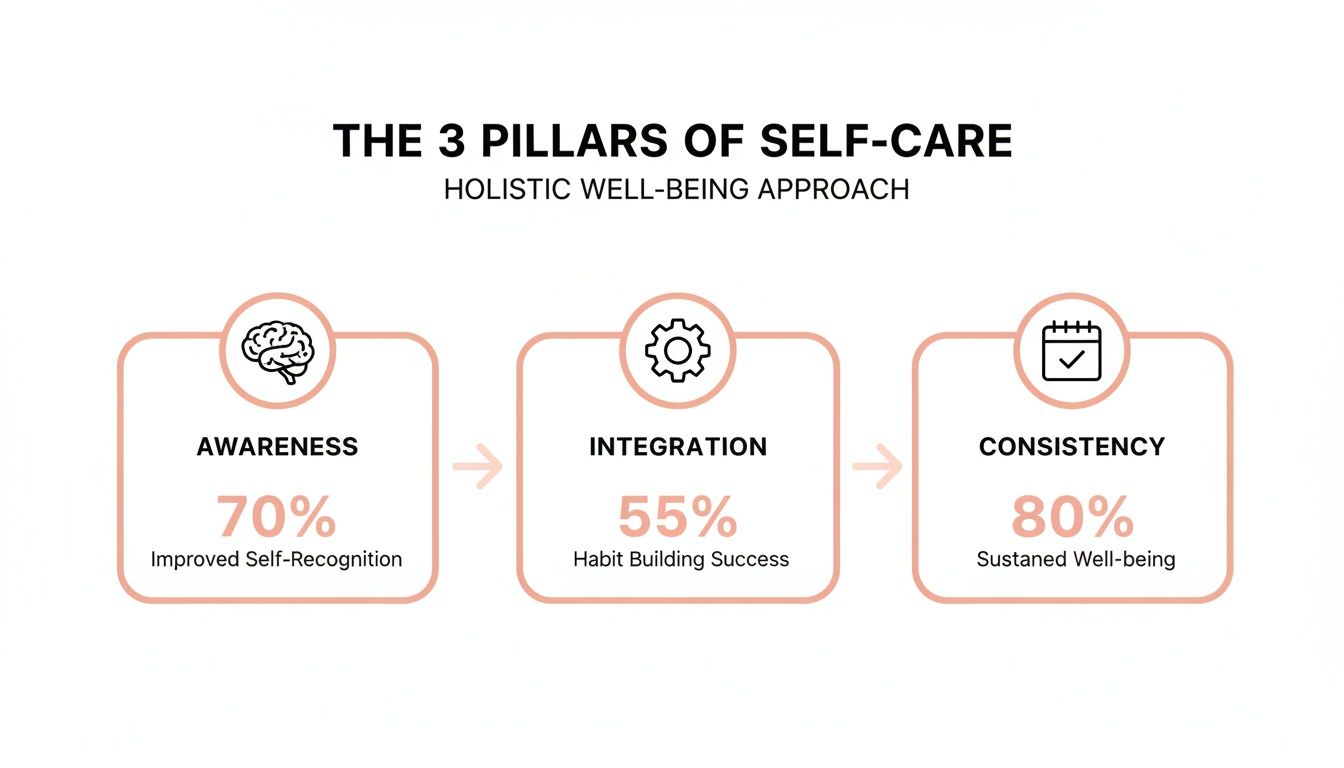
As you can see, the journey begins with Awareness, moves into practical Integration, and is sustained by Consistency.
Real People, Real Results
Picture a teacher who starts her morning with just five minutes of quiet journaling. That small act of peace helps her greet her students with patience and a genuine smile, transforming the energy of the entire classroom. She ends her day feeling accomplished, not depleted.
Or imagine a busy parent who carves out a 30-minute solo walk three times a week. That isn't an indulgence—it's a vital reset. It allows them to return to their family with renewed energy and a clearer head, making them a more present and joyful parent.
This is your permission slip to make your well-being non-negotiable. By putting yourself first, you empower yourself to show up more fully for everyone else.
These simple examples highlight a powerful truth: consistent self-care creates a beautiful, positive feedback loop. When you feel better, you perform better, and your relationships blossom. This isn’t selfishness. It’s the most generous thing you can do for yourself and the people you love.
Creating Your Personal Self-Care Menu
Let's be honest: generic, one-size-fits-all advice rarely works. What recharges one person—like a vibrant social gathering—might feel completely draining to another.
This is your invitation to become your own self-care expert. Learning how to prioritize self care starts with listening to your unique needs. You're about to build a personalized 'self-care menu' filled with activities that genuinely fill your cup.

Tune Into Your Needs
The first step is a simple, gentle check-in. Throughout your day, pause for just a moment. Place a hand on your chest, take a deep breath, and ask, "What do I need right now?"
The answer might be surprisingly simple. Maybe your body is asking for a glass of water, a quick stretch, or five minutes of quiet. This foundational practice transforms self-care from a chore into a conversation with yourself.
Self-care isn't about adding more to your to-do list; it’s about cultivating a new way of being with yourself. By tuning in, you move from reacting to the world to responding to your own needs with intention.
Identify Your Drains and Energizers
To build your perfect menu, get curious about what works for you. Grab a notebook and reflect on these four key areas. Get honest about what drains your energy and what restores it.
- Physical: How does your body feel? Does sitting all day leave you stiff? Does a brisk 10-minute walk completely change your mood?
- Mental: How is your mind? Does endless scrolling leave you feeling foggy? Does reading a book or solving a puzzle feel clarifying?
- Emotional: How are you processing feelings? Do you feel on edge when you bottle things up? Does journaling or talking with a friend bring relief?
- Social: How are your connections? Does a crowded party feel exhausting? Or does a quiet, one-on-one coffee date leave you feeling seen and energized?
Action Point: Need inspiration? Our daily self-care checklist is a great starting point for activities you can try today.
Build Your Self-Care Menu
Now, let's put it all together. Use this framework to map out your needs and create a go-to list of activities. Think of this as your personalized blueprint for well-being.
Your Personal Self-Care Menu
| Dimension of Well-being | What Drains Me? | What Recharges Me? | Micro-Action (5 mins) | Full Activity (30+ mins) |
|---|---|---|---|---|
| Physical | Sitting too long | Stretching my body | Do 5 minutes of neck/shoulder rolls | Go for a 30-minute walk outside |
| Mental | Constant notifications | Learning something new | Watch an educational short video | Listen to an inspiring podcast episode |
| Emotional | Ignoring my feelings | Expressing my thoughts | Write down three things I'm feeling | Have a heart-to-heart with a friend |
| Social | Small talk with strangers | Meaningful connection | Send a thoughtful text to a loved one | Schedule a dinner with close family |
This personalized menu is your secret weapon. It removes the guesswork, giving you realistic, actionable options that fit your life—whether you have five minutes or an entire hour.
How to Weave Self-Care into a Packed Schedule
Let’s be real: the biggest hurdle to self-care isn't desire—it's time. When your day is scheduled down to the minute, adding one more thing feels impossible.
But what if the goal wasn't to add more, but to beautifully integrate moments of calm into the life you already lead? This is how to prioritize self care without a massive calendar overhaul. It's about finding those small pockets of time and filling them with intention.

Embrace Habit Stacking
One of the most effective ways to make self-care stick is habit stacking. The idea is brilliant: you link a new self-care habit to something you already do automatically. This simple trick removes the mental effort of remembering your new practice.
For example, instead of struggling to find time to meditate, you "stack" it onto your morning coffee. While the coffee brews, you do five minutes of mindful breathing. The existing habit becomes the trigger for the new one.
Action Point: Try these habit stacks:
- After you brush your teeth, take three deep, grounding breaths.
- While your computer boots up, do a series of gentle neck and shoulder stretches.
- As soon as you get in the car, listen to one minute of a calming song before driving.
Master Your Minutes with Time Blocking
Another game-changer is time blocking. This is where you schedule appointments with yourself and guard them as fiercely as you would a meeting with your boss. This isn't about finding huge chunks of time; it's about claiming small, non-negotiable windows for your well-being.
Even 15 minutes blocked out three times a week can make a world of difference. Put it in your calendar—"Recharge Break"—to give it the same weight as any other commitment. This visual reminder is a powerful way to honor the promise you’ve made to yourself.
Self-care isn't about finding more time; it's about making the time you have more meaningful. Tiny, consistent actions build incredible momentum.
Weave in Physical Wellness
Integrating physical activity is often the toughest piece, but it's the foundation of our energy. The World Health Organization recommends 150-300 minutes of moderate physical activity for adults each week, which sounds like a lot.
But the key is to break it down. A 20-minute brisk walk on your lunch break or a quick 10-minute yoga flow before breakfast all adds up. To get moving and stay moving, learn how to make exercise a lasting habit and find what truly works for your life.
Navigating Guilt and Other Common Roadblocks
Even with the best intentions, the path to consistent self-care can be bumpy.
You might finally set aside an hour to read, only to be hit with a wave of guilt. That inner voice might whisper that you're being selfish or that you should be doing something "productive."
This is one of the most common roadblocks when learning how to prioritize self care, but it doesn't have to stop you. The key is to reframe your thinking: self-care isn't selfish; it's the essential maintenance that allows you to show up as your best self for others.
The Art of Setting Gentle Boundaries
Overcoming guilt often begins with setting clear, kind boundaries. This could be as simple as saying "no" to a request that will drain you or telling your family you need a quiet hour to yourself.
Learning how to set healthy boundaries is an act of self-respect. It protects your most precious resources: your time and energy. It’s not about pushing people away—it's about preserving your well-being so you can connect with them more meaningfully.
Self-care isn't selfish; it’s essential for your survival and your ability to thrive. Treating your well-being as a priority gives you the strength to support the people and causes you care about most.
Embracing Self-Compassion on the Journey
Let's be real: some days, your self-care plans will fall apart. An unexpected deadline, a sick child, or sheer exhaustion can derail your efforts. In those moments, the kindest thing you can do is show yourself compassion.
Instead of self-criticism, acknowledge that life happens. Every moment is a fresh start.
Action Point: Practice the three steps of self-compassion:
- Acknowledge the Hurdle: Name what got in the way. "I was too exhausted to exercise today."
- Offer Yourself Kindness: Talk to yourself as you would a dear friend. "It's okay to rest when my body needs a break."
- Gently Recommit: Plan your next small step. "I'll go for a short walk tomorrow morning."
This mindset shift is gaining momentum. A recent McKinsey study found that nearly 30% of Gen Z and millennials are prioritizing wellness more than they did just a year ago. You can read more about these wellness trends on McKinsey.com. Navigating obstacles with kindness builds a practice that's resilient enough to weather any storm.
Your Path to Lasting Inner Peace and Energy
We’ve walked through this journey together, and my hope is that you’re inspired to build a new, more compassionate relationship with yourself. Prioritizing your well-being isn’t a one-time fix; it's a practice—a choice you make again and again to refill your own cup.
When you do, you can pour your energy into the world from a place of abundance, not depletion. You now have the tools and the mindset to truly thrive.
The key takeaway is this: prioritizing your well-being empowers you to show up as your best self in every area of your life.
Building this inner peace comes down to forming habits that stick. Start small, stay consistent, and give yourself grace when you stumble.
Your path to a more energized and centered life begins right now, with your very next breath.
Your Self-Care Questions, Answered
Diving into self-care can bring up questions, and that's a wonderful sign that you're on the right path. Let's clear up some common uncertainties so you can move forward with confidence.
What Truly Counts as Self-Care?
Simply put, self-care is any deliberate action you take to care for your mental, physical, or emotional health. It's not just about bubble baths (though those are great too!).
True self-care is about checking in with yourself and giving your mind and body what they genuinely need. That might be a heart-pumping workout, saying "no" to protect your energy, or scheduling a long-overdue doctor's appointment. If the intention is to support your well-being, it absolutely counts.
How Do I Start When I'm Already Exhausted?
This is a real and common feeling. When your energy is at zero, the secret is to think micro.
The most effective self-care starts small. When you're exhausted, don't aim for a marathon. Aim for one deep, intentional breath. That's a win.
Instead of a 30-minute meditation, just close your eyes for 60 seconds and breathe. Instead of a full workout, do a simple two-minute stretch. These tiny acts of kindness build momentum without demanding more than you have to give.
How Can I Get My Family on Board with This?
Bringing loved ones on your journey is about open communication. Help them understand why this is important to you. Frame it not as taking time away from them, but as a way to recharge so you can be more present for them.
Action Point:
- Lead by Example: When they see the positive shift in your energy, they’ll become your biggest cheerleaders.
- Make It a Team Effort: Find small things you can do together, like a family walk after dinner or a tech-free hour.
- Communicate Kindly: Gently state what you need. "I'm going to take 20 minutes to read quietly so I can recharge. I can't wait to play with you when I'm done!"
At Mesmos, we believe that small, intentional acts of self-kindness create lasting change. Explore our collection of inspiring stationery and gifts designed to bring more mindfulness and peace into your everyday life. Discover your next favorite tool for well-being at https://mesmos.co.


