

Imagine a week where lesson planning sparks creativity instead of stress. We've designed a simple and effective free lesson planning template you can download today, created to help you organize your week and—most importantly—reclaim your precious time. Think of this as your first step toward transforming a chore into an inspiring, mindful process. It's all about providing a clear structure, so you can focus on building incredible learning experiences for your students.
From Overwhelmed to Empowered
Picture this: you walk into your classroom on Monday morning feeling prepared, calm, and fully present for your students. The constant pressure of lesson planning can steal countless hours, but it doesn’t have to. This guide is your invitation to a new, more joyful approach.
We're going to unlock the power of a great template, one designed for passionate educators like you. Forget the anxiety of staring at a blank page. Instead, discover how a well-designed structure can become your secret weapon for inspired teaching and a more balanced life.
Reclaim Your Time and Spark Your Passion
The data is clear: teachers spend an average of 7 hours per week on lesson planning alone. This relentless demand is a major contributor to burnout, with a startling 44% of new teachers leaving the profession within their first five years. This isn't just a statistic; it's a call to action for a more sustainable way to teach.
But here's the inspiring part: educators who switch to structured templates report cutting their planning time by as much as 50%. You can read more about these teacher planning statistics and see the proof for yourself.
This isn’t just about saving time; it's about redirecting your energy toward what truly matters—igniting curiosity in your students and nurturing your own well-being.
A lesson plan is more than a schedule; it's a roadmap to an intentional and peaceful classroom. When you structure your thoughts, you create the mental space for creativity and connection to flourish.
The Power of a Structured Approach
A blank document can feel paralyzing. A template, however, offers a supportive framework that instantly calms the chaos. It prompts you to consider the essential elements of a brilliant lesson without reinventing the wheel every single time.
This structure empowers you to:
- Clarify Learning Objectives: Ensure every activity is anchored to a powerful purpose.
- Organize Resources: Gather all your materials, links, and notes in one streamlined hub.
- Plan for Differentiation: Intentionally design lessons that meet the wonderfully diverse needs of every learner.
- Integrate Assessments: Seamlessly weave in quick checks for understanding to guide your teaching in real-time.
By using a lesson planning template free of clutter, you build a consistent routine that minimizes decision fatigue. This frees you from the nagging "what's next?" anxiety and unleashes your creative energy to craft lessons that truly resonate. It’s your first step toward making planning a source of inspiration, not exhaustion.
Find the Right Template for Your Teaching Style
Every classroom has its own unique rhythm, and your lesson plan should honor that. The journey to reclaiming your time begins with finding a lesson planning template free of unnecessary fluff—one that aligns with how you teach. It’s not about a one-size-fits-all solution, but a tool that feels like a natural extension of your expertise.
With so many options, the key is to choose with intention. Are you a high school teacher orchestrating a complex, multi-week unit? A big-picture unit planner will be your trusted ally. Or are you an elementary teacher juggling multiple subjects each day? A clean, streamlined weekly layout can bring a sense of calm to the whirlwind.
Staring at a blank document can feel paralyzing. Choosing a template gives you a starting point, a structure to build on, which instantly quiets that "where do I even begin?" anxiety.
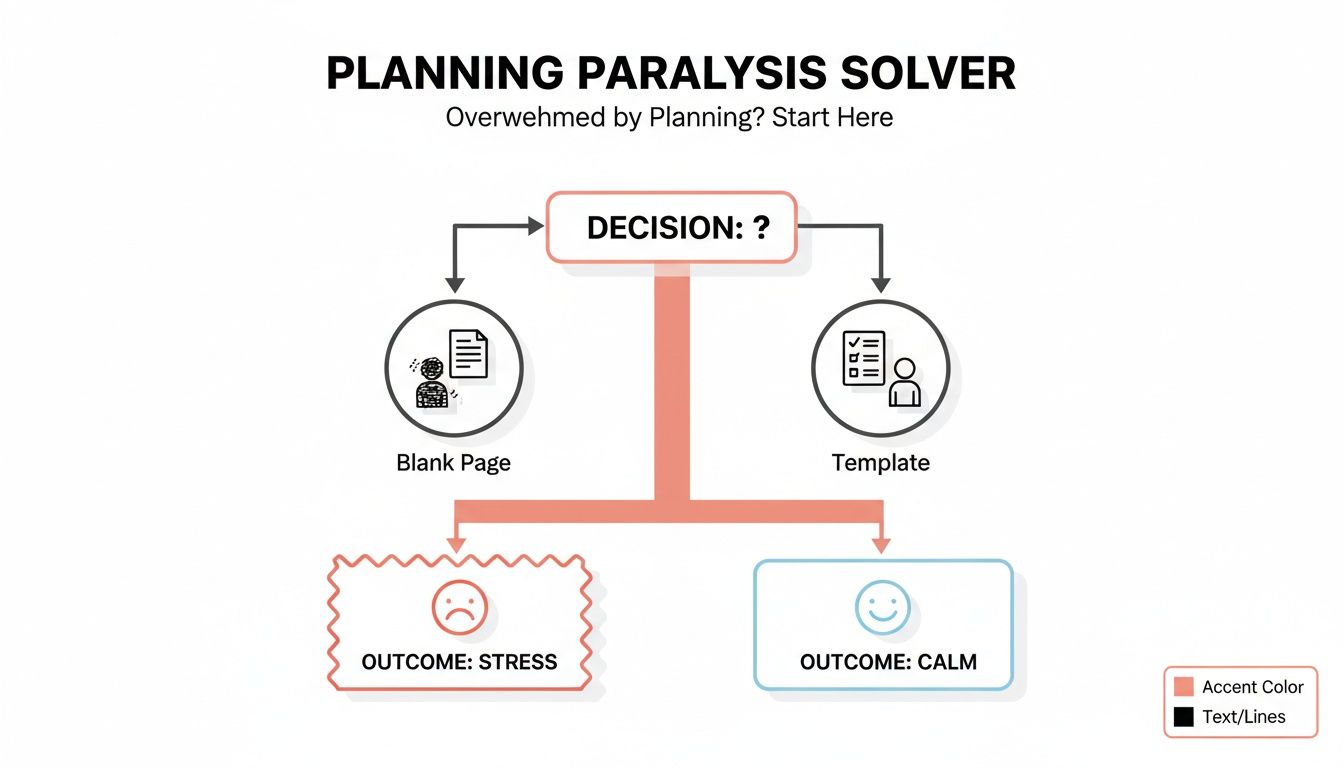
Here's the secret: a good structure doesn’t limit your creativity. It liberates it. By handling the logistics, it frees you to focus on the art of teaching—crafting learning experiences that stick.
Choosing Your Planning Partner
Think of your lesson plan template as a partner in your teaching journey. You need one that feels intuitive and supportive, not restrictive. Some of us thrive with minimalist designs that offer ultimate flexibility, while others feel more grounded with detailed templates that prompt for objectives, materials, and assessments. Neither is "better"—it's all about what helps you organize your brilliant ideas.
To help you decide, here’s a quick guide to the 3 main types of lesson plan templates.
Find Your Ideal Free Lesson Plan Template
A comparison of different free lesson plan template types to help you choose the best fit for your classroom needs.
| Template Type | Best For | Key Features | Mindfulness Benefit |
|---|---|---|---|
| Daily Template | Detailed, minute-by-minute scheduling, substitute plans, or days with complex, multi-step activities. | High level of detail, timed sections, space for specific instructions and materials. | Reduces in-the-moment stress by having every single step pre-planned. |
| Weekly Template | Getting a bird's-eye view of the entire week, balancing different subjects, and pacing content. | Subject slots for each day, clear weekly overview, sections for goals and notes. | Creates a sense of control and clarity for the week ahead, preventing Sunday scaries. |
| Unit/Thematic Template | Long-range planning, mapping out an entire topic over several weeks, and ensuring standards are met cohesively. | Big-picture goals, standard alignment, project timelines, assessment planning. | Fosters a feeling of purpose and direction, connecting daily tasks to a larger vision. |
Ultimately, your lesson plan is your professional thinking made visible. The right template clarifies your goals and honors the expertise you bring to the classroom.
If you’re looking to get your entire year organized, you might also want to explore some of the best planners for teachers that work beautifully alongside these digital tools.
Action Point: Download one of each template type. Spend just 10 minutes sketching out a lesson in each. See which one feels less like work and more like a natural extension of your own thoughtful, creative teaching style.
Customize Your Template for Maximum Impact
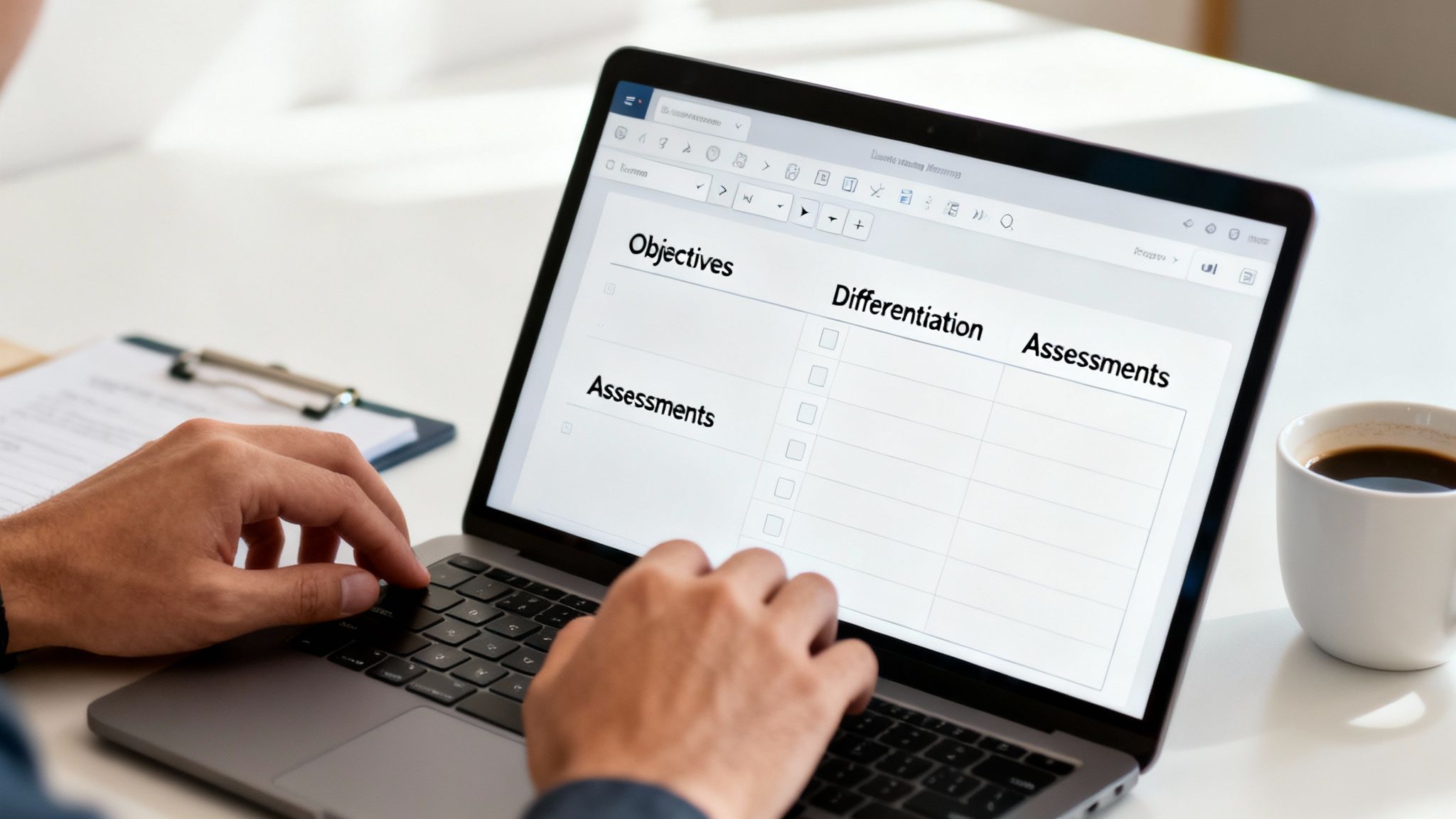
A great template is your starting line; personalization is where the magic happens. This is your chance to transform a basic document into a powerful tool that reflects your classroom’s unique spirit. It's about designing a plan that actively helps you create a calm, organized, and deeply effective learning environment.
You don’t need fancy software. With free tools like Google Docs, Slides, or Canva, you can easily tweak any layout to fit your needs perfectly. Think of your template not as a rigid rulebook, but as a living document that grows with you and your students.
Make It Your Own with Simple Hacks
Let’s move beyond just filling in blanks. True customization means embedding your teaching philosophy right into your plan’s structure. This is how you make a lesson planning template free of generic constraints and infuse it with your personal touch.
Action Point: Add one new section to your template that reflects your core values as a teacher. For example, create a specific box for differentiation strategies to keep ideas for every learner front and center. This simple change makes inclusivity a built-in part of your process, not an afterthought.
A few other powerful customization ideas:
- Color-Code Your Subjects: Use distinct colors for different subjects. It’s a simple visual cue that makes your schedule scannable at a glance, a proven way to reduce cognitive load.
- Add an "I Can" Statement Box: Frame learning objectives from the student's perspective. "I can..." statements are empowering and keep the focus squarely on student outcomes.
- Embed Hyperlinks: In a digital template, link directly to your resources—slides, videos, or articles. Your plan instantly becomes a command center, saving precious minutes during class.
Your lesson plan is more than an organizational tool; it's a reflection of your intentions. By customizing it, you're not just planning lessons—you're designing experiences that nurture both academic growth and well-being.
Integrate Objectives and Assessments Seamlessly
Gone are the days of rigid planning structures. Digital tools allow us to weave objectives, materials, and assessments together in a fluid, intuitive way. This is a lifesaver, especially when you learn that 55% of teachers cite disorganization as a major source of stress.
To make your template work even harder, create a small section for "Formative Assessment." This could be a checklist for informal observations, a space for an exit ticket question, or a reminder to use a specific questioning technique. For a huge boost to student success, consider how you can integrate powerful reading comprehension strategies for teachers directly into your template.
Finally, weave in cues for your classroom culture. Add a "Mindful Minute" prompt at the start of a lesson or a "Praise Prompt" to remind yourself to give specific, positive feedback. These small additions transform your planner into a partner that helps you create the supportive, inspiring classroom you envision.
See a Real Lesson Plan in Action
Theory is great, but seeing a plan in motion is where it all clicks. Let’s walk through a filled-in weekly lesson planning template free of overwhelming fluff. This example will show you exactly how to turn big ideas into a clear, energizing schedule that truly works in a real classroom.
Imagine you're a 4th-grade teacher launching a science unit on ecosystems. The goal for the week is to introduce students to producers, consumers, and decomposers. Here’s a simple way to map out your week to build excitement and make learning stick.
Monday: Launching the Ecosystem Unit
Start the week with a powerful hook. Instead of a lecture, plan an interactive "gallery walk." Students move around the room observing photos of different ecosystems, jotting down what they notice and wonder on sticky notes. This immediately sparks curiosity and activates prior knowledge.
- Objective: Students will be able to define "ecosystem" and identify its living and non-living parts.
- Activity (45 mins): Gallery walk with ecosystem photos, followed by a "think-pair-share" to discuss their findings.
- Differentiation: Offer sentence starters like "I notice..." for students who need more support. Challenge others to start classifying the components they see.
- Informal Assessment: A quick scan of the sticky notes gives you a snapshot of their initial ideas and misconceptions.
This active start sets a collaborative tone for the entire unit. In fact, research from the Johns Hopkins School of Education shows that lessons incorporating movement can improve both memory and attention.
Building Knowledge Through the Week
With a strong foundation, the rest of the week builds on that initial excitement. On Tuesday, you might focus on producers with a hands-on activity, like examining plant parts under a microscope. Wednesday could be all about consumers, using a fun sorting game where students categorize animals by diet.
A well-structured plan is not a cage; it is a trellis. It provides the support your lessons need to grow in unexpected and beautiful directions, creating space for those magical, unscripted moments of discovery.
By Thursday, your students are ready to explore decomposers by creating their own mini compost jars. Each day’s activity flows logically into the next, reinforcing key concepts. The plan isn't just a to-do list; it’s a narrative you’re building together.
This structure is what allows you to be spontaneous. When a student asks a brilliant question about fungi on Wednesday, your solid plan gives you the confidence to explore it. You know you won't derail the entire week. This is how a great lesson planning template free of rigidity empowers you to be a more responsive and dynamic teacher.
Weave Wellness Into Your Daily Plan
Your well-being is the engine that drives a thriving classroom. A truly great lesson plan does more than organize content—it intentionally designs a day that nurtures both you and your students. By weaving small moments of calm into your schedule, your planner becomes a daily commitment to a more balanced teaching life.
This begins with recognizing that structure is a form of self-care. Research has shown that proactive planning and routine can significantly reduce anxiety. A study published in the Journal of Educational Psychology found that teachers with well-defined classroom routines report lower levels of stress and higher job satisfaction.
Small Moments, Big Impact
Integrating wellness doesn’t require a curriculum overhaul. It’s about sprinkling intentional practices throughout your day using your lesson planning template free of any extra work.
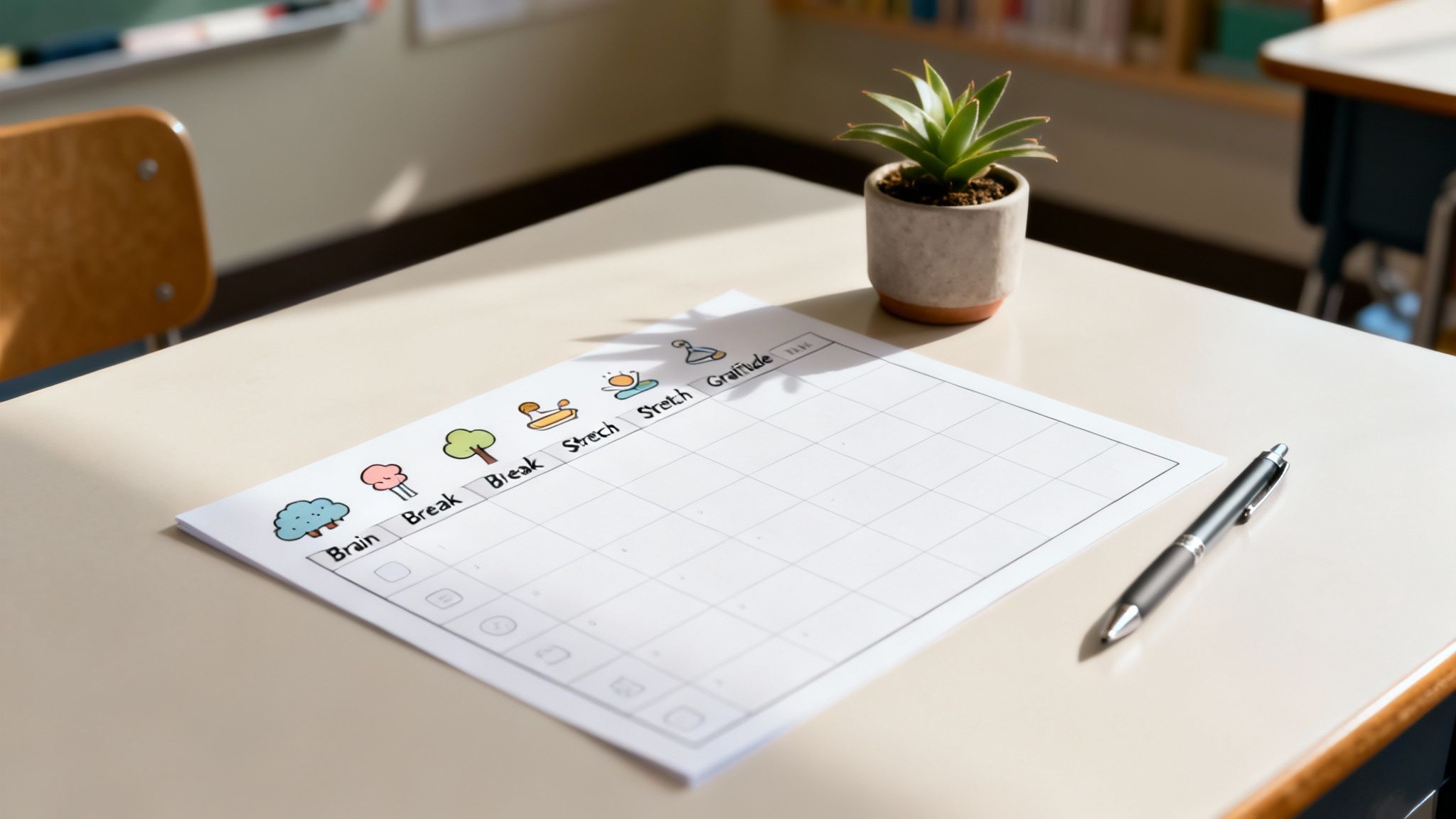
Action Point: Schedule one 3-minute "wellness break" into your plan for tomorrow. Here are a few ideas:
- Mindful Transitions: Instead of rushing, plan a 60-second "transition ritual." This could be three deep, collective breaths, a quick stretching exercise, or a moment of silent observation.
- Gratitude Prompts: Add a box at the end of your daily plan labeled "Gratitude Moment." Use it to schedule a quick share-out where students mention one good thing that happened.
- Scheduled Brain Breaks: Pencil in a five-minute "brain break" between challenging subjects. Plan a quick dance party, a doodling session, or quiet time.
Your lesson plan is your daily script. When you write moments of peace and connection into that script, you give them the same importance as your academic objectives. You're modeling that well-being isn't a luxury; it's essential.
Planning as a Tool to Reduce Decision Fatigue
Every choice you make drains mental energy. A well-structured lesson plan drastically reduces this decision fatigue by front-loading your choices. When the "what, when, and how" are already mapped out, you’re free to be more present and responsive.
This proactive approach conserves your energy for what truly matters: fostering relationships, sparking curiosity, and managing your classroom with a calm, centered presence. By using a lesson planning template free to download, you are safeguarding your own peace of mind. For more inspiration, explore our guide on mindfulness activities for teachers that you can easily plug into your planner.
Ready to Plan with Purpose?
You have the ideas, the inspiration, and the tools. Now it's time to trade planning-induced stress for a sense of calm and creativity. This is your chance to transform your lesson planner into something that serves you, freeing you to focus on the magic of teaching.
Remember, this isn't about perfection. It’s about making small, intentional shifts that add up to a more mindful, joyful, and organized classroom.
Your lesson planner is so much more than a schedule. It's a daily commitment to your own well-being and a roadmap for creating a classroom filled with connection and creativity.
Here’s your action plan to get started right now:
- Pick Your Favorite Template: Which one resonates with you—daily, weekly, or unit? Trust your intuition.
- Make It Your Own: Add one small section for a daily gratitude note or a mindfulness check-in.
- Plan Just One Lesson: Don't tackle the whole week. Fill out one lesson for tomorrow with a clear, simple focus.
Ready to dive in? Download our exclusive collection of free lesson planning templates below and start fresh.
And for those with a passion for instructional design, learning how to create and sell online courses is an incredible way to share your expertise with the world.
Your Questions, Answered
Jumping into a new planning rhythm can bring up questions. I've gathered the most common ones I hear from fellow educators to give you clear, practical answers that will help you feel confident and inspired.
What’s the Best Format for a Lesson Plan?
Honestly, the "best" format is the one that brings you clarity and calm. It truly depends on your teaching style, your subject, and what helps you feel most prepared.
I find a clutter-free, weekly lesson planning template is a lifesaver for seeing the big picture and mapping out my pacing—it dramatically reduces Sunday night anxiety. However, for a complex science lab or a day with a substitute, a detailed daily template is my trusted go-to. My advice? Experiment! Try a few free layouts and see which one feels less like a chore and more like a creative tool.
How Can a Template Actually Help with Classroom Management?
A great lesson plan is your secret weapon for proactive classroom management. Think about it: when do behavior issues often arise? In those unstructured moments between activities.
A well-structured plan with clear transitions and engaging activities keeps students on task and minimizes those opportunities for disruption. You can even build management cues right into your template! I love adding small sections for:
- Positive Reinforcement: A quick reminder to praise specific students or behaviors.
- Brain Breaks: Scheduling a two-minute stretch or a quick mindfulness exercise.
- Student Notes: A small space to jot down reminders about individual needs or goals.
Are Digital or Printable Templates Better?
This is the classic debate! There’s no right answer—it’s all about what fits your workflow and brings you joy.
Digital templates, like those in Google Docs or Canva, are fantastic for easy editing, sharing with co-teachers, and accessing from anywhere. On the other hand, there’s something incredibly satisfying about a printable template you can write on by hand and keep in a physical planner.
Because every teacher is different, our free downloads come in both formats. You get to choose what makes your life easier.
Ready to turn your planning from a chore into a more creative and mindful practice? Mesmos is here to help with beautifully designed tools that bring more joy and calm into your teaching journey. It’s time to create more space for what truly matters.


