


Feeling overwhelmed isn't a sign you're failing—it's a powerful signal from your body that it’s time to find your center. Answering that call with meditation for stress and anxiety relief is one of the most transformative gifts you can give yourself. Think of it as a beautiful journey inward, training your attention not just to cope, but to truly thrive with a sense of clarity and unshakeable inner peace.
The Beautiful Science: How Meditation Rewires Your Brain for Calm
When stress or anxiety hits, it's more than just a feeling—it’s a biological storm. Your amygdala, the brain's ancient alarm system, sounds the siren, flooding your body with stress hormones. This is your "fight or flight" response, designed for survival but often exhausting in modern life.
Meditation is the gentle, powerful counterbalance.
This timeless practice isn't about forcing your mind to go blank. It's about learning to become a compassionate observer of your thoughts, watching them drift by like clouds in the sky without getting swept up in the storm. As you practice this, you’re strengthening your prefrontal cortex—the wise, calm leader of your brain responsible for thoughtful decisions.
With each session, this calm leader gains more influence over the reactive amygdala. This incredible shift empowers you to respond to life's challenges with intention and grace, rather than automatic panic.
The Science of a Calmer Mind
Neuroscience reveals a stunning truth: a regular meditation practice can physically reshape your brain through a process called neuroplasticity. Research shows that dedicated meditators often have a less reactive amygdala and a more developed prefrontal cortex.
What does this mean for you? You’re not just feeling calmer—you are literally building a brain that is architecturally designed to handle stress with greater ease.
This biological transformation is why meditation is a trusted path to well-being for millions. A study in the journal Nature highlights that long-term practice can significantly reduce depressive symptoms, proving its profound impact over time. It's an empowering journey of self-discovery, and you can explore the foundations by understanding meditation as a mental practice.
A Simple Start to Inner Peace
Ready to turn this inspiring knowledge into life-changing action? Your journey begins not with a giant leap, but with a single, gentle breath. You don't need to clear your schedule or become a monk—you can start right now, exactly where you are.
Your First Steps to a Calmer Mind: A simple, powerful plan to begin today.
| Core Principle | Why It Matters for Anxiety | Your Action Point |
|---|---|---|
| Start Small | Big goals can feel overwhelming. A 5-minute practice feels achievable and creates inspiring momentum. | Action: Find a quiet spot for just five minutes. Set a gentle timer and give yourself this gift of stillness. |
| Anchor to Your Breath | Focusing on a physical sensation gives your busy mind a calm, steady anchor in the present moment. | Action: Sit comfortably and simply notice the feeling of your breath as it flows in and out. No need to change a thing. |
| Gently Redirect Focus | Your mind will wander—that's what minds do! The goal is to notice this with kindness and gently guide your attention back. | Action: When a thought appears, label it "thinking" without judgment, and then softly return your focus to your breath. |
This process of gently redirecting your focus is where the magic happens. Every time you guide your attention back, you’re doing a "rep" for your prefrontal cortex. You're building mental muscle, one beautiful breath at a time.
Three Simple Meditation Techniques You Can Try Today
The best way to feel the incredible benefits of meditation isn’t to read about it—it’s to experience it. And the wonderful news is, you already have everything you need. All it takes is a quiet corner and the willingness to connect with yourself for just a few precious moments.
Let's explore three profound yet simple practices designed to quiet a busy mind and soothe an anxious heart. Find a spot where you can get comfortable, and let's begin this journey together.
Mindful Breathing: Your Anchor in the Storm
When your mind feels like a stormy sea, your breath is the anchor that can hold you steady. Mindful Breathing is the foundation of meditation for a reason: it directly communicates with your nervous system, sending a powerful signal that it's safe to relax.
A Simple 5-Minute Mindful Breathing Practice:
- Settle in. Find a comfortable seat. Let your eyes gently close or soften your gaze.
- Turn your attention to your breath. Simply notice the sensation of the air entering through your nostrils and filling your lungs.
- Feel your body breathe. Place a hand on your belly if it helps. Feel the gentle rise on the inhale and the softening on the exhale.
- When your mind wanders, be kind. Acknowledge the thought without judgment ("Ah, thinking") and gently guide your focus back to your breath. Each time you do this, you strengthen your mindfulness muscle.
- Continue for five minutes. When the time is up, slowly open your eyes and take a moment to notice how you feel.
The Body Scan: Releasing Hidden Tension
Anxiety lives not just in our minds, but in our bodies—as tight shoulders, a clenched jaw, or a knot in the stomach. The Body Scan is a beautiful practice of moving your attention through your body, part by part, with gentle, loving awareness.
A 10-Minute Body Scan Guided Practice:
- Lie down comfortably. Let your arms rest by your sides, palms facing up.
- Bring your awareness to your toes. Simply notice the sensations—warmth, coolness, tingling—without needing to change anything.
- Slowly travel upward with your attention, moving through your feet, ankles, and calves.
- Continue this gentle scan up through your thighs, hips, and belly.
- Pay special attention to your shoulders and neck. On your next exhale, imagine all the tension melting away.
- Scan down through your arms to your hands and fingertips.
- Bring your awareness to your face. Soften the tiny muscles around your eyes and jaw.
- Spend the last minute feeling your entire body, whole and at peace, breathing in this moment of stillness.
This practice teaches you to listen to your body’s whispers before they become screams. By noticing tension, you empower yourself to release it.
Loving-Kindness Meditation: Growing Self-Compassion
Anxiety often brings a harsh inner critic. Loving-Kindness Meditation is the perfect antidote. It's a heartfelt practice of silently repeating phrases of warmth and goodwill—first for others, and most importantly, for yourself.
Research from institutions like Stanford has shown that this practice can significantly boost positive emotions and feelings of connection, which are essential for quieting anxiety.
A 5-Minute Loving-Kindness Practice:
- Settle into a comfortable posture. Take a few deep, grounding breaths.
- Bring to mind someone you love easily. Picture them clearly and feel the warmth in your heart.
- Silently repeat these phrases, sending these wishes to them: "May you be happy. May you be healthy. May you be safe. May you live with ease."
- Now, gently turn that kindness toward yourself. This can be the most powerful step. Repeat the phrases for you: "May I be happy. May I be healthy. May I be safe. May I live with ease."
- Stay with the feeling. Notice whatever comes up without judgment, simply returning to the kind intention of the phrases.
Building a Meditation Habit That Truly Lasts
Knowing how meditation works is inspiring, but the life-altering magic happens when you show up for it consistently. The goal is to weave this practice into the fabric of your life, creating a reliable sanctuary of calm you can always return to.
Let go of the idea that you need a perfect, silent hour. The secret to a lasting habit is to start small and make it effortless. Let’s try "habit stacking"—linking a tiny meditation to something you already do every day.
Your Action Points for a Mindful Day:
- Morning Coffee Micro-Meditation: While your coffee brews, instead of scrolling, close your eyes and take three deep, intentional breaths. Feel your feet on the floor. You’ve just started your day with a moment of peace.
- The Commute Reset: Waiting at a red light or for the bus? Use that 60-second window for a quick body scan. Notice any tension in your shoulders and consciously let it go.
- A Pre-Meeting Breather: Before a stressful call, take one minute to focus on your breath. This simple act calms your nervous system and helps you enter the meeting with a clear head.
By sprinkling these micro-meditations into your day, you prove to yourself that you do have time. Tracking these small wins can be incredibly motivating. Consider using health and wellness journals to document your journey and celebrate your progress.
Overcoming Common Meditation Hurdles
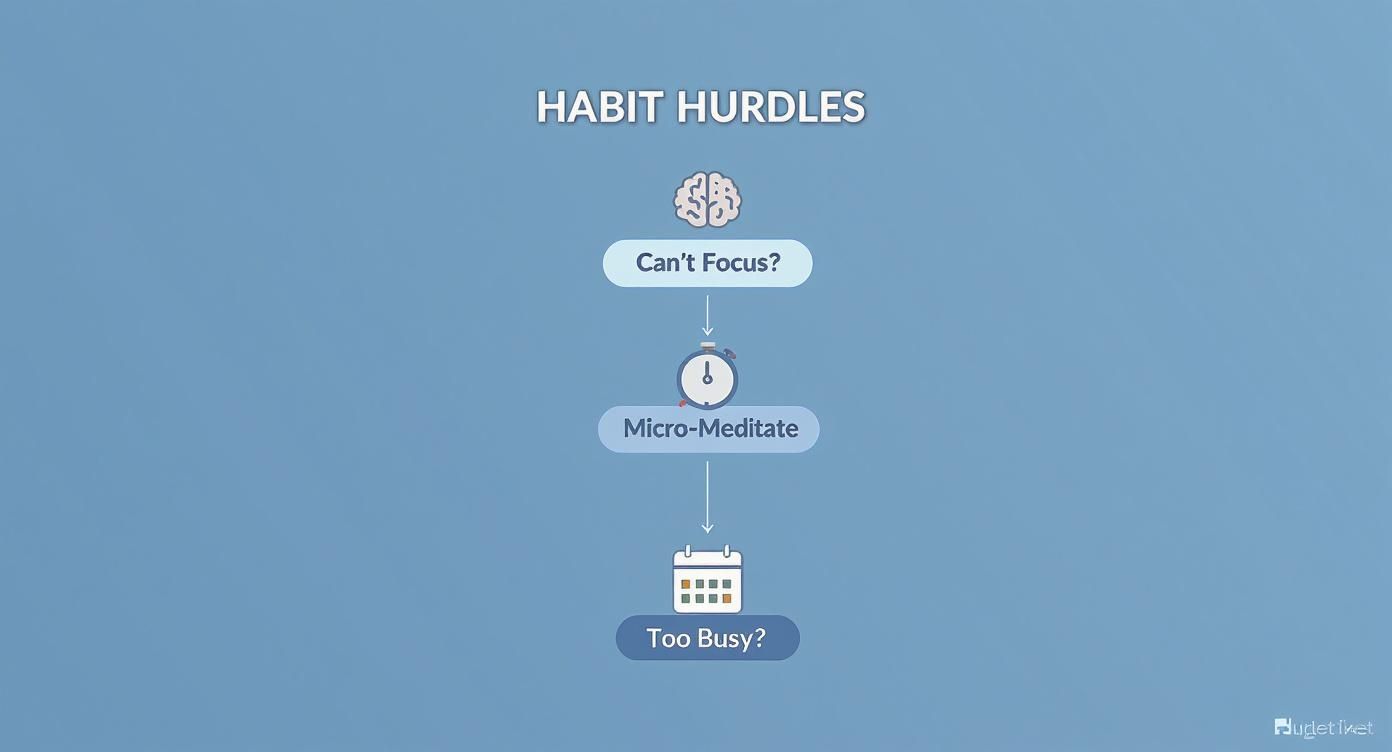
Your mind will race. You’ll feel fidgety. Some days, you just won’t feel like it. This is 100% normal and part of the process. The goal isn’t perfection; it’s gentle persistence.
A wandering mind is not a failed meditation; it’s an opportunity to practice. Every single time you notice your thoughts and gently guide your attention back, you are strengthening your focus and resilience. That is the work.
Stay motivated by remembering that consistency is what creates profound change. Research shows that sticking with a program for at least eight weeks leads to a significant reduction in depressive symptoms, building incredible mental resilience over time. Discover more about these long-term benefits on Nature.com.
Deeper Practices for Lasting Anxiety Relief
Once you're comfortable with shorter practices, you might feel a calling to explore techniques that cultivate an even deeper sense of calm. These more immersive practices are designed to help you navigate intense moments of anxiety and build lasting emotional resilience.
This is about actively engaging your mind in new ways, soothing your nervous system, and learning to guide your thoughts with focus and wisdom.
Bringing Mindfulness into Motion with Walking Meditation
Does the idea of sitting still make you feel even more antsy? Walking meditation is a beautiful alternative that combines gentle movement with mindful awareness, grounding you in the present moment through physical sensation.
A 15-Minute Walking Meditation Practice:
- Begin by standing still. Feel your feet planted firmly on the ground. Take a few deep breaths to arrive in this moment.
- Start walking at a slow, natural pace. Turn your attention to the sensation of your feet—lifting, moving, and placing them back down.
- Sync your breath with your steps if it feels comfortable.
- When you reach the end of your path, pause. Take a mindful breath, turn slowly, and begin again.
- Expand your awareness to the feeling of the air on your skin or the sounds around you, staying present with each step.
Creating a Mental Sanctuary with Visualization
Visualization is a powerful technique that uses your imagination to create deep relaxation. Your brain often can't distinguish between a vividly imagined experience and a real one. When you mentally picture a peaceful place, your body responds by slowing your heart rate and calming your nervous system.
A 10-Minute Visualization for Calm Practice:
- Find a quiet, comfortable place. Close your eyes and take a few slow, deep breaths.
- Imagine a place where you feel completely safe and at peace—a sun-drenched beach, a quiet forest, a cozy room.
- Engage all your senses. What do you see? Hear? Feel on your skin? Make it as real as possible.
- Allow yourself to fully inhabit this sanctuary. Feel the deep sense of calm wash over you. Know that this space is always available to you.
- Spend a few minutes breathing in this peaceful energy. When you’re ready, slowly bring your awareness back to the room.
The effectiveness of these practices is backed by strong science. A landmark meta-analysis of 47 trials, involving over 3,500 participants, found that mindfulness meditation programs led to moderate reductions in anxiety, with benefits comparable to antidepressants. You can learn more about these powerful meditation findings on JAMA Network. For more ideas on managing daily pressures, see our guide on how to reduce stress naturally.
Knowing When to Seek Professional Support
Embracing meditation is a beautiful and powerful act of self-love. It's an incredible tool for building a foundation of inner strength. Your commitment to this practice is a huge step toward living a more peaceful, intentional life.
However, your mental wellness journey is deeply personal. While meditation is a wonderful ally, it’s not a replacement for professional care, especially when anxiety feels persistent or overwhelming.
Recognizing the Signs It’s Time for More Support
It's a sign of profound self-awareness to know when your current toolkit isn't enough. If anxiety is consistently disrupting your life, work, or relationships, it might be time to speak with a mental health professional.
Think of it this way: Meditation helps you navigate the daily weather, but a therapist can help you understand the entire climate system of your mind, offering strategies to get to the root causes of anxiety.
Seeking help is an act of courage and one of the most important investments you can make in your well-being. A professional can provide a safe space and personalized coping mechanisms. If you feel your anxiety needs a more structured approach, you might explore options like specialized anxiety therapy to find the right support.
Your mental health is a priority. Knowing all your options—from daily mindfulness to professional guidance—empowers you to take the best possible care of yourself.
Your Top Questions About Meditation for Anxiety, Answered
Starting a new practice like meditation naturally brings up questions. That's a great sign—it means you're engaged and ready to learn! Here are clear answers to some of the most common curiosities.
How Long Until I Actually Feel a Difference?
While many people report feeling calmer after their very first session, science suggests the most significant, lasting changes in daily anxiety levels often become noticeable after about eight weeks of consistent practice. The key is consistency. Think of it like nurturing a garden—a single watering helps, but steady care allows deep roots to grow. Even five minutes a day builds a powerful foundation for a more peaceful mind.
Is It Bad if My Mind Wanders All the Time?
Absolutely not. In fact, it means you're human and your brain is doing its job! A wandering mind is completely normal and expected.
The goal of meditation isn’t to force your thoughts into submission. The real practice is in the gentle, non-judgmental act of noticing your mind has drifted and kindly guiding it back. Every time you do this, you are strengthening your mindfulness "muscle."
An aware mind is far more powerful than an empty one. Each time you gently guide your focus back, it’s a victory.
Are Those Meditation Apps Actually Any Good?
Yes, they can be a fantastic way to start! Research has shown that app-based meditation can deliver benefits very similar to in-person programs. Apps like Calm or Headspace are popular because they offer:
- Guided Sessions: They remove the guesswork, which is a huge relief when you're new.
- Helpful Reminders: A gentle nudge can make all the difference in building a consistent habit.
- Variety: They allow you to explore different styles to find what truly resonates with you.
What if Meditation Makes Me Feel More Anxious?
For a small number of people, sitting quietly can initially intensify feelings of anxiety. If this happens, please honor that feeling and don't force it. Instead, pivot to a more active form of mindfulness like a slow, intentional walk or gentle yoga. Start with very short sessions of just one or two minutes. If the feeling of heightened anxiety persists, it’s a clear sign that it's time to speak with a therapist who can help you find coping strategies that feel safe and supportive for you.
Your journey toward a calmer mind is a beautiful act of self-care. At Mesmos, we create products designed to support you every step of the way, from journals that track your progress to decor that creates a peaceful space. Discover tools to inspire your practice at Mesmos.co.


