


In a world that pulls you in a million directions, reclaiming moments for your mental well-being isn't an indulgence—it's your power. True self-care is the revolutionary act of tending to your inner world, building the resilience to navigate life's storms, and creating a sustainable foundation for your emotional health. This guide is your roadmap, filled with powerful, science-backed mental health self care tips designed to fit into your real, and often hectic, life.
We know your time is precious. That’s why each strategy here is broken down into practical, actionable steps you can implement in just a few minutes. Whether you're a parent juggling schedules, a teacher shaping young minds, or simply someone seeking a more centered existence, these techniques are for you. You'll discover not just what to do, but why it works, with insights rooted in psychology and neuroscience.
Let's explore ten pillars of mental wellness, from the grounding power of mindfulness to the mood-lifting magic of movement. Think of this as your personal toolkit for a calmer, more vibrant mind. For those looking to supplement these practices with digital support, exploring the best free mental health apps can provide on-the-go resources that align with your wellness goals. Let’s begin this transformative journey together, one intentional and restorative moment at a time. Your peace of mind is worth fighting for.
1. Mindfulness and Meditation
Imagine having an anchor in the storm of daily life. That's the power of mindfulness and meditation. Mindfulness is the simple, profound practice of being fully present in this moment, without judgment. Meditation is the exercise you do to strengthen that awareness, like a workout for your mind.
These practices are scientifically proven to calm your nervous system. By activating the parasympathetic response, they lower your heart rate and the stress hormone cortisol. Research published in journals like Social Cognitive and Affective Neuroscience shows that consistent meditation can literally rewire your brain, strengthening areas tied to emotional regulation and focus.
Why It's a Top Self-Care Tip
This practice is your portable sanctuary. It requires no equipment, just a few minutes and a willingness to be still. The impact is profound and scientifically validated.
How to Practice Mindfulness & Meditation
- Start Small: Begin with just one to five minutes daily. Consistency is your superpower, not duration.
- Use a Guide: Let an expert lead the way. Apps like Calm or Headspace offer guided meditations that make starting easy.
- Find Your Time: Anchor your practice to an existing habit, like meditating right after your morning coffee or just before bed.
- Be Kind to Your Mind: Your mind will wander. That’s its job! The practice isn't about having an empty mind, but about gently guiding your focus back to your breath, again and again.
Take Action: For a deeper dive into different styles, check out our guide on meditation techniques for beginners to find the perfect fit for you.
2. Regular Physical Exercise
Movement is medicine for the mind. Physical activity is one of the most potent mental health self care tips you can embrace. It’s a direct line to a better mood, reduced stress, and sharper cognitive function. When you move, your brain releases endorphins—natural, mood-lifting chemicals—and stimulates neuroplasticity, helping you build a more resilient brain.
Even moderate activity creates a cascade of positive changes. Exercise helps burn off excess cortisol and adrenaline, the hormones that fuel our stress response. A landmark Harvard study even found that regular exercise can be as effective as antidepressants for some individuals, highlighting its incredible power to manage symptoms of depression and anxiety.

Why It's a Top Self-Care Tip
Exercise is a cornerstone of mental wellness promoted by leading institutions like the World Health Organization because it delivers immediate, proven results. It’s a versatile and impactful strategy for everyone.
How to Practice Regular Physical Exercise
- Find Your Joy: The best workout is the one you'll actually do. If you hate running, don't force it. Explore hiking, dancing, swimming, or yoga.
- Start Manageable: Aim for 20-30 minutes of moderate activity, like a brisk walk, three times a week.
- Take It Outside: "Green exercise," or moving in nature, has been shown to provide an extra mood boost and reduce feelings of tension.
- Celebrate Consistency: Focus on showing up for yourself. Any movement is a victory. Building the habit is more important than the intensity.
Take Action: Track your activity and mood in a journal for one week. Notice the direct connection between moving your body and feeling better. Celebrate that progress!
3. Journaling and Expressive Writing
Your mind can feel like a tangled knot of thoughts. Journaling is the act of gently untangling them. This practice involves writing down your thoughts and feelings to gain clarity and reduce mental clutter. The act of translating emotions into words helps organize them, turning chaos into coherence.

This creates a private, judgment-free space for your most honest self. Groundbreaking research by Dr. James Pennebaker revealed that expressive writing can significantly reduce symptoms of anxiety and depression. By getting your thoughts out of your head and onto paper, you can see them more objectively and manage them more effectively.
Why It's a Top Self-Care Tip
Journaling is a powerful, private tool for emotional regulation that you can adapt to any lifestyle. It provides a tangible record of your growth, helping you recognize patterns and celebrate how far you’ve come.
How to Practice Journaling & Expressive Writing
- Set a Timer, Not a Goal: Start with just 10 minutes. Let your thoughts flow freely without worrying about grammar or punctuation. This is for you, not an audience.
- Use a Prompt: If you're stuck, use a simple prompt like: "What is one thing on my mind today?" or "What brought me a moment of joy?"
- Try Gratitude: A powerful variation is to write down three specific things you're grateful for. This simple exercise, proven by science, shifts your brain's focus toward positivity.
- Write Without a Filter: Give yourself permission to be completely honest. Your journal is a safe space to explore even the most difficult emotions.
Take Action: If you’re ready to start but unsure where to begin, explore our guide on how to start journaling for mental clarity for more tips and techniques.
4. Quality Sleep and Sleep Hygiene
Quality sleep is the bedrock of mental and emotional well-being. It is non-negotiable. Sleep hygiene refers to the habits you cultivate to ensure restorative rest. While you sleep, your brain is hard at work processing emotions, consolidating memories, and clearing out metabolic toxins—essentially resetting your mind for the day ahead.
According to the National Institute of Mental Health, poor sleep is strongly linked to depression and anxiety. When sleep is disrupted, it impairs mood regulation and heightens your vulnerability to stress. Prioritizing sleep is one of the most impactful mental health self care tips because it supports your brain's natural ability to heal itself.
Why It's a Top Self-Care Tip
The connection between sleep and mental health is so profound that sleep clinics now use Cognitive Behavioral Therapy for Insomnia (CBT-I) as a frontline treatment. Good sleep is a biological imperative for psychological resilience.
How to Practice Good Sleep Hygiene
- Create a Rhythm: Go to bed and wake up around the same time every day—even on weekends. This regulates your body's internal clock.
- Build a Sanctuary: Keep your bedroom cool, dark, and quiet. The ideal temperature for sleep is between 60-67°F (15-19°C).
- Institute a Screen Curfew: Power down all screens at least 30-60 minutes before bed. The blue light they emit suppresses melatonin, the hormone that signals sleep.
- Design a Wind-Down Ritual: A relaxing routine, like reading a book (a real one!), gentle stretching, or taking a warm bath, tells your body it's time for rest.
- Optimize Your Comfort: A supportive sleep environment is key. Part of cultivating good sleep hygiene involves ensuring your physical comfort; exploring how to choose the right pillow for better sleep can significantly impact your rest.
Take Action: Tonight, start with one small change. Put your phone away 30 minutes before your usual bedtime. Notice the difference it makes.
5. Social Connection and Relationships
Humans are wired for connection. Meaningful relationships are not a luxury; they are a vital component of robust mental health. Strong, supportive bonds act as a powerful buffer against life's stressors, offering validation, reducing loneliness, and fostering a deep sense of belonging.
When we engage in positive social interactions, our brains release oxytocin, the "bonding hormone," which promotes trust while lowering the stress hormone cortisol. The landmark Harvard Study of Adult Development, one of the longest-running studies on happiness, famously concluded that good relationships are the single most important factor in keeping us happy and healthy throughout our lives.
Why It's a Top Self-Care Tip
Nurturing your social bonds is as crucial for your mental well-being as exercise is for your physical health. This practice directly combats the harmful effects of isolation, which is a major risk factor for depression and anxiety.
How to Practice Social Connection
- Schedule Connection: Treat social time like an important appointment. Put a weekly call with a friend or a monthly family dinner on your calendar.
- Find Your People: Join a club, class, or volunteer group centered around a hobby you love. Shared passions are a natural bridge to friendship.
- Be Brave with Vulnerability: As researcher Brené Brown teaches, true connection blossoms when we allow ourselves to be seen. Share your authentic self with trusted individuals.
- Send the First Text: Don't wait for others to reach out. Send a quick "thinking of you" message to someone you haven't spoken to in a while.
Take Action: If you’re looking for a structured way to practice gratitude for your relationships, try using a gratitude journal to focus on the positive connections in your life each day.
6. Nutrition and Mindful Eating
The food you eat is information for your brain. The gut-brain axis is a direct communication highway that powerfully influences your mood and cognitive function. Proper nutrition provides the essential building blocks for neurotransmitters like serotonin and dopamine, which regulate feelings of happiness and motivation.
A whole field, nutritional psychiatry, has emerged to study this link. Research shows that diets rich in omega-3s, B vitamins, and magnesium can actively support mental wellness, while processed foods and sugar can fuel inflammation and mood instability. Mindful eating—the practice of paying full attention to your food—enhances this connection, improving digestion and fostering a healthier relationship with your meals.
Why It's a Top Self-Care Tip
This approach gives you direct control over a key aspect of your mental health every single day. The science is clear: the Mediterranean diet, for example, is linked to significantly lower rates of depression.
How to Practice Nutrition & Mindful Eating
- Eat Real Food: Prioritize foods in their natural state: fruits, vegetables, lean proteins, and whole grains. Add one more serving of vegetables to your day.
- Fuel Your Brain: Incorporate healthy fats rich in omega-3s, like salmon, walnuts, or flaxseed, which are crucial for cognitive function.
- Eat Without Distractions: Put your phone away. Turn off the TV. Sit at a table and truly experience the textures, smells, and tastes of your food.
- Hydrate for Clarity: Dehydration can tank your mood and concentration. Keep a water bottle with you and sip throughout the day.
Take Action: This week, choose one meal to eat with total mindfulness. Notice every ingredient, savor each bite, and express gratitude for the nourishment it provides.
7. Setting Boundaries and Saying No
Setting healthy boundaries is a profound act of self-respect and a vital form of mental health self-care. Boundaries are the clear lines you draw to protect your energy, time, and emotional well-being. They prevent the burnout that comes from overextending yourself for others.
Learning to say "no" is how you honor those boundaries. This isn't about being unkind; it's about being honest about your capacity. According to psychologists, clear boundaries are essential for psychological safety and authentic relationships. As the renowned researcher Brené Brown states, "Clear is kind. Unclear is unkind."
Why It's a Top Self-Care Tip
This skill is your frontline defense against overwhelm. It protects your most valuable resources: your time and energy. It's about choosing where to invest yourself, rather than letting your energy be drained by default.
How to Practice Setting Boundaries
- Define Your "Yes": Before you can say no, you must know what you're saying yes to. Get clear on your priorities and values.
- Practice Simple Scripts: Have a few kind but firm phrases ready. Try: "Thank you for thinking of me, but my plate is full right now," or "I can't commit to that, but I appreciate the offer."
- Use 'I' Statements: Frame your boundary around your needs. For example, "I need to protect my evenings for rest." This is about honoring yourself, not rejecting others.
- Start Small: Practice saying no in low-stakes situations first. Decline an extra task at work or a social invitation you’re not excited about to build your confidence.
Take Action: Identify one area in your life where a boundary is needed. Write it down in a journal and brainstorm a simple, respectful way to communicate it this week.
8. Practicing Gratitude
Gratitude is the simple, transformative act of shifting your focus from what's wrong to what's right. It's a powerful form of mental self-care that actively retrains your brain, moving its default setting from scanning for threats to noticing sources of joy.
Scientific research, particularly from pioneers like Dr. Robert Emmons, has shown that a regular gratitude practice can significantly reduce symptoms of depression and anxiety. It strengthens neural pathways associated with positive emotions and enhances overall life satisfaction, building profound resilience against life's challenges.
Why It's a Top Self-Care Tip
Gratitude is a universally accessible and highly effective tool for boosting well-being. It costs nothing and requires only a few moments of intentional focus, yet it can fundamentally change your outlook on life.
How to Practice Gratitude
- Start a Gratitude Journal: Each day, write down three specific things you are grateful for. Instead of "my family," try "the sound of my child's laughter." Specificity is key.
- Speak It Aloud: Make a point to directly thank someone. A simple text, call, or note can amplify positive feelings for both of you.
- Find Gratitude in Hardship: When facing a challenge, ask: "What can I learn from this?" or "Is there a hidden gift here?" This builds resilience.
- Create a Gratitude Cue: Place a reminder, like a small stone in your pocket or a sticky note on your monitor, to prompt you to pause and find something to be grateful for during the day.
Take Action: Kickstart your daily practice with a dedicated space for your thoughts. Explore our collection of beautifully designed notebooks and journals perfect for capturing your moments of gratitude.
9. Creative Expression and Hobbies
Engaging your creativity is a joyful and powerful way to care for your mental health. Whether it's painting, writing, gardening, or playing an instrument, creative hobbies provide a healthy outlet for complex emotions and shift your focus away from daily stressors.
These pursuits activate the brain's reward center, boosting dopamine and reducing stress hormones. This can lead to a "flow state," a deeply engrossed state of mind where you lose track of time and your worries seem to dissolve. The Mayo Clinic reports that engaging in creative activities can reduce anxiety, depression, and stress.
Why It's a Top Self-Care Tip
This is one of the most personalizable mental health self care tips available. It's entirely about your individual enjoyment and the process, not the final product. It’s about play, exploration, and self-expression.
How to Practice Creative Expression
- Follow Your Curiosity: What did you love as a child? Try an adult coloring book, a simple online knitting tutorial, or writing a short poem.
- Schedule Playtime: Block out even 15-20 minutes in your calendar for your hobby. This treats your creative time with the importance it deserves.
- Embrace Imperfection: The goal is to enjoy the act of creating, not to produce a masterpiece. Let go of judgment and have fun.
- Make It Easy: Keep your sketchbook, yarn, or journal easily accessible. This removes barriers and makes it easier to start when inspiration strikes.
Take Action: Don't know where to start? Try our Mindful Art & Doodling printable prompts to gently ease into a creative flow without any pressure to perform.
10. Nature Exposure and Outdoor Time
Connecting with nature is a deeply restorative and essential form of self-care. It leverages our innate biological connection to the natural world, a concept known as biophilia. Spending time outdoors has been shown to dramatically reduce the stress hormone cortisol, lower blood pressure, and elevate your mood.
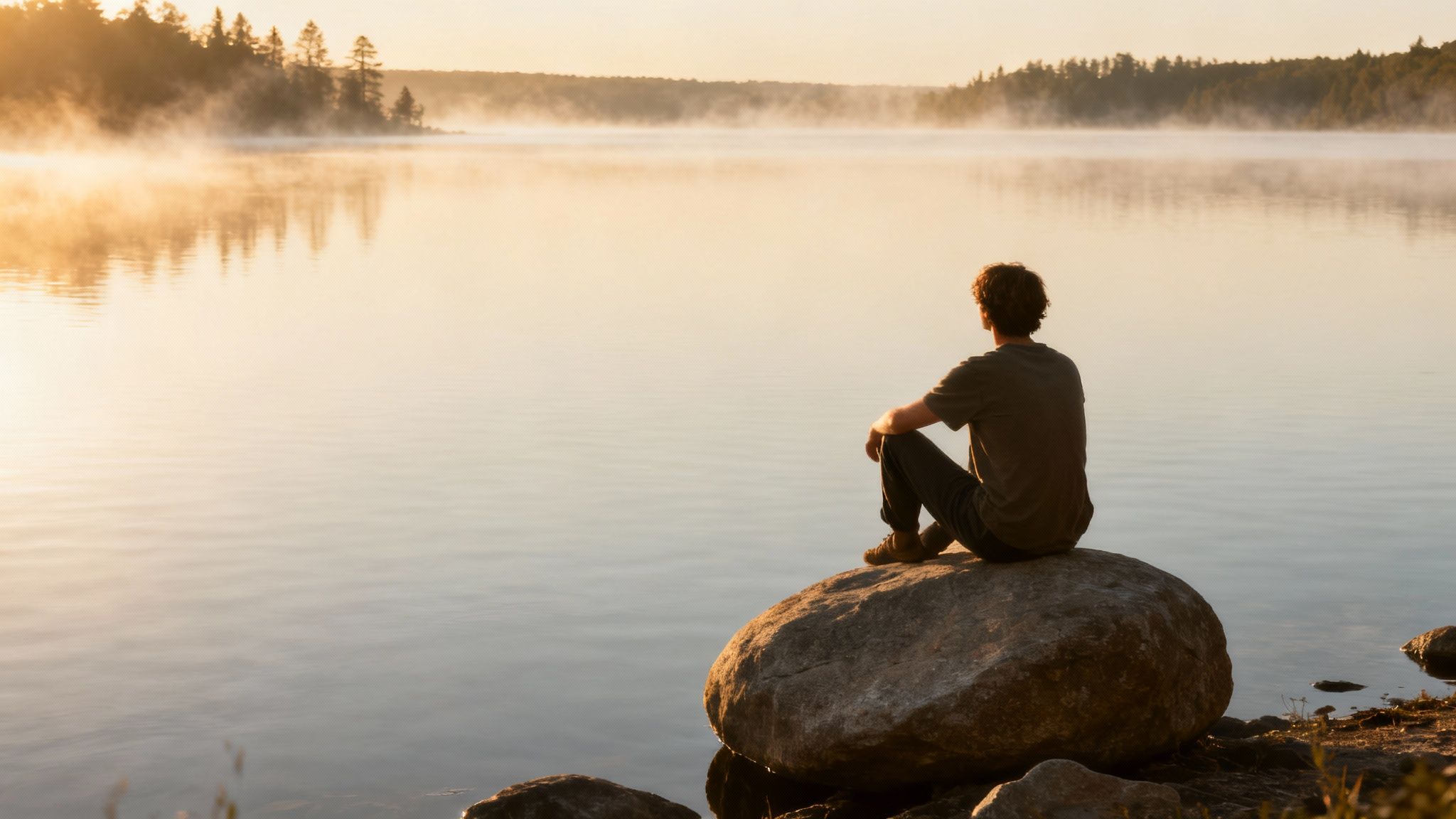
This powerful effect is supported by science. A study from the University of Michigan found that just 20 minutes in nature can significantly lower stress hormone levels. Nature offers a sense of perspective, pulls us into the present moment, and provides a powerful antidote to the overstimulation of modern digital life.
Why It's a Top Self-Care Tip
This practice is scientifically validated and incredibly accessible. The rise of "forest bathing" (shinrin-yoku) and "park prescriptions" from doctors highlights its legitimacy in promoting well-being. It is a screen-free, grounding experience that counteracts the noise of modern life.
How to Practice Nature Exposure
- Take Micro-Doses: Aim for just 15 minutes outdoors each day. A walk in a local park, sitting on a bench, or even tending to houseplants counts.
- Go Screen-Free: Leave your phone behind or switch it to airplane mode to fully disconnect and immerse yourself in the experience.
- Engage Your Senses: Intentionally notice the sound of birds, the smell of damp earth after rain, and the feeling of a breeze on your skin. This is active mindfulness.
- Find Your Green Spot: Identify a peaceful outdoor place nearby—a quiet park, a tree-lined street, a community garden—and make it a regular destination.
Take Action: Try a "sensory walk" this week. For 10 minutes, walk outside and identify five things you can see, four things you can feel, three things you can hear, two things you can smell, and one thing you are grateful for in that moment.
10 Mental Health Self-Care Tips Comparison
| Practice | Complexity 🔄 | Resource Needs ⚡ | Expected Outcomes 📊 | Ideal Use Cases 💡 | Key Advantages ⭐ |
|---|---|---|---|---|---|
| Mindfulness and Meditation | Low–Moderate (habit formation) | Minimal (time; apps optional) | Reduces stress/anxiety; improves focus and regulation | Daily stress management, workplace breaks, adjunct therapy | Evidence-based, low-cost, portable ⭐⭐ |
| Regular Physical Exercise | Moderate (planning, motivation) | Moderate (time; possible equipment) | Improves mood, sleep, cognition; reduces depression symptoms | Depression adjunct, energy boost, social programs | Strong antidepressant effects; boosts cognition ⭐⭐ |
| Journaling and Expressive Writing | Low (consistency required) | Minimal (pen/paper or app) | Enhances emotional processing; reduces anxiety/stress | Therapy adjunct, self-reflection, trauma processing | Private, tracks patterns, low-cost ⭐ |
| Quality Sleep and Sleep Hygiene | Moderate (habit + environment changes) | Low–Moderate (time; bedroom adjustments) | Improves mood, resilience, cognitive function | Foundational mental health; when sleep is disrupted | High impact on mood/cognition; restorative ⭐⭐ |
| Social Connection and Relationships | Moderate–High (time, emotional work) | Moderate (time, effort) | Reduces loneliness; increases resilience and support | Loneliness, crisis support, long-term wellbeing | Strong protective effect on mental & physical health ⭐⭐ |
| Nutrition and Mindful Eating | Moderate (planning, behavior change) | Moderate–High (food, prep time) | Improves mood, reduces inflammation; supports neurotransmitters | Mood stabilization, preventive mental health care | Direct gut-brain impact; sustainable benefits ⭐ |
| Setting Boundaries and Saying No | Moderate (skill-building, practice) | Low (communication/time) | Reduces burnout; increases self-respect and clarity | Work-life balance, preventing overwhelm, relationship health | Protects energy; improves relationship quality ⭐ |
| Practicing Gratitude | Low (simple daily habit) | Minimal (few minutes/day) | Increases life satisfaction; shifts negative bias | Daily mood boost, relationship appreciation, resilience | Easy to implement; enhances positivity ⭐ |
| Creative Expression and Hobbies | Low–Moderate (time, practice) | Variable (materials, classes) | Provides stress relief, flow, purpose and self-esteem | Emotional outlets, flow states, skill development | Personal, enjoyable, supports flow states ⭐ |
| Nature Exposure and Outdoor Time | Low (access dependent) | Minimal–Moderate (time/travel) | Rapid reduction in stress hormones; improved mood | Quick anxiety relief, mindfulness, low-cost therapy | Fast physiological benefits; accessible and restorative ⭐ |
Weaving Self-Care Into the Fabric of Your Life
The journey through these ten essential domains of self-care reveals a profound truth: mental wellness is not a destination. It is a daily practice. It's not about grand gestures but about the small, intentional choices you make for yourself amidst the noise—the quiet moments you reclaim as your own.
We've explored a diverse toolkit of mental health self care tips, each designed to be adaptable and accessible. True self-care is about integration, not addition. It's about weaving these practices into the life you already have, transforming them from abstract concepts into lived experiences that build a robust foundation for your well-being.
From Knowledge to Action: Your Personal Self-Care Blueprint
The power of this knowledge is in its application. Think of this not as another checklist, but as a mosaic you are building piece by piece. Each small action—a gratitude entry, a healthy meal, a "no" that protects your energy—is a tile that adds color, strength, and beauty to the overall picture of your life.
Key Takeaway: Consistent, small acts of self-care compound over time, creating a powerful buffer against stress and building a deep, resilient sense of inner peace. It is the practice, not perfection, that matters.
Your Next Steps on the Path to Wellness
The most effective approach is to start small. Choose one or two tips that resonate with you most right now and commit to practicing them consistently.
- Identify Your Starting Point: Which tip felt most needed today? Was it the idea of a 10-minute nature walk, the relief of journaling, or the simple act of a mindful meal?
- Schedule It: Treat your self-care like an important appointment. Block out 10 minutes in your calendar. Making it official drastically increases your chances of following through.
- Track the Good: Use a planner to note when you complete your practice and how you feel afterward. This creates a positive feedback loop that reinforces the habit.
- Practice Self-Compassion: You will miss days. The key is to simply begin again without judgment. Every moment is a new opportunity to choose yourself.
By mastering these mental health self care tips, you are not just coping; you are actively cultivating a life of greater calm, clarity, and joy. You are investing in your most valuable asset: you. This investment pays dividends in every area of your life. Your future self will thank you for the intentional, beautiful, and resilient life you are building today, one small, mindful step at a time.
Ready to put these principles into practice? The beautifully designed journals and planners from Mesmos are the perfect companions for your wellness journey, providing a dedicated space for gratitude, reflection, and intentional living. Start weaving self-care into your daily rhythm by exploring the collection at Mesmos.


