

In a world buzzing with constant demands, finding a moment of peace can feel like a distant dream. But what if the power to cultivate calm and clarity wasn't somewhere out there, but right here, within you? This is the promise of mindfulness: the art of being fully present, aware of where you are and what you’re doing, without being swept away by the chaos around you. This isn't just a trend; it's a scientifically-backed path to a more vibrant life.
Grounded in compelling research, including studies in top journals like JAMA Internal Medicine, a consistent mindfulness practice is proven to reduce stress, sharpen focus, and foster emotional balance. This guide moves beyond theory, offering you a powerful toolkit of actionable mindfulness activities for adults. We’ve designed these exercises to be simple and adaptable, whether you have five minutes between meetings or a dedicated hour for yourself.
This listicle will guide you through ten transformative practices, from Mindful Breathing to Gratitude. You'll learn how to turn everyday moments into opportunities for profound peace. For those ready to dive deeper, an immersive experience like a Mindfulness Day Retreat can beautifully solidify these skills. Whether you're a busy parent, a dedicated teacher, or simply seeking a more centered life, these practices are your invitation to reclaim your presence, ignite your inner peace, and discover a more meaningful way of living. Your journey begins now.
1. Guided Meditation
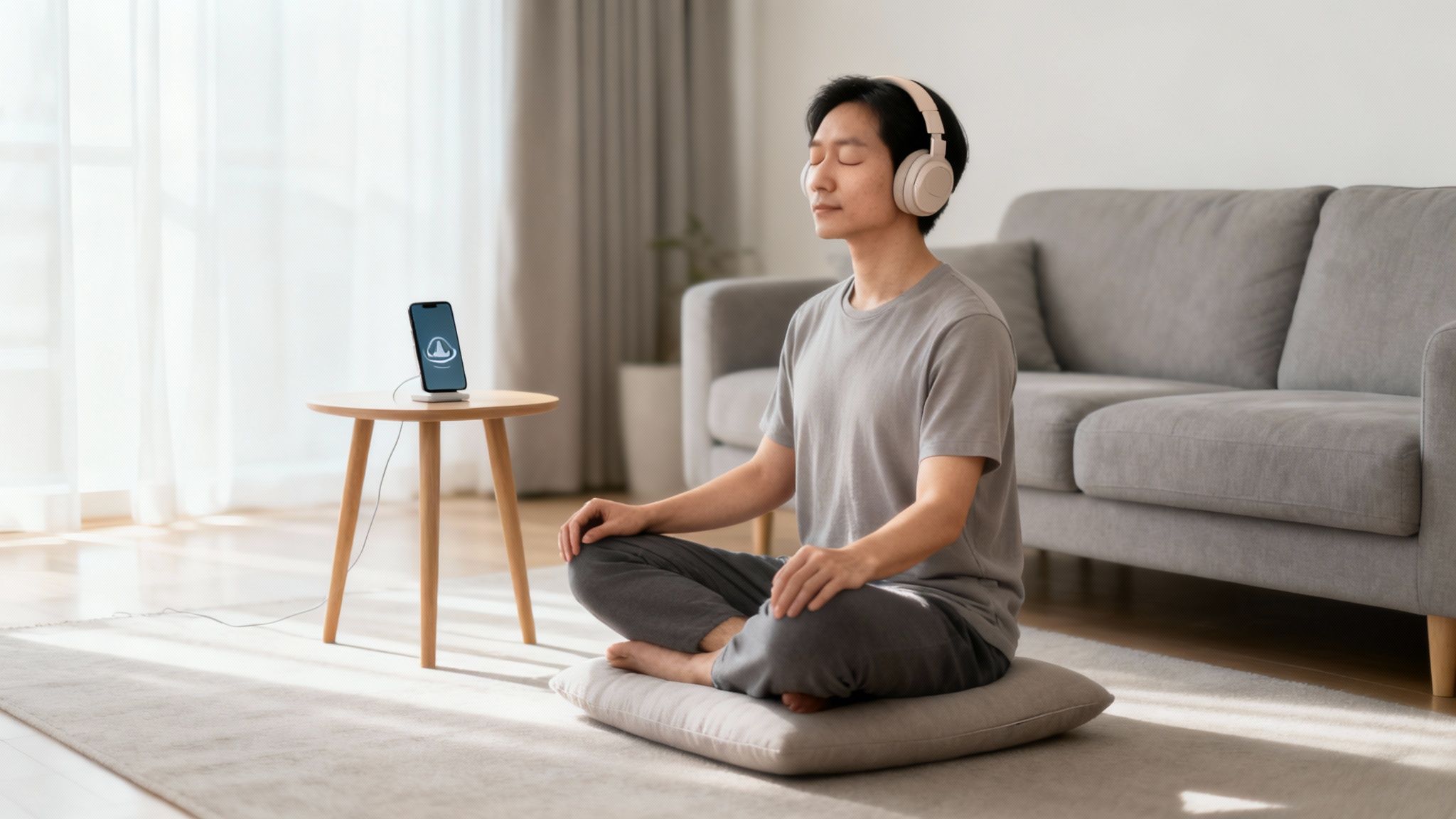
Guided meditation is your welcoming gateway into mindfulness, especially if you're just starting. It’s like having a trusted guide lead you through an unknown land. You simply follow their voice—either in person or through an app—as they direct you through the steps of relaxation, focus, and awareness. This structure removes the guesswork and quiets the "Am I doing this right?" voice in your head.
Instead of struggling to tame a wandering mind on your own, you can relax into the gentle instructions. This support, often paired with calming sounds, helps anchor your attention and provides a clear path back when your thoughts drift. It’s a personal trainer for your mind, offering the structure you need to build a powerful mindfulness foundation.
The Science Behind It
Guided meditation is highly effective because it makes the practice instantly accessible. The clear format helps you cultivate focus without the pressure of self-direction. A 2018 study in Behavioral Brain Research revealed that even a single session can reduce anxiety and improve cognitive function, showcasing its immediate power. It's the perfect tool for busy adults seeking a direct path to de-stress.
Your Action Plan
- Find a Guide: Explore apps like Headspace, Calm, or the free library on Insight Timer. Find a voice and style that resonates with you.
- Start Small: Commit to just 5-10 minutes a day. Consistency is more powerful than duration when building a new habit.
- Action Point: Try your first guided meditation tonight before bed. Notice how it shifts your state of mind.
2. Mindful Journaling
Mindful journaling is the beautiful practice of capturing your present moment on paper. It’s about translating your thoughts, feelings, and sensations into words as they arise, free from any pressure to be polished or perfect. This simple act transforms writing from a task into a powerful exercise in self-discovery and emotional release.
The goal isn't to recount your day, but to connect with your inner world. By allowing your thoughts to flow without judgment, you create a sacred space for authentic reflection. This makes mindful journaling one of the most insightful mindfulness activities for adults seeking to understand their emotions and cultivate inner clarity.

The Science Behind It
This practice works by externalizing your thoughts, allowing you to observe them with greater clarity. Known as "expressive writing," this technique is scientifically proven to reduce stress. A landmark study from the University of Texas at Austin found that participants who wrote about stressful events experienced improved physical health. It makes abstract feelings tangible and manageable.
Your Action Plan
- Set a Time: Dedicate 5 minutes each morning or evening to this practice.
- Write Freely: Let go of rules. Don't worry about grammar or spelling. This is for your eyes only.
- Action Point: Tonight, take out a notebook and write for three minutes using this prompt: "What am I feeling in this moment?"
3. Body Scan Meditation
The body scan meditation is a profound practice that rebuilds the connection between your mind and your body. It involves systematically guiding your awareness through your body, from your toes to your head, simply noticing any sensations—warmth, coolness, tingling, tension—without trying to change them.
This practice trains you to listen to your body’s subtle language and recognize how stress and emotions manifest physically. By shining the light of non-judgmental awareness on these areas, you can release stored tension and cultivate a deep sense of calm. It's a loving conversation with your body, learning to hear what it has to say.
The Science Behind It
The body scan is powerfully grounding. As a core component of Jon Kabat-Zinn's Mindfulness-Based Stress Reduction (MBSR) program, its benefits are well-documented. A study in the Journal of Psychosomatic Research found that regular body scan practice significantly reduced both physical and psychological symptoms in people with chronic pain, demonstrating its potent mind-body benefits.
Your Action Plan
- Get Comfortable: Lie on your back on a mat or bed with your arms by your sides.
- Use a Guide: Start with a guided recording from YouTube or an app like Calm to learn the flow.
- Action Point: Try a 10-minute guided body scan before sleep. It’s a wonderful way to release the day's tension.
4. Mindful Walking
Mindful walking transforms a simple, everyday action into a moving meditation. Instead of walking on autopilot, lost in thought, you bring your full awareness to the physical experience of each step. This practice blends light physical activity with mental focus, making it one of the most accessible mindfulness activities for adults who find sitting still a challenge.
You intentionally notice the sensation of your feet on the ground, the rhythm of your breath, and the sights and sounds around you. It’s a dynamic way to connect with your body and your environment, turning any journey—whether to the mailbox or through a park—into an opportunity for presence.

The Science Behind It
Mindful walking grounds your awareness in the present moment through physical sensation, which can interrupt cycles of anxious thinking. Championed by Zen master Thich Nhat Hanh, this practice is backed by science. A 2017 study in Evidence-Based Complementary and Alternative Medicine showed that mindful walking significantly reduced depressive symptoms, highlighting its therapeutic power.
Your Action Plan
- Slow Down: Begin walking at a slower, more deliberate pace.
- Focus on Your Feet: Bring your attention to the feeling of your heel, sole, and toes connecting with the ground.
- Action Point: On your next walk, spend the first five minutes focusing only on the sensation of your feet touching the earth.
5. Loving-Kindness Meditation (Metta)
Loving-kindness meditation, or Metta, is a heart-opening practice designed to cultivate boundless compassion. It involves silently repeating phrases that extend goodwill, first to yourself, then to loved ones, neutral people, and eventually all beings. It is a systematic practice for nurturing your capacity for empathy, connection, and warmth.
Unlike other meditations, Metta actively generates positive emotions. It’s a direct antidote to feelings of frustration, resentment, or self-criticism. This practice is an emotional balm, helping you build resilience and foster a more positive outlook on yourself and the world.
The Science Behind It
Metta meditation is proven to rewire your brain for happiness. Groundbreaking research by positive psychology expert Barbara Fredrickson showed that consistent practice increases positive emotions and life satisfaction. Furthermore, a study in the Journal of Positive Psychology found it can reduce symptoms of chronic pain and PTSD by fostering deep self-compassion.
Your Action Plan
- Choose Your Phrases: Start with simple phrases like: "May I be happy. May I be healthy. May I be safe."
- Start with Yourself: Always begin by offering these kind wishes to yourself. This is the foundation.
- Action Point: Sit for two minutes and repeat your chosen phrases, directing them inward. Feel the gentle warmth of this self-compassion.
6. Mindful Breathing (Pranayama)
Mindful breathing is the cornerstone of mindfulness—the simple, profound act of paying attention to your breath. This practice shifts breathing from an unconscious function to an intentional tool for anchoring your mind and calming your nervous system.
By consciously slowing and deepening your breath, you activate your body's relaxation response (the parasympathetic nervous system). This makes it one of the most immediate and accessible mindfulness activities for adults. You can do it anywhere, anytime, using your breath as a portable anchor to the present moment.
The Science Behind It
Your breath is directly linked to your brain state. Research from institutions like Stanford University shows that specific breathing patterns can directly influence your emotions and stress levels. Techniques like Box Breathing (breathing in a 4-4-4-4 count) are so effective at managing stress that they are taught to military personnel and first responders.
Your Action Plan
- Try Box Breathing: Inhale for a count of four, hold for four, exhale for four, and hold for four.
- Practice in Calm Moments: Build this skill when you're relaxed, so it's easier to access when you're stressed.
- Action Point: Right now, stop and take three conscious, deep breaths. Inhale through your nose, exhale through your mouth. Notice the instant shift.
7. Mindful Eating
Mindful eating is the joyful practice of bringing your full awareness to the experience of eating. It involves slowing down and using all your senses to savor your food's flavors, textures, and smells. This transforms a routine meal into a rich, nourishing meditation.
Instead of rushing through lunch while scrolling on your phone, you focus completely on the act of eating. This practice reconnects you with your body’s natural hunger and fullness cues, fostering a healthier relationship with food. It’s an opportunity to appreciate the nourishment you are receiving, turning a simple meal into a moment of gratitude.
The Science Behind It
Mindful eating is a powerful tool because it reframes an existing daily routine. Research published in the Journal of Obesity found that mindfulness-based interventions significantly improve eating behaviors by increasing awareness of physical and emotional cues. This practice helps break the cycle of mindless or emotional eating, leading to better digestion and greater satisfaction.
Your Action Plan
- Engage Your Senses: Before your first bite, notice the colors, shapes, and aromas of your food.
- Remove Distractions: Put your phone away and turn off the TV. Create a space dedicated to your meal.
- Action Point: With your next snack, eat it as slowly as possible. Try to identify every single flavor.
8. Gratitude Practice
Gratitude is the simple, profound act of intentionally focusing on the good in your life. It involves actively noticing and appreciating the people, experiences, and things that bring you joy. This practice powerfully shifts your focus from what you lack to the abundance that surrounds you, building a resilient foundation for happiness.
Instead of getting caught in a cycle of stress, a gratitude practice trains your brain to seek out the positive. It's not about ignoring challenges, but about giving weight to the good. This conscious cultivation of thankfulness is one of the most uplifting mindfulness activities for adults, grounding you in a state of appreciation.
The Science Behind It
Gratitude is scientifically proven to make you happier. A 2019 study in the Journal of Positive Psychology confirmed that regular gratitude practices lead to sustained increases in well-being and reductions in depressive symptoms. It works by activating the brain's reward centers and boosting feel-good neurotransmitters like dopamine and serotonin, effectively rewiring your brain for joy.
Your Action Plan
- Be Specific: Instead of "I'm grateful for my family," try "I'm grateful for the way my partner encouraged me today."
- Establish a Routine: Each night before bed, think of three specific good things that happened during your day.
- Action Point: Right now, name one small thing you are grateful for, like the comfort of your chair or the light in the room.
9. Mindful Movement (Yoga, Tai Chi, Qigong)
Mindful movement unites physical postures, breathing, and focused attention into a moving meditation. Practices like yoga, tai chi, and qigong are more than just exercise; they are powerful tools for cultivating a deep mind-body connection. This approach transforms physical activity into a rich, sensory experience.
Instead of just going through the motions, you are invited to notice the subtle sensations in your body and the rhythm of your breath. This active engagement with the present moment helps quiet mental chatter and anchors you firmly in your body. It’s a perfect way to practice mindfulness if you find it hard to sit still.
The Science Behind It
Mindful movement addresses mental and physical tension at the same time. The gentle, flowing movements release stored stress, while the focus on breath calms the nervous system. A 2017 meta-analysis in the Journal of Evidence-Based Integrative Medicine found that both yoga and tai chi significantly reduced symptoms of anxiety and depression, offering a holistic path to well-being.
Your Action Plan
- Find Your Flow: Explore beginner classes on YouTube, like Yoga With Adriene.
- Focus on Breath: Let your inhales and exhales guide the pace and rhythm of your movements.
- Action Point: Try a 10-minute beginner yoga or stretching video today, focusing completely on how each movement feels in your body.
10. Digital Detox and Mindful Tech Breaks
A digital detox is one of the most essential mindfulness activities for adults in our hyperconnected world. It’s the practice of intentionally stepping away from screens to reconnect with yourself and the world around you. It isn't about rejecting technology, but about using it with purpose instead of letting it control you.
By consciously unplugging, you reclaim your focus and reduce the chronic low-level stress caused by constant notifications. This intentional pause allows your mind to rest, wander, and engage more deeply with your real life. It is a powerful choice to be present.
The Science Behind It
A digital detox directly counteracts the negative effects of constant digital stimulation. Research from the Journal of Social and Clinical Psychology has linked reduced social media use to significant decreases in depression and loneliness. Setting boundaries with technology creates space for genuine rest, deeper connections, and improved mental well-being.
Your Action Plan
- Establish Tech-Free Zones: Make the bedroom or dining table a screen-free zone. This can dramatically improve sleep and connection.
- Schedule "No-Phone" Time: Start with one hour each day where you put your phone away completely.
- Action Point: Tonight, put your phone on airplane mode one hour before you plan to sleep. Read a book or listen to music instead.
Comparison of 10 Mindfulness Activities
| Practice | Implementation Complexity 🔄 | Resources ⚡ | Expected Outcomes 📊⭐ | Ideal Use Cases 💡 | Key Advantages ⭐ |
|---|---|---|---|---|---|
| Guided Meditation | Low–Moderate: follow instructor or recordings | Device/app or class; headphones optional | Improved focus, routine building, reduced beginner uncertainty 📊 | Beginners, remote practice, group classes | Structured guidance increases adherence |
| Mindful Journaling | Low: requires habit discipline | Pen & notebook or digital app | Greater self-awareness, emotional processing, tracked growth 📊 | Self-reflection, therapy adjunct, habit tracking | Tangible record; low cost; supports insight |
| Body Scan Meditation | Low: simple sequence but needs quiet | Quiet space, mat or bed, optional recording | Reduces physical tension; aids sleep and somatic awareness 📊 | Stress relief, sleep routine, grounding | Direct mind–body relaxation; no equipment |
| Mindful Walking | Low: easy to integrate but distractible | Safe walking route; comfortable shoes | Boosts alertness, focus, mild cardio benefits 📊 | Commuting, lunch breaks, those who dislike sitting | Combines movement with mindfulness |
| Loving‑Kindness (Metta) | Moderate: emotional vulnerability required | Quiet space; simple phrases or guided audio | Increases compassion, reduces resentment, improves relationships 📊 | Self‑compassion work, conflict healing, therapy | Strengthens empathy and forgiveness over time |
| Mindful Breathing (Pranayama) | Very Low: simple techniques, easy to learn | No equipment; brief practice anywhere | Immediate calming, lower heart rate/cortisol ⭐📊 | Acute stress relief, focus resets, discrete situations | Fast, portable physiological regulation |
| Mindful Eating | Moderate: requires dedicated, unrushed time | Screen‑free meal setting; attention to food | Better digestion, reduced overeating, healthier habits 📊 | Meal times, weight/relationship with food work | Enhances satisfaction; reduces emotional eating |
| Gratitude Practice | Very Low: short daily routine | Journal or mental practice; 3–10 items | Increased happiness, resilience, improved sleep 📊 | Daily routines, family rituals, mood maintenance | Scientifically backed uplift; cost‑free |
| Mindful Movement (Yoga/Tai Chi/Qigong) | Moderate–High: technique & instruction advised | Space, teacher or video, optional props | Improved fitness, balance, stress reduction 📊 | Integrated fitness/mindfulness, group classes | Merges physical health with mental clarity |
| Digital Detox & Tech Breaks | Moderate: behavioral change & boundaries | Planning, alternative activities, accountability | Better sleep, focus, reduced anxiety and FOMO 📊 | Overloaded professionals, family time, creative work | Reduces distraction; restores presence and deep work |
Your Journey Starts Now: Weaving Mindfulness into the Fabric of Your Life
The path to mindfulness isn’t about adding another chore to your to-do list. It’s a gentle, inspiring journey of weaving awareness into the very fabric of your life. We've explored ten powerful mindfulness activities for adults, each a unique gateway to the present moment, from the quiet stillness of a Body Scan to the gentle rhythm of Mindful Walking.
The goal isn't to master every technique. It’s to discover which invitations to presence resonate most with you. Perhaps the quiet reflection of Mindful Journaling brings you clarity, or the warmth of Loving-Kindness Meditation helps you embrace self-compassion.
From Knowledge to Embodied Practice
The true power of mindfulness awakens not in reading about it, but in the doing. This is where profound change happens. It’s the difference between knowing gratitude is good for you and feeling the genuine warmth of appreciation as you name three beautiful moments from your day.
This is a practice of consistency, not perfection. There will be days your mind wanders or you forget to eat mindfully. That isn't failure; it's part of the human experience. The real practice is gently guiding your attention back, again and again. Each time you do, you strengthen your "mindfulness muscle."
“The little things? The little moments? They aren’t little.” - Jon Kabat-Zinn
This is the heart of a mindful life: finding profound peace in the ordinary. The rich taste of your coffee, the feeling of sunshine on your skin, the sound of a loved one's laugh—these are the moments that make up a beautiful life.
Your Actionable Path Forward
To turn this inspiration into real change, let’s create a simple plan. Choose what feels most inviting to you right now.
- Choose Your Anchor Practice: Select just one of the ten mindfulness activities. Does Mindful Breathing feel like the perfect tool for your busy day? Or does a Digital Detox feel like the most urgent act of self-care?
- Commit to Five Minutes: Anyone can find five minutes. Set a timer and dedicate that small window each day to your chosen practice. This builds momentum without overwhelm.
- Link It to an Existing Habit: Anchor your new practice to something you already do. Practice Mindful Breathing while your coffee brews, or do a quick Body Scan as you get into bed. This "habit stacking" dramatically increases your chances of success.
- Observe with Kindness: Notice how you feel before, during, and after your practice. There's no "right" way to feel. The goal is simply to be aware, with curiosity and compassion.
Remember, the aim of these mindfulness activities for adults is not to escape life, but to engage with it more fully—with more clarity, compassion, and joy. You are building a toolkit for a more resilient, connected, and vibrant life. Your journey begins not tomorrow, but in this very breath.
Ready to put these principles into practice with a tool designed for intention? The journals and wellness planners from Mesmos provide the perfect structure to build a consistent gratitude or mindfulness habit. Explore the collection at Mesmos and find the perfect companion for your journey inward.


