


Have you ever held a piece of paper that just felt right? That satisfying, premium quality you can feel in your fingertips is powered by its GSM, or Grams per Square Meter. Think of it as the secret language of paper—a simple number that unlocks its character and unleashes its potential.
The Foundation of Your Creative Vision
So, what does GSM actually mean for paper? At its heart, it’s a beautifully simple and universal measurement. Standing for Grams per Square Meter, GSM is the global standard for paper weight, as defined by the International Organization for Standardization (ISO 536). It allows creators and printers everywhere to speak the same language.
This metric tells you exactly how much a one-meter by one-meter square of paper weighs in grams. This single number directly impacts its thickness, sturdiness, and how it feels in your hand. You can dive deeper into how this system stacks up against others with the experts at PAX Solutions.
Think of it like the thread count in luxury sheets or the cacao percentage in gourmet chocolate. A higher GSM number means a denser, heavier, and usually more durable paper. This isn't just a technical detail; it’s the very foundation that shapes how your final project will look, feel, and endure.
Why GSM Is Your Creative Superpower
Understanding GSM empowers you to make choices with intention. The weight of your paper sends a message long before anyone reads a single word.
A heavier paper often conveys quality, importance, and permanence. It’s the reason a wedding invitation feels more significant than a flyer, or why a thank you note on thick cardstock leaves such a lasting impression.
Choosing the right GSM is the first step in ensuring the physical medium matches your creative vision. It dictates everything from how crisp a printed photo appears to the satisfying feel of turning a page in a high-quality journal.
When you select a paper, you’re really choosing the character of your project. Here’s why this single metric is so critical:
- It dictates durability: A higher GSM means a sturdier paper that can stand up to more handling, making it perfect for things like business cards, book covers, and cherished art prints.
- It influences print quality: Heavier papers are fantastic at preventing ink from bleeding through, resulting in sharper, more vibrant colors and super-clean text.
- It shapes the user experience: The tactile sensation of a paper—its weight, stiffness, and texture—has a huge impact on how your message is received.
Once you master this simple concept, you'll stop seeing paper as just a blank canvas. You’ll start to see it as an active, essential partner in your expression, ready to bring your most beautiful ideas to life.
How to Visualize Different Paper Weights
Numbers on a screen don't always connect with reality. When you see a label like "120 GSM," what does that actually feel like? Let’s translate those technical specs into tangible, real-world examples so you can feel confident in your choices.
Think about the standard paper you’d find in an office printer or a basic notebook—that’s usually around 80-90 GSM. It’s lightweight and functional, but it might not feel special enough for a heartfelt gift or a keepsake journal.
Now, imagine the smooth, satisfying pages of a high-quality planner, where your favorite ink pen just glides without bleeding through. That's the magic of 100-120 GSM paper. It's a small step up in weight that makes a huge difference in the writing experience.
This visual perfectly breaks down what GSM is all about—it's simply a measurement of a paper's density, connecting its weight in grams to a standard square meter.
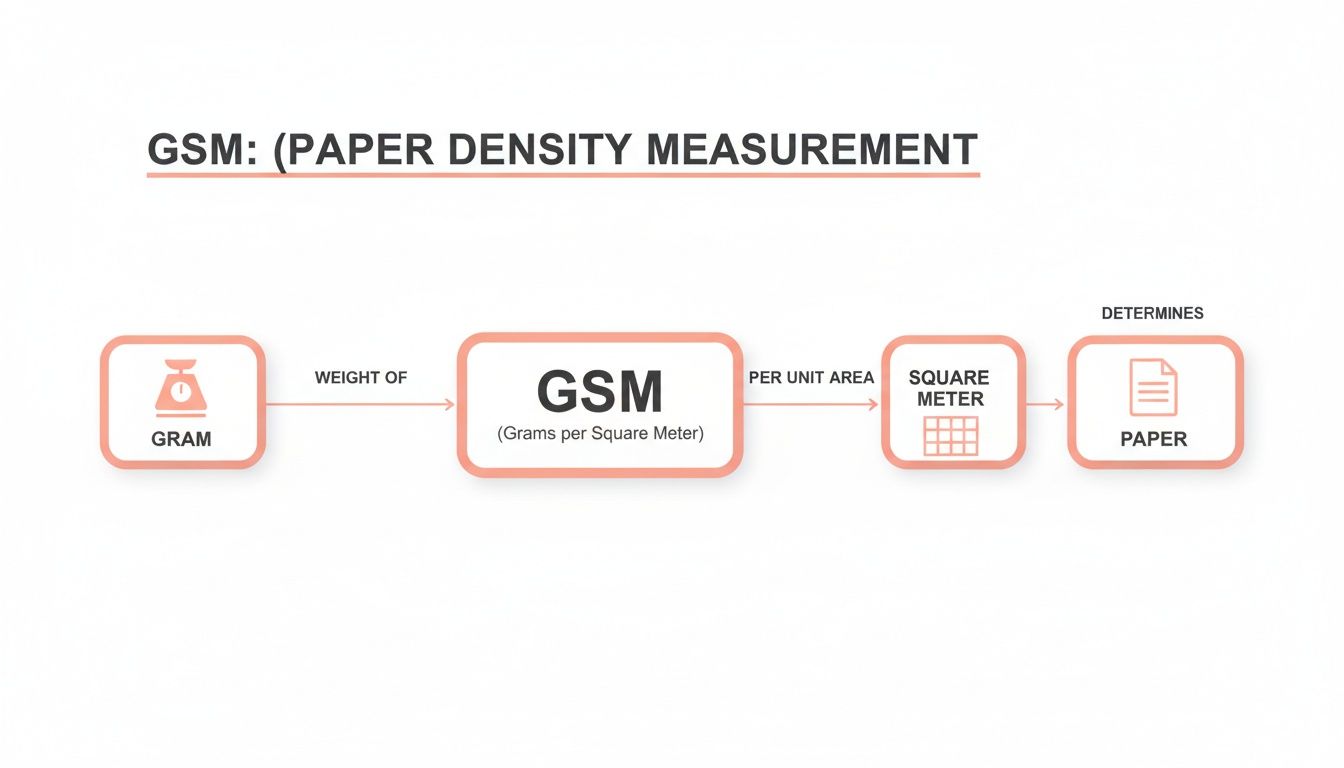
As you can see, a higher GSM number means more paper fibers are packed into that same amount of space, giving it more substance and durability.
From Flyers to Fine Art
As we go up the GSM scale, the paper starts to feel much more substantial. A professionally printed flyer or a beautiful art print is often in the 130-200 GSM range. This weight gives it enough durability to be handled while making colors look rich and vibrant.
Finally, picture the sturdy, premium feel of an elegant wedding invitation or a memorable business card. That impressive thickness comes from using heavyweight paper, typically 250 GSM or higher. This isn’t just paper anymore; it’s making a statement.
Choosing a higher GSM is like choosing to frame a precious memory. It adds a touch of permanence and elegance, protecting your most important messages and preserving them beautifully for years to come.
Getting a feel for these weights is one thing, but what happens when you’re dealing with different measurement systems? In the U.S., you'll often see paper weight measured in pounds (lb), which can get confusing.
Let's clear that up.
GSM vs Pounds (lb) a Handy Conversion Chart
This little chart is your go-to translator, bridging the gap between the global GSM standard and the U.S. pound (lb) system.
| Paper Type | Common GSM | Equivalent Weight (lb) |
|---|---|---|
| Standard Office Paper | 90 GSM | 24 lb Bond |
| Journal/Planner Paper | 120 GSM | 80 lb Text |
| Art Print/Poster | 170 GSM | 100 lb Text |
| Business Card/Invitation | 300 GSM | 110 lb Cover |
Keep this handy, and you'll be able to confidently pick the perfect paper for any project, no matter how its weight is listed.
Choosing the Right Paper for Your Project
Picking the perfect paper isn't just a technical step—it’s a creative choice that breathes life into your project. Understanding what GSM means for paper helps you match the physical weight and feel to the soul of your message, ensuring your final piece is exactly how you pictured it.
Let's walk through which GSM ranges feel right for different creative projects.
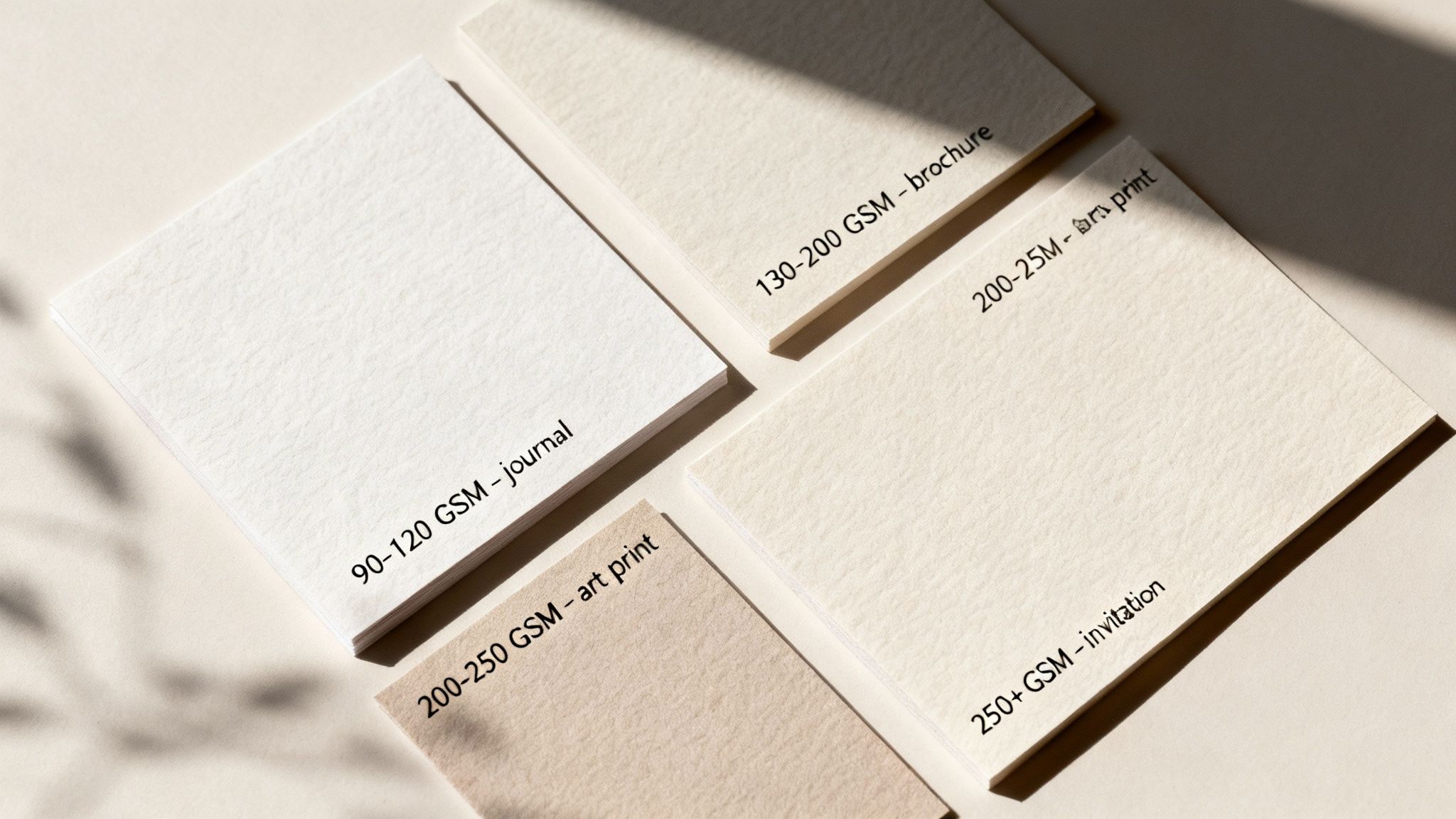
This kind of intentionality is why certain paper weights are so popular for specific uses. For instance, in the huge copier paper market, the everyday 75-80 GSM segment holds a massive 35.67% share. It hits that perfect balance between being sturdy enough for crisp prints and light enough for mailing, making it a favorite for everything from mindfulness schedules to creative planners.
The Everyday Creative: 90 to 120 GSM
This lightweight range is the heart of daily creativity. It's what you want for journals, planners, and notebooks where you need a smooth writing surface without adding tons of bulk. A 100-120 GSM paper feels substantial and is opaque enough to handle most pens with minimal ghosting, making every page a joy to write on.
The Professional Sweet Spot: 130 to 200 GSM
When your project needs to feel more durable and look polished, the 130-200 GSM range is your go-to. This is the sweet spot for professional brochures, high-quality flyers, and art prints that need more heft to feel special. The added thickness makes colors pop and ensures the final product can stand up to being passed around. Find inspiration by exploring ideas for personalized stationery and note cards.
Choosing the right GSM is about aligning the physical form of your message with its emotional intent. A heavier paper doesn't just feel different; it sends a signal of importance, care, and permanence before a single word is read.
The Heavyweights: 250 GSM and Above
For moments that demand a powerful first impression, the heavyweights deliver. At 250 GSM and above, you’re in the world of premium cardstock. This is the foundation for business cards that mean business, wedding invitations that feel like an event, and luxury stationery that conveys true thoughtfulness. The substantial feel communicates significance and lasting value. Understanding paper stocks and finishes is key to making a strong impression.
How GSM Impacts Your Final Print Quality
You’ve poured your heart into a design, and you deserve to see it come to life perfectly. Understanding what GSM means for paper is the bridge between the beautiful idea in your head and the stunning final print in your hands. Getting this right helps you sidestep common printing headaches and ensures your final piece feels as special as you imagined.
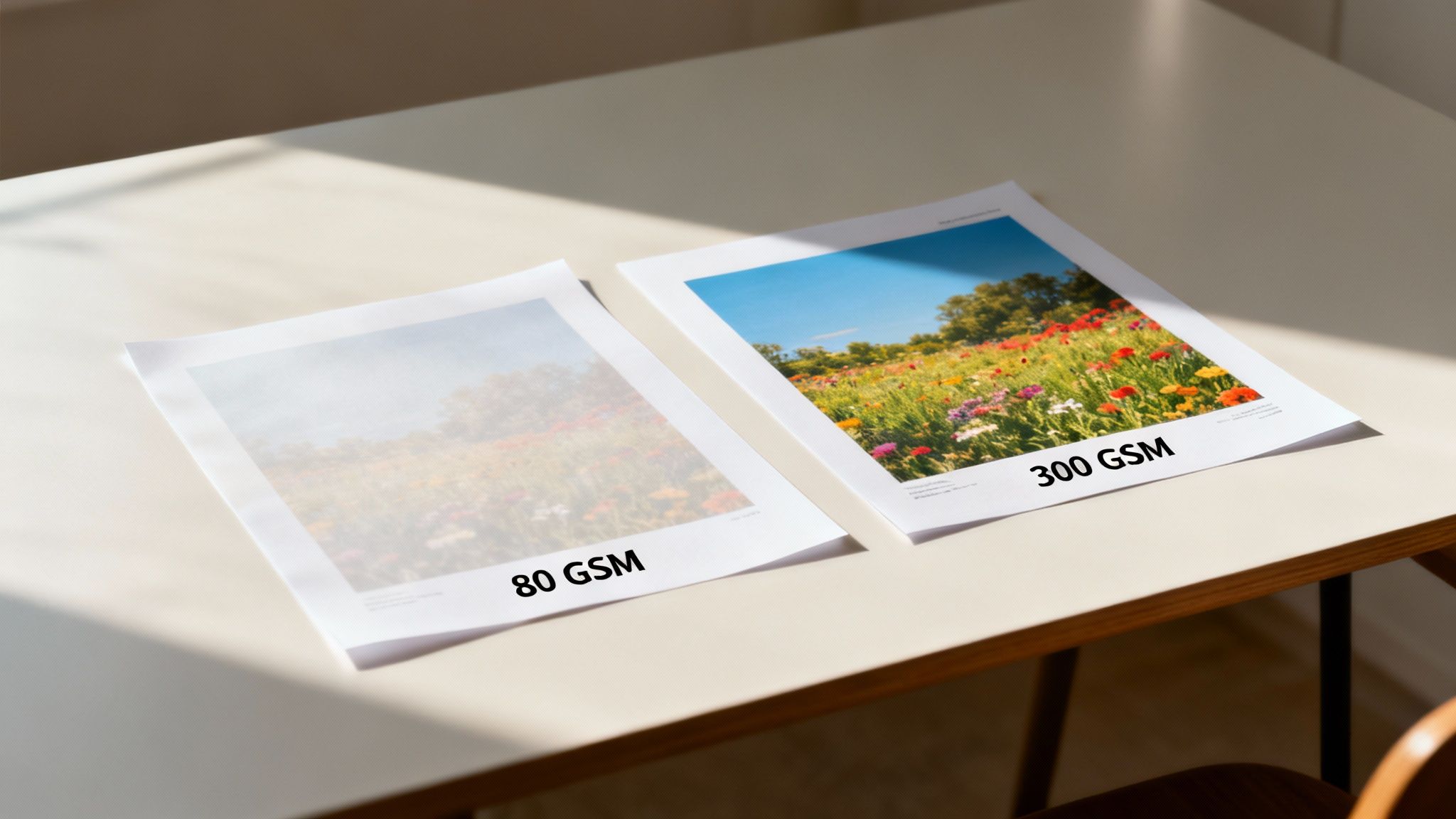
Think of paper weight as the foundation of your project. If the base is flimsy, things can go wrong. For instance, really light paper (below 90 GSM) can easily jam a standard home printer because the machine's rollers are built to grab something with more heft.
On the flip side, very heavy cardstock (above 200 GSM) might be too thick to navigate a printer’s normal, curvy paper path. This is why many printers have a special manual feed tray for heavier stocks—it gives the paper a straighter shot through the machine, preventing ugly bends or frustrating jams.
Ink Behavior and Visual Clarity
The real magic—or mishap—happens when ink hits the paper. The paper's density, which GSM measures, completely changes how ink is absorbed and how your final image looks.
- Lighter Papers (like 90 GSM): These papers are more porous. Ink can soak in too deeply, causing bleed-through, where the image is visible on the other side. This can also make colors look dull.
- Heavier Papers (140+ GSM): With a higher GSM, the paper fibers are packed together more tightly. This density stops ink from spreading and bleeding, letting it sit right on the surface. The result? Sharper text, richer colors, and crisp, professional images.
Choosing a paper with a higher GSM isn’t just about feel—it’s an act of quality control. It guarantees the vibrancy and detail of your design are faithfully captured, giving your project the premium finish it deserves.
Folding, Scoring, and Finishing Touches
Finally, don’t forget to think about how you'll finish the piece. If you're creating greeting cards, gift boxes, or folded brochures, the paper's weight plays a huge structural role.
A heavier paper gives you a clean, sturdy fold, especially when you score it first (creating a small indent to guide the crease). Lighter papers can look messy when creased and lack that satisfying, rigid structure. By choosing the right GSM, you ensure every last detail, from print to final fold, is absolutely perfect.
Making a Conscious Choice with Paper Weight
Creating something beautiful is one thing; doing it thoughtfully means considering our impact. This is where understanding GSM becomes more than a technical detail—it’s an act of mindful creation, connecting our practical choices to a deeper sense of responsibility.
Choosing the right paper weight is an opportunity to align your project with your values. It’s a chance to prove that a beautiful creation can also be a sustainable one.
Sustainability Meets Practicality
You don’t always need the heaviest paper to make a statement. Sometimes, less is more. Opting for a lighter GSM for things like internal documents or early drafts is a simple yet powerful way to reduce material waste. This small change can also significantly lower shipping costs and your overall carbon footprint.
The paper industry is catching on. The market for machine glazed paper is growing, with the 71-100 GSM segment leading as a cost-effective choice for printing and sustainable packaging. Europe's focus on eco-friendly solutions favors this paper as it often cuts chemical use by 20-30% compared to heavily coated options, all while meeting the demand for recyclable materials.
Making a conscious choice isn't about sacrifice; it's about finding that perfect balance where quality, purpose, and sustainability beautifully coexist.
Explore Eco-Friendly Alternatives
Today, you have more earth-friendly options than ever before. You can find innovative papers made from recycled content or alternative fibers like bamboo, cotton, or even hemp, all available in a wide range of GSMs. These choices empower you to find the perfect texture and weight without compromising your commitment to the planet.
As you weigh your options, remember that the paper you choose also influences the real price to print a book, which can really affect your production costs.
Whether you're creating personal journals or designing thoughtful stationery sets for adults, selecting the right eco-conscious paper adds another layer of meaning to your work. It transforms a simple project into a story of mindful creation.
Your Top Paper Questions, Answered
Let's dive into some of the most common questions people have about paper weight. Think of this as your friendly guide to becoming a paper pro, so you can feel confident every time you choose paper for a project you care about.
Does a Higher GSM Mean Better Quality?
Not always! While a higher GSM means the paper is thicker and more durable, "quality" is a much bigger story. The real magic of high-quality paper also comes from its material (like dreamy 100% cotton), its finish (is it silky smooth or beautifully textured?), and what it’s made for.
The "best" paper is simply the one that’s perfect for your project. A hefty 300 GSM paper is fantastic for a business card you want people to remember, but it would be totally wrong for the inside pages of a journal.
Can My Home Printer Handle Thick Paper?
This is such a great practical question! The answer really comes down to your specific printer. Most standard home printers, whether inkjet or laser, can handle paper up to around 160 GSM without a problem.
But once you get into the heavier stuff—think 200 GSM and up—you’ll want to check your printer’s manual. Many printers have a special feed tray for thicker paper that gives it a straighter path through the machine, which is key to preventing jams.
Action Point: Before printing a big batch, always run a single test sheet of your heavy paper. It’s a tiny step that can save you from a major paper jam headache and wasted supplies!
What's the Best GSM for a Journal or Planner?
For journals and planners, the sweet spot is almost always between 100 and 120 GSM. There's a reason this range is the gold standard.
Paper in this weight class feels substantial and lovely to the touch, gives you a super smooth writing surface, and is opaque enough to stop most pens from bleeding through. It keeps every page looking clean, beautiful, and ready for your next big idea.
Why Does GSM Matter for Gifting?
When you’re giving a gift, the little details are what make it feel special. The weight of the paper you use has a huge impact on how thoughtful and valuable your gift feels.
A greeting card on sturdy 250+ GSM cardstock feels like a keepsake, not just a note. Choosing the right GSM for gift tags, custom prints, or handmade cards shows an extra level of care that people truly notice. It’s a small touch that makes a world of difference.
At Mesmos, we believe thoughtful details bring more beauty and meaning into our lives. Discover our collection of mindfully designed stationery and gifts that inspire creativity and connection. Explore Mesmos today.


