

Have you ever wondered what makes life truly worth living? Positive psychology is the inspiring science dedicated to answering that very question. It’s a revolutionary shift in focus—instead of just fixing what’s broken, it’s about discovering and nurturing your unique strengths, building genuine well-being, and crafting a life brimming with meaning and joy.
Think of it as the science of helping you thrive, not just survive. It's an invitation to unlock the best version of yourself, starting today.
What Is Positive Psychology Really About?
Let’s move beyond a simple definition. If traditional psychology is like a skilled doctor healing an illness, positive psychology is your personal strengths coach. It takes the incredible potential you already possess and helps you build on it to reach new heights of fulfillment.
This isn't about ignoring life's challenges. In fact, it’s the opposite. It’s about arming you with the mental and emotional tools to navigate tough times with greater resilience, courage, and grace.
This approach marked a profound turning point. For decades, psychology focused primarily on mental illness, working from a "disease model." While this work is vital, it left a gap in understanding what makes people feel truly engaged, happy, and fulfilled. If you'd like to explore this further, this guide on What Is Positive Psychology? offers a fantastic overview.
A New Branch of Science
This exciting field isn’t about wishful thinking; it’s a robust science grounded in credible research.
The movement gained momentum in the late 1990s, championed by psychologist Martin Seligman. During his presidency of the American Psychological Association in 1998, he introduced it as a new frontier—a science dedicated to studying human strengths and virtues. This moment sparked a global shift toward understanding how individuals and communities can flourish.
So, what is positive psychology for you? It's a practical roadmap to your own potential for happiness. It offers evidence-based strategies that anyone can use to cultivate more joy, meaning, and connection in their life.
The aim of positive psychology is to catalyze a change in psychology from a preoccupation only with repairing the worst things in life to also building positive qualities.
To make this distinction crystal clear, let's look at a side-by-side comparison.
Traditional Vs Positive Psychology: A Quick Comparison
This table shows how these two essential approaches work in harmony. Positive psychology doesn’t replace traditional therapy; it complements it by adding a powerful focus on building what’s already strong within you.
| Focus Area | Traditional Psychology | Positive Psychology |
|---|---|---|
| Primary Question | "What's wrong?" | "What's right?" |
| Goal | To heal and alleviate distress. | To build well-being and fulfillment. |
| Focus | From negative states (e.g., -8) to neutral (0). | From neutral (0) to positive states (e.g., +8). |
| Approach | Fixing weaknesses and treating disorders. | Identifying and cultivating strengths and virtues. |
This shift adds a powerful new dimension to mental wellness. It asks a fundamentally different question: Instead of just asking, "What's wrong?" it also asks, "What's right, and how can we cultivate more of it?"
This simple reframe is the key to unlocking a more fulfilling life, and it's a journey you can begin today.
Discovering The PERMA Model For Well-Being
What does it truly mean to live a good life—not just a happy one, but a deeply fulfilling one? Martin Seligman, a pioneer of positive psychology, created a brilliant, science-backed framework to answer this: the PERMA model.
Think of it as a recipe for a flourishing life. It moves beyond the fleeting idea of "happiness" and gives us five core ingredients we can actively cultivate. Each one is a building block, and together, they create a strong foundation for genuine well-being.
This is where positive psychology really shines. It represents a major shift from traditional psychology, which historically focused on fixing what's wrong. Instead, positive psychology asks, "What makes life worth living?"
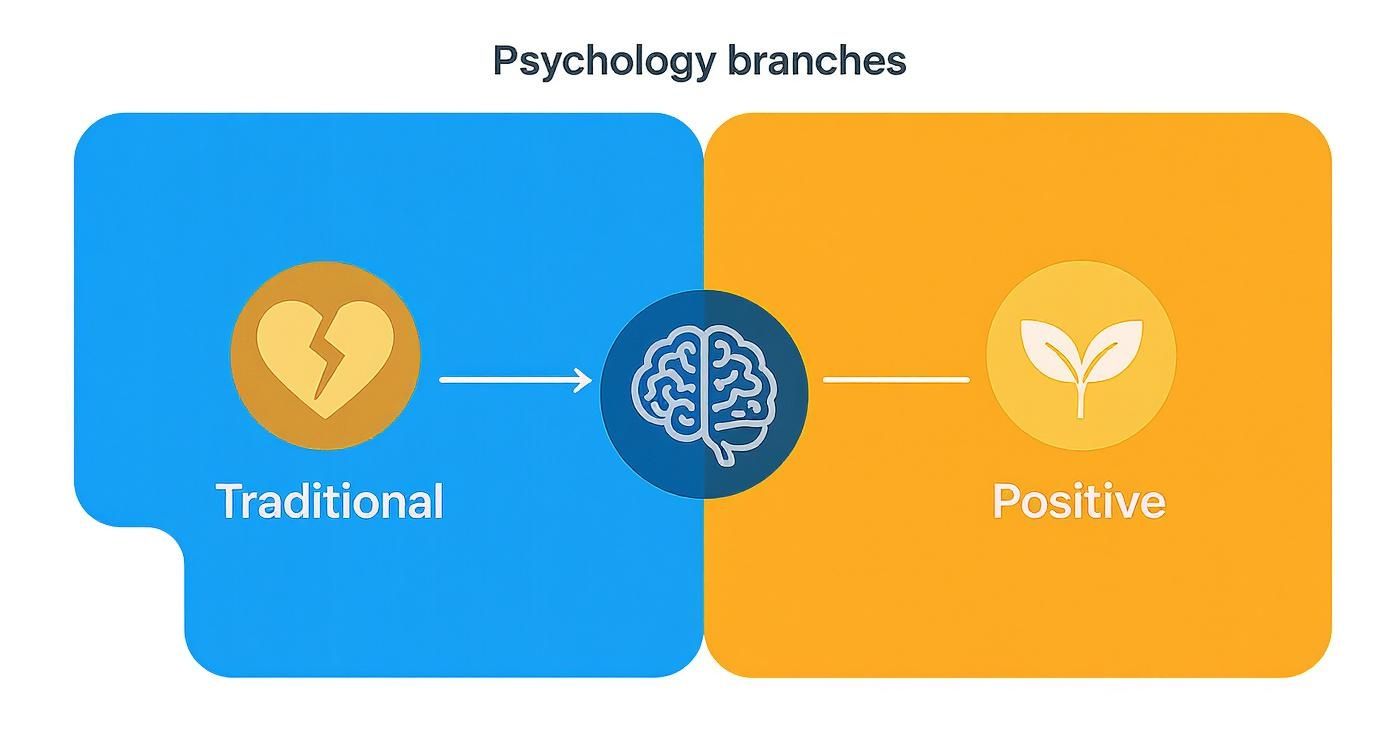
This image beautifully captures that evolution—moving from a model focused on healing deficits (the broken heart) to one centered on nurturing our innate potential for growth (the sprout).
P Is For Positive Emotion
First up is Positive Emotion. This isn't about forcing a smile 24/7. That's unrealistic. Instead, it’s about intentionally making space for feelings like joy, gratitude, hope, and love.
It’s the warmth you feel when a friend sends an encouraging text, the peace of watching a sunset, or the quiet pride after completing a challenging task. These moments matter. Learning to notice and savor them can fundamentally change your perspective.
E Is For Engagement
Next, we have Engagement. This is about becoming so absorbed in an activity that you lose all track of time. You’ve probably heard it called being "in the zone" or what psychologist Mihaly Csikszentmihalyi famously termed “flow.”
It’s that magical state where the world fades away. Maybe you find it while painting, gardening, coding, or playing music. The activity is so rewarding that you do it for the sheer joy of it, finding deep satisfaction along the way.
“The best moments in our lives are not the passive, receptive, relaxing times… The best moments usually occur if a person’s body or mind is stretched to its limits in a voluntary effort to accomplish something difficult and worthwhile.”
- Mihaly Csikszentmihalyi
This total immersion connects you to your passions and is a powerful source of well-being.
R Is For Relationships
We are wired for connection. That’s why Relationships are a vital pillar of a flourishing life. Time and again, scientific research shows that strong, authentic connections are one of the surest predictors of happiness.
These are your people—the family, friends, and colleagues who champion your dreams, support you through struggles, and celebrate your wins. Actively nurturing these bonds is a direct investment in your emotional health.
M Is For Meaning
The fourth pillar is Meaning. This is the profound feeling of being connected to something bigger than yourself. It’s the "why" that inspires you to get out of bed in the morning—the belief that your life has a purpose.
Meaning can be found anywhere: in your career, family, a cause you champion, or your spiritual beliefs. It’s the internal compass that gives your life direction and helps you navigate challenges with resilience.
A Is For Accomplishment
Finally, we have Accomplishment. This is the satisfaction that comes from setting and achieving goals that matter to you. It's the feeling of competence you get from mastering a new skill or reaching a milestone you’ve worked hard for.
But it’s not just about the finish line. The real magic is often in the journey—the discipline, effort, and grit you build along the way. Pursuing ambitions gives our lives momentum and a powerful sense of pride.
The PERMA model offers a beautifully simple yet profound roadmap. Here’s how you can put each pillar into practice today.
Your Personal PERMA Action Plan
| PERMA Pillar | Core Idea | Simple Action You Can Take Today |
|---|---|---|
| Positive Emotion | Intentionally cultivating feelings of joy, hope, and gratitude. | Write down 3 specific things that went well today and why. Keep a simple gratitude list in a journal. |
| Engagement | Finding activities that fully absorb you (creating "flow"). | Set aside 20 minutes for a hobby you love, with no distractions. Put your phone away and just be present with it. |
| Relationships | Nurturing strong, authentic connections with others. | Send a heartfelt text or make a quick call to a friend or family member just to check in and let them know you’re thinking of them. |
| Meaning | Connecting to a purpose larger than yourself. | Reflect for 5 minutes on what matters most to you. How can one small action today align with those values? |
| Accomplishment | Pursuing and achieving meaningful goals. | Pick one small, manageable task you've been putting off and complete it. Enjoy that little rush of "I did it!" |
By intentionally weaving these small actions into your daily routine, you can start building a life that doesn't just look good on the outside, but feels deeply good on the inside.
Since Seligman and Csikszentmihalyi published their groundbreaking paper in 2000, the field has exploded with research. Their work ignited a global wave of interest in well-being and what it truly means to live a good life. You can explore the research on the global influence of positive psychology to see just how far the conversation has come.
Simple Exercises To Boost Your Happiness
Knowing the theory is one thing, but putting it into practice is where the real transformation begins. These simple, proven exercises can move the science of well-being from the page directly into your daily life, starting tonight.
These aren't just fluffy, feel-good activities. They are scientifically supported practices designed to create lasting positive shifts. Think of them as workouts for your mind—building your emotional resilience and capacity for joy, one small habit at a time.

The Three Good Things Exercise
One of the most powerful habits you can build is the "Three Good Things" practice. This quick ritual gently shifts your focus from what's going wrong to what's going right. The science is incredible: it literally retrains your brain to scan for positives, wiring it for optimism.
Research has shown that people who do this exercise consistently for just one week report feeling happier and less depressed for up to six months afterward. It’s a tiny investment with a huge return on your well-being.
Your Action Plan:
- Set a Time: Just before bed, set aside five to ten minutes with a notebook.
- Reflect: Look back over your day and find three things that went well, no matter how small.
- Write Them Down: Jot down what happened. It could be as simple as "I savored my morning coffee" or "My coworker gave me a wonderful compliment."
- Explain 'Why': This is the key. Briefly write why it happened or what it meant to you. For example, "This happened because I took an extra minute for myself instead of rushing."
This simple practice acts as a mental filter, training you to notice the small joys that often get lost in the daily hustle. It’s a beautiful way to cultivate gratitude and end your day on a high note.
The Gratitude Letter
While a daily gratitude habit is powerful, the "Gratitude Letter" is a profound, one-time exercise that can create a major happiness boost for both you and the recipient. It’s a chance to express deep appreciation to someone who made a real difference in your life but whom you may have never properly thanked.
This exercise is a beautiful way to strengthen the 'Relationships' pillar of the PERMA model, deepening your bonds and creating powerful positive emotions.
Your Action Plan:
- Choose a Person: Think of someone who has been incredibly kind or influential—a mentor, teacher, grandparent, or friend.
- Write the Letter: Take time to write a heartfelt letter (about 300 words). Be specific: what did they do, how did it impact you, and why are you so thankful?
- Arrange a Visit: If possible, schedule a time to meet this person.
- Read it Aloud: When you meet, read the letter to them. This vulnerable act creates a powerful emotional connection. You can leave the letter with them as a keepsake.
This act of intentional gratitude is one of the most impactful happiness interventions ever studied by scientists.
Unleash Your Character Strengths
Do you know what you’re naturally good at? Not just skills like cooking or coding, but your core character strengths—qualities like creativity, kindness, bravery, or curiosity. Research shows that knowing and using your signature strengths is a direct path to feeling more engaged and fulfilled.
The VIA Institute on Character offers a free, scientifically validated survey to help you identify your unique strengths. Taking it is the first step toward a more authentic and energized life.
Your Action Plan:
- Creativity: Schedule one hour this week for a creative project—paint, write, or try a new recipe.
- Kindness: Plan one small, unexpected act of kindness for someone each day this week.
- Curiosity: Lean into your curiosity by visiting a new place, reading about an unfamiliar topic, or asking a friend deeper questions about their passions.
Consistently using your strengths in new ways is proven to increase happiness and reduce symptoms of depression. It’s all about letting your best, most authentic self shine.
For those eager to dive deeper, journaling is a wonderful way to track your experiences with these exercises. If you're new to the practice, our guide on how to start journaling can help you begin. Additionally, for a wider array of well-being practices, exploring a comprehensive guide to empowered happiness can offer further inspiration.
Applying Positive Psychology at Home and Work
The real magic happens when you start weaving these principles into your daily life. This is where the science steps off the page and into your home and office, creating a ripple effect of positivity that lifts everyone around you.
Let’s explore how to bring these powerful ideas into the two places you spend the most time, turning everyday moments into opportunities for connection, growth, and joy.

Cultivating a Flourishing Family Life
Your home is the perfect place to begin. By introducing a few simple, intentional practices, you can build a family culture that nurtures resilience, gratitude, and a true sense of belonging. The goal isn’t perfection, but progress—creating a space where everyone feels seen, valued, and encouraged to be their best.
A great starting point is creating a 'strengths-based' home. This means shifting your focus from "fixing" weaknesses to actively celebrating what each family member naturally does well.
This simple shift can change the whole family dynamic. When children feel recognized for their innate strengths—whether it’s curiosity, kindness, or perseverance—their confidence just soars.
Instead of only praising a good grade, you could praise the grit it took to get there. This focus on effort fosters a growth mindset, teaching kids that abilities can be developed with dedication.
Practical Action Points:
- Create a Family Gratitude Jar: Keep a jar and slips of paper in a central spot. Encourage everyone to write down things they’re grateful for. Once a week, read the notes aloud together. This beautiful ritual hardwires gratitude into your family’s routine.
- Start 'Strength Spotting': Make it a fun game to "catch" each other using a character strength. "I saw you use your bravery when you tried that new food!" or, "It showed so much kindness when you shared your toy."
- Hold 'What Went Well' Dinners: Take five minutes at the dinner table for each person to share one good thing from their day. This simple practice trains everyone's brain to scan for positives.
Building a More Positive Workplace
The same principles are just as powerful at work. In fact, companies that prioritize well-being see incredible results. Research shows that employees in positive environments are more engaged, productive, and innovative, with much lower rates of burnout.
Bringing positive psychology to your job doesn’t require a massive overhaul. It starts with small, consistent actions that build trust, psychological safety, and meaningful connections. One of the most effective strategies is fostering a culture of appreciation and recognition. A simple, specific "thank you" can make a huge difference in someone’s sense of value.
Practical Action Points:
- Start Meetings with a Win: Kick off team meetings by having each person share a small personal or professional win from the past week. It sets a positive tone and builds camaraderie.
- Give Specific Praise: Instead of a generic "good job," try something more detailed: "I was so impressed with how you handled that difficult client call with such patience and creativity." Specificity makes praise meaningful.
- Create a 'Kudos' Channel: Use a dedicated Slack channel or a physical whiteboard where team members can publicly acknowledge and thank one another.
Fostering well-being at work is a team effort. For a deeper dive, check out our guide on how to create a positive work environment. By taking these small steps, you can help build a culture where people don’t just show up—they thrive.
Navigating The Misconceptions Of Positive Psychology
To truly grasp what positive psychology is, it helps to understand what it isn't. As this science has grown in popularity, a few common myths have emerged. Let's clear the air so you can embrace this journey with authentic confidence.
One of the loudest criticisms is that it promotes "toxic positivity"—the idea that you must force a smile and suppress negative feelings. This is a complete misrepresentation of the science.
A rich, full life isn't about pretending sadness, anger, or fear don't exist. It’s the opposite. Positive psychology gives you the emotional tools and resilience to face these very real human experiences with courage, not ignore them.
Genuine Optimism Versus Forced Positivity
There's a vast difference between genuine optimism and the pressure to be happy 24/7. Forced positivity asks you to deny your feelings, which creates a painful and lonely gap between how you feel and how you act.
Genuine optimism, on the other hand, is grounded in reality. It’s the quiet strength to acknowledge all your emotions—the good, the bad, and the messy—while holding onto the belief that you can navigate challenges and that better days are possible. It’s about being hopeful, not just happy.
True well-being doesn't come from erasing negative feelings; it comes from learning to navigate them with grace and courage. It’s about accepting that you are a whole person, capable of feeling both profound joy and deep sorrow.
This very acceptance builds incredible emotional strength.
Knowing When To Seek Professional Help
While practices like gratitude journaling are powerful tools, they are not a substitute for professional therapy. It is crucial to know the difference and when to seek more support.
Think of it like this:
- Positive Psychology Interventions: These are your daily emotional fitness routine. They build resilience, boost your mood, and help you flourish when starting from a place of general stability.
- Professional Therapy: This is essential for navigating persistent mental health challenges like depression, anxiety, or trauma. A licensed therapist provides diagnosis, treatment, and expert guidance in a safe, structured space.
The two can work beautifully together, but one does not replace the other. If you find that feelings of sadness, anxiety, or hopelessness are persistent and interfering with your daily life, reaching out to a mental health professional is a brave and vital step.
Understanding the real scope of what is positive psychology means embracing this balanced view. It’s not a magic wand, but a science-backed path to building a life that is both authentically joyful and resiliently whole.
Answering Your Questions About Positive Psychology
As you start this inspiring journey, questions are natural. The world of well-being is vast, so let's clear up some of the most common queries about positive psychology so you can move forward with clarity and confidence.
Think of this as your friendly, science-backed FAQ to separate the facts from the myths.
Is This Just The Power Of Positive Thinking?
This is a great question, and the answer is a clear no. While they sound similar, there's a huge difference between "positive thinking" and the science of positive psychology.
Positive thinking often involves affirmations or the belief that simply wishing for good outcomes will make them happen. It can sometimes feel like you're being asked to ignore reality, which isn't always helpful.
Positive psychology, on the other hand, is a scientific field. It never asks you to ignore life's difficulties. Instead, it uses evidence-based methods—like identifying character strengths or practicing gratitude—to build resilience and cultivate genuine well-being. It’s about taking practical, proven actions, not just wishful thinking.
Positive psychology isn't about wearing rose-colored glasses. It’s about giving you the tools to build a stronger, more resilient pair of eyes to see the world with—acknowledging both the shadows and the light.
Can Positive Psychology Cure Depression?
This is a crucial point. Positive psychology is not a cure for clinical depression or other mental health conditions.
Think of it this way: if you break your leg, you need a doctor to set the bone. Physical therapy comes later to rebuild strength. Similarly, clinical depression often requires treatment from a licensed mental health professional, which might include therapy or medication.
Positive psychology interventions can be an incredibly powerful complement to professional treatment—like the physical therapy for your mind. They help build emotional strength, find meaning, and cultivate positive habits to support recovery and flourishing, but they absolutely do not replace necessary medical care.
How Long Does It Take To See Benefits?
This is a wonderful, practical question! The beauty of many positive psychology exercises is that you can often feel a small, immediate lift. For example, writing a gratitude letter can provide a powerful emotional boost on the very same day.
However, the deeper, more lasting changes come from consistency. Just like physical fitness, emotional well-being is a practice.
Here’s a realistic timeline based on scientific studies:
- Immediate Boosts (First few days): Simple exercises like "Three Good Things" can leave you feeling more hopeful right away.
- Noticeable Shifts (A few weeks): With consistent practice for 2-3 weeks, you may start to notice a real change in your default mindset, naturally spotting the good in your day.
- Lasting Change (A few months): After several months, these practices can become second nature. Research shows that consistent engagement can lead to sustained increases in happiness and reductions in depressive symptoms for six months or more.
The key is to start small and be patient. Your journey toward a flourishing life is a marathon, not a sprint, and every single step makes a difference.
At Mesmos, we believe in the power of small, intentional actions to create a life filled with beauty and meaning. Our thoughtfully designed journals, planners, and home decor are created to be gentle reminders on your journey toward well-being, helping you turn scientific principles into daily practices. Explore our collection and find the perfect tool to support your path to a more flourishing you at https://mesmos.co.


