

Ever wondered what to write in a letter? The secret isn’t about finding poetic words; it’s about sharing genuine emotion through specific, heartfelt details. The letters we treasure are the ones that recall a shared memory, express sincere thanks for a specific kindness, or offer a whisper of encouragement. They forge a tangible connection that texts and emails simply can't replicate, creating a keepsake of a moment in time.
The Timeless Art of Letter Writing in a Digital Age
In a world buzzing with instant notifications, a handwritten letter is a quiet, powerful act of intention. It’s an invitation to slow down, gather your thoughts, and create something beautiful and lasting for someone you care about. This isn't a chore; it’s a chance to send a tangible piece of your heart.
This guide will help you move past the fear of the blank page and translate your feelings into meaningful words. Let's rediscover why this timeless practice is making a comeback as we all crave genuine connection over digital noise.
Why Letters Still Matter in a Modern World
Putting pen to paper sends more than a message—it sends a feeling. Unlike a fleeting digital message, a letter communicates time, effort, and focused intention. It tells the recipient, "I was thinking only of you."
This powerful act of connection is having a renaissance for a reason. Research from positive psychology suggests that expressing gratitude in writing can significantly boost happiness for both the writer and the recipient. A study published in Psychological Science found that people consistently underestimated how much recipients would appreciate a letter of gratitude, and overestimated how awkward it would feel. The reality? People are incredibly moved by such gestures.
This shift is even reflected in market trends. The global writing instruments market is experiencing steady growth, projected to expand significantly as people combat 'digital fatigue' on Allied Market Research. Writing by hand is becoming a cherished practice of presence.
Action Point: Your 5-Minute Mindful Start
Ready to begin? You don't need a lot of time.
- Choose One Person: Think of someone you've been meaning to connect with.
- Set a Timer for 5 Minutes: That's it. No pressure to write a novel.
- Write One Thing: Start with a simple sentence: "I was thinking of you today because..." and let your heart fill in the rest.
A Quick Guide to Letter Writing Tone and Occasion
Not sure how to sound? Match your tone to the moment with this at-a-glance guide.
| Occasion | Recommended Tone | Key Elements to Include |
|---|---|---|
| Thank-You | Warm, Sincere, Specific | Mention the specific gift or act, how it made you feel, and a personal closing. |
| Apology | Humble, Honest, Direct | Acknowledge your mistake, express genuine remorse, and state how you'll make it right. |
| Sympathy | Gentle, Compassionate, Supportive | Share a fond memory of the deceased, offer specific help, and express your condolences. |
| Love Letter | Romantic, Passionate, Vulnerable | Share your deepest feelings, recall a special memory, and express your hopes for the future. |
| Congratulations | Enthusiastic, Celebratory | Acknowledge the achievement, praise their hard work, and wish them well for the future. |
Getting the tone right is the first step to making your letter truly resonate and feel authentic to both you and the person reading it.
How to Express Gratitude in a Letter
A quick "thank you" text is nice, but a thoughtfully written letter of gratitude is unforgettable. It’s a powerful way to express deep appreciation that truly resonates, turning a simple moment of kindness into a lasting memory. Knowing just what to write in a letter of thanks can transform a polite gesture into a profound act of connection.
The secret is moving beyond generic phrases to share something real and specific. This process doesn't just warm the heart of the person you're thanking—it's also a powerful act of mindfulness for you, focusing your attention on the good in your life.
Action Point: The Three-Part Gratitude Formula
Crafting a meaningful thank-you note is simple with this powerful framework.
- 1. Name the Act: Get right to the point. Instead of, "Thanks for your help," try, "Thank you so much for taking the time to mentor me on the marketing project." Specificity shows you were paying attention.
- 2. Describe the Impact: This is the heart of your letter. Explain how their action helped you. "Your advice gave me the confidence I needed to lead the meeting successfully." This makes your gratitude tangible.
- 3. Look Forward: End with a warm, forward-looking closing. "I truly value the wisdom you share. Wishing you a wonderful week ahead."
This simple structure ensures your letter feels authentic and deeply personal, elevating it far beyond a standard thank-you note.
Practical Sentence Starters to Get You Going
The blank page can feel intimidating! Use these prompts as a launchpad for your own genuine feelings:
- "I was so moved when you..."
- "I’m writing to express my deepest gratitude for..."
- "Your support with [specific task] was a game-changer because..."
- "I can’t thank you enough for the [gift/advice/help]. It meant so much that..."
- "Thinking back on [the event], I was so grateful for your..."
A key takeaway is to focus on the "why" behind your thanks. Explaining why their kindness mattered is what will make your letter truly memorable and touch their heart.
Authentic Examples for Real-Life Scenarios
Let's see this framework in action.
For a Mentor: "Dear [Mentor's Name], I’m writing to express my deepest gratitude for your guidance during the recent launch. Your advice on how to approach the client presentation was a game-changer; it gave me the confidence I needed to lead the meeting successfully. I truly value the wisdom you share. Wishing you a wonderful week ahead."
For a Coworker: "Hi [Coworker's Name], I wanted to properly thank you for staying late to help me finish the quarterly report on Friday. I was feeling completely overwhelmed, and your support made a huge difference, allowing me to get home to my family at a reasonable hour. I really appreciate you having my back. Let me know if I can ever return the favor."
Pairing your heartfelt letter with one of these thoughtful thank you gift ideas can make your gesture even more special. For more tips, our guide on how to write thank you notes offers even more inspiration.
Navigating Tough Times: Writing Letters of Sympathy and Apology
Some conversations are hard. In moments of grief or regret, finding the right words can feel impossible. But this is when a handwritten letter becomes more than just ink on paper—it’s a powerful act of connection, healing, and understanding.
Putting pen to paper forces you to slow down, focus on what truly matters, and offer a piece of your heart to someone who needs it. It's an intentional choice to show up for someone in a meaningful way.
How to Write a Meaningful Sympathy Note
When someone is grieving, your note isn't meant to fix their pain. It's to remind them they aren’t alone. The most comforting messages are often the simplest, focusing on genuine warmth and support. Avoid clichés like "They're in a better place." A personal touch always means more.
Action Point: The Sympathy Letter Checklist
- Acknowledge the Loss: Start with a simple, direct expression of sorrow. "I was so heartbroken to hear about the passing of [Name]."
- Share a Fond Memory: This is a beautiful gift. "I'll always smile when I remember the time [Name] and I..."
- Offer Specific Help: Vague offers can be overwhelming. Instead, try: "I'm going to drop off dinner on Tuesday" or "I'd love to walk the dog for you next week."
- Close with Care: End with a simple, warm closing. "Thinking of you and your family." No response is needed.
Your letter is a quiet offering of support, a small light in a very dark time.
A sympathy note is not about having the answers; it's about being present. Your genuine expression of sorrow and your willingness to share a positive memory can be a profound source of solace for someone navigating loss.
The Art of a Sincere Apology
A genuine apology isn't about getting forgiveness—it's about owning your actions and starting to rebuild trust. Writing it down gives you the space to choose your words carefully and ensure your message lands with sincerity.
What to Include in an Apology Letter
| Component | Its Purpose | Example Phrasing |
|---|---|---|
| Acknowledge Your Mistake | State clearly what you did wrong, without excuses. | "I was completely out of line for what I said, and I take full responsibility." |
| Express Genuine Remorse | Show you understand the impact of your actions. | "I am so sorry for the hurt and frustration I caused you." |
| Commit to Doing Better | Explain how you plan to change your behavior. | "I am committed to being more thoughtful with my words from now on." |
| Offer to Make Amends | If appropriate, suggest a way to repair the harm. | "I would like to find a way to make this right. Please let me know if you're open to that." |
Writing an apology takes courage. It shows you respect the other person's feelings and want to repair the relationship, paving the way for your future actions to match your words.
Sharing Love and Celebrating Life's Big Moments
Some of the most meaningful letters capture pure joy. These are the notes that mark life’s most beautiful moments—from a personal love letter to a card celebrating a wedding or a big birthday.
Putting these feelings into words is about translating affection into specific, personal details. It’s a chance to create a timeless keepsake that honors your unique bond and turns a simple piece of paper into something they’ll treasure forever.
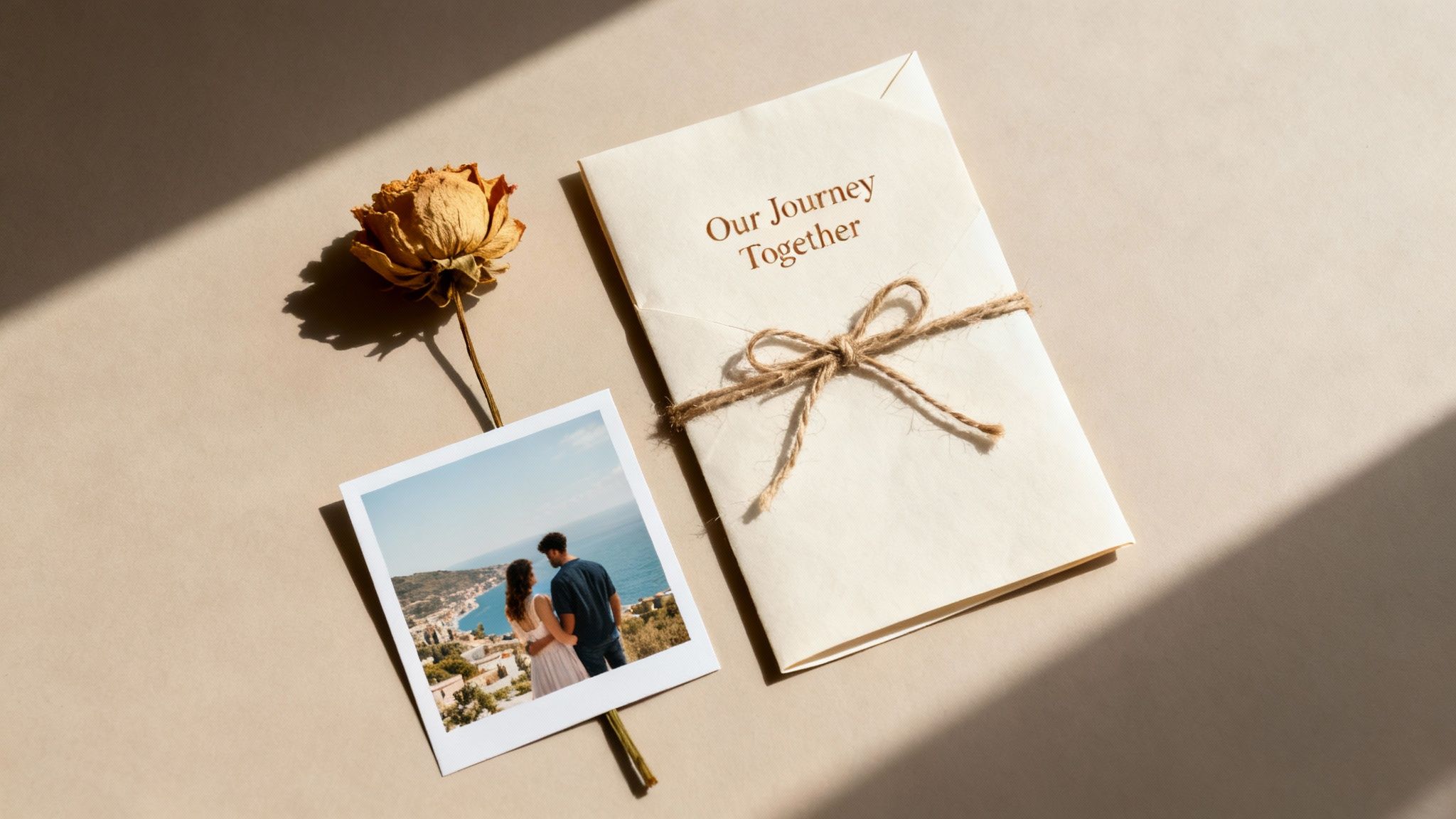
Crafting a Heartfelt Love Letter
A love letter is one of the most intimate gifts you can give. It’s an opportunity to go beyond a quick "I love you" and truly explain why. The magic is in the details. Instead of saying your partner is “kind,” tell a story about a time their kindness truly shone. This transforms a compliment into a vivid, personal memory.
Action Point: Love Letter Brainstorm
Stuck on where to begin? Grab a piece of paper and quickly jot down your answers:
- A Favorite Memory: What's a specific moment that always makes you smile?
- Three Qualities You Admire: What do you adore about them? (e.g., their laugh, their strength, the way they see the world).
- A Future Dream: What is one simple thing you can't wait to share with them?
Use these notes as the building blocks for your letter.
Remember, a love letter isn’t about perfection; it’s about authenticity. Let your true voice come through, quirks and all. That honesty is what will make it a treasured keepsake for years to come.
Celebrating Milestones and Personal Wins
Celebratory letters for birthdays, weddings, or promotions amplify someone's happiness. Your words should make them feel seen, loved, and celebrated. A simple, heartfelt structure works beautifully.
For a Graduation: "Congratulations on your graduation! I have been so impressed watching you balance everything with such determination. Your incredible work ethic is going to take you so far, and I can't wait to see all the amazing things you do next. Cheers to you and this huge achievement!"
For a Wedding: "To the happy couple! It brings me so much joy to see you begin this new chapter. The love and respect you have for one another is truly inspiring. Wishing you a lifetime of laughter, adventure, and endless happiness. Congratulations!"
These messages don’t need to be long. A few sincere sentences are more than enough to convey your excitement and pride.
Adding a Personal Touch That Lasts
To make your letter even more memorable, include a small, tangible piece of your shared story.
- Tuck in a photo from a favorite adventure.
- Press a flower from a special day you spent together.
- Include a ticket stub from a concert you both loved.
These little additions create a bridge between your words and memories, turning a letter into an unforgettable gift.
Choosing Stationery that Elevates Your Message
The words are the heart of your letter, but the paper is the first impression. Choosing the right stationery isn't just about aesthetics; it’s about creating a complete sensory experience that deepens the impact of your message from the moment it’s received.
The physical weight of high-quality cardstock or the smooth glide of a pen across fine paper sends a powerful message: "I took my time with this. I cared enough to create something beautiful for you." This turns a simple note into a treasured keepsake.
The Psychology of Touch and Texture
Before anyone reads a single word, they feel the letter in their hands. The connection between touch and emotion is deeply ingrained in us. Studies on embodied cognition reveal that physical sensations, like the feel of high-quality paper, can influence our emotional responses and judgments, making the message feel more significant and heartfelt.
This is why the tactile experience of writing is so powerful. Neuroscientific research shows that writing by hand activates different brain circuits than typing, enhancing memory retention and deepening our connection to the words we write.
Action Point: Match Your Stationery to Your Message
Align your materials with your message for maximum impact.
- For Thank-You Notes: A classic, clean notecard in ivory or white conveys sincerity and elegance.
- For Love Letters: Choose something with more personality. Soft, high-quality paper, perhaps with a deckled edge, adds a touch of romance.
- For Sympathy Letters: Opt for understated, high-quality materials. A simple, unadorned card in a muted color like gray or cream communicates respect.
- For Celebrations: Feel free to be more expressive! Bright colors or fun patterns can amplify the joy of the message.
The goal is to create harmony between your words and your materials. The right paper deserves a great pen. Discover some of the great pens to write with to complete your toolkit. For more inspiration, explore our guide on letter writing kits to find the perfect tools to tell your story.
Pairing Your Letter with a Mindful Gift
Sometimes, a small, thoughtful gift can amplify your message.
- For Encouragement: Pair your letter with a wellness journal.
- For a Graduate: Include a high-quality pen set with your congratulatory note.
- For a Coworker: A small desk plant can accompany your thank-you note.
This mindful approach ensures your message is not only read but truly felt.
A Few Common Letter-Writing Questions
Even with the best intentions, a few small questions can stop you in your tracks. But the "rules" are simpler and more flexible than you might think. Let's clear away any lingering doubts so you can focus on sharing your heart.
How Long Should a Personal Letter Be?
Focus on connection, not word count. The right length is whatever it takes to say what you need to say sincerely. A single, heartfelt page is often more powerful than several pages of filler.
- A thank-you note can be perfect in just three thoughtful sentences.
- A sympathy letter needs only a few sincere lines of comfort.
- A love letter might fill pages with memories and dreams.
The goal isn't to hit a word count; it's to convey a genuine emotion. When you've shared what's in your heart, your letter is complete.
What’s the Best Way to Start and End a Letter?
Your opening and closing are the bookends of your message. Match them to your relationship with the person.
For Your Opening:
- "Dear [Name]," is a timeless classic for almost any situation.
- "Hi [Name]," or just "[Name]," is perfect for a more casual, friendly note.
For Your Closing:
- "Sincerely," is a safe, respectful choice for formal letters.
- "Best,", "Warmly," or "All the best," are wonderfully versatile and friendly.
- "With love,", "All my love," or "Yours," are perfect for family and close friends.
Choose words that feel authentic to you.
Is It Okay to Type a Personal Letter?
While a handwritten letter shows a unique level of intention, let's be realistic: a typed letter is always better than no letter at all. Sincerity is what matters most.
If you struggle with legible handwriting or are short on time, typing your letter is a perfectly fine alternative. For a personal touch, add a handwritten signature at the end. It beautifully bridges the gap between digital and personal.
What Should I Do If I Make a Mistake While Writing?
First, take a deep breath. You’re human! A handwritten letter is a celebration of authenticity, not perfection. A small, crossed-out word adds character and reminds the reader that a real person took the time to write this.
Simply draw a single, neat line through the error and keep going. Embrace the small imperfections. This human touch is exactly what makes handwritten notes so incredibly special.
At Mesmos, we believe that every letter is an opportunity to create a moment of mindfulness and connection. Our beautifully crafted stationery and wellness gifts are designed to help you share your heart, celebrate life's moments, and find peace in the simple act of putting pen to paper. Discover the perfect tools to tell your story.


