

In a world pulling you in a million directions, the path to inner peace is surprisingly simple. Learning how to start a meditation practice isn't about adding another chore; it's about discovering a quiet space within yourself. It all begins with finding a comfortable spot, choosing a gentle focus (like your breath), and setting aside just five minutes a day.
That’s it. That’s the seed from which a calmer, more centered you can grow.
Finding Your Calm in a Chaotic World
The idea of meditating can feel overwhelming, but what if it was the one thing that made everything else feel more manageable? This guide isn’t about rigid rules or forcing your mind silent—that’s a common myth. It’s an invitation to give yourself permission to simply pause and reconnect.
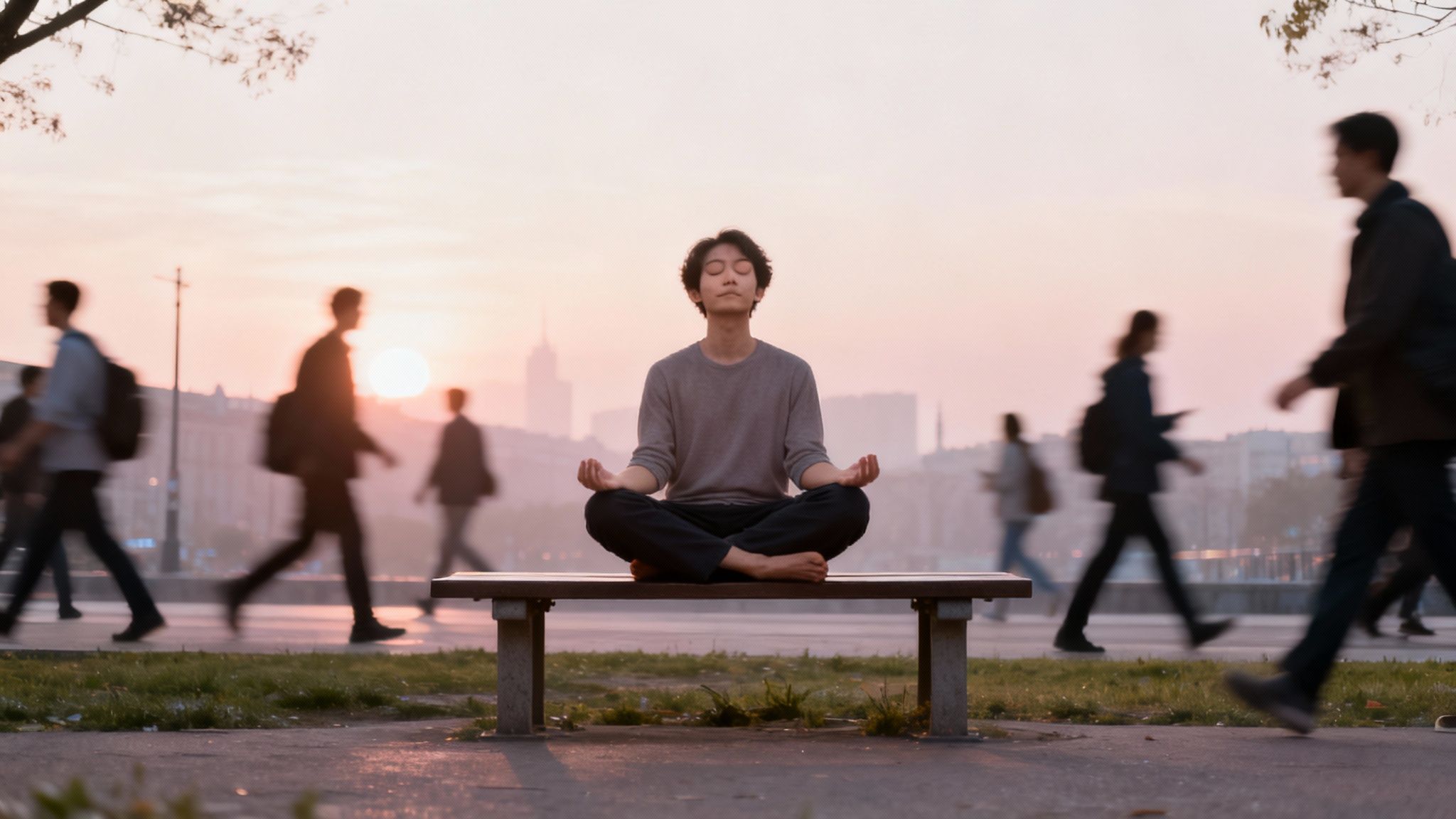
We'll explore how real people—from busy parents to driven professionals—use simple mindfulness techniques to find clarity. Your goal isn’t to stop your thoughts, but to observe them with gentle curiosity, like watching clouds drift across the sky.
Why Now Is the Perfect Time to Begin
You aren't just starting a fringe habit; you're joining a global movement toward greater well-being. Today, an estimated 200–500 million people meditate worldwide, seeking calm and connection.
The momentum is undeniable. A report by the Global Wellness Institute noted a staggering 2,900% increase in time spent meditating globally after March 2020. You can explore more powerful meditation trends and see how this practice has become a cornerstone of modern self-care. This isn't just a trend; it's a collective awakening to the power of inner peace.
Your Simple Starting Point
Beginning your practice doesn’t require special gear or hours of your time. It’s about building a small, consistent habit you can actually look forward to. To make it feel effortless, here’s all you need to think about today.
Your 5-Minute Meditation Starter Kit
A quick summary of the essential first steps to begin your meditation journey today.
| Component | Your First Action | Why It Helps |
|---|---|---|
| Technique | Just notice your breath. Feel the air moving in and out of your nose. | It's a simple, reliable anchor that's always with you. |
| Timing | Pick a 5-minute slot you can protect. First thing in the morning often works best. | Makes it easy to remember and turns it into a routine. |
| Space | Find a comfortable chair where you won't be interrupted. | A designated spot signals to your brain that it's time to pause. |
This simple act of returning to your breath creates a powerful pause between life's challenges and your reaction. It’s in that small space that your freedom and peace reside.
Practical Action Point: For the next three days, commit to this 5-minute practice. Set a timer, find a quiet chair, close your eyes, and just focus on the sensation of your breathing. That's your only goal.
Let's explore exactly how to make this small act of self-care a natural part of your life.
Find Your Anchor: 3 Simple Starting Points for Meditation
Let’s clear up a huge misconception: meditation isn’t about forcing your mind to go silent. That’s impossible! The real secret is much gentler. It's about giving your busy mind a simple, steady place to rest.
This is your anchor point—a focal point you can return to again and again, especially when your thoughts wander.
Think of your mind like a curious puppy. It’s going to get distracted. Your job isn't to get frustrated, but to kindly guide it back to your anchor. Here are three beautifully simple anchors perfect for beginners.
Anchor 1: Your Breath
This is the most popular anchor for a reason—it’s always with you. Breath awareness is the simple act of noticing the natural rhythm of your breathing without changing it. Focus on the sensation of cool air entering your nostrils and warm air leaving, or the gentle rise and fall of your chest.
When you feel stress rising, you can instantly turn your attention to your breath. A few conscious inhales and exhales can bring you back to the present moment, calming your nervous system. You can explore various breathing exercises for anxiety relief that build on this foundational practice.
Anchor 2: The Body Scan
The body scan is a wonderful way to reconnect with your physical self and release hidden tension. It involves bringing gentle, curious attention to different parts of your body, one at a time.
Start with your toes, simply noticing any sensations—warmth, coolness, the feeling of your socks. Slowly guide your awareness up through your feet, legs, torso, and arms, all the way to the top of your head. The goal isn't to fix anything, just to notice.
Research published in the journal Health Psychology found that body scan meditation can significantly reduce cortisol, the body's primary stress hormone. It’s like a physical reset button that encourages deep relaxation.
Anchor 3: Loving-Kindness
While the first two anchors are about observation, loving-kindness meditation (also called Metta) is an active practice of cultivating compassion. It involves silently repeating a series of positive phrases directed toward yourself and others.
Start by offering kindness to yourself with phrases like:
- May I be happy.
- May I be healthy and strong.
- May I be safe and at peace.
Gradually, you can extend these warm wishes outward—to loved ones, neutral people, and eventually, even those you find challenging. This practice can transform your inner dialogue from criticism to compassion, creating a beautiful ripple effect in your life.
Practical Action Point: Choose one of these three anchors to try for your next session. Don't worry about doing it "perfectly." Just experiment and see which one feels most natural for you right now.
Create an Inviting Meditation Space
Your environment is a powerful cue for your habits. When you design a space you want to be in, you’re sending a clear signal to your mind and body that it’s time to settle down and recharge.
Forget the pressure to create a perfect, silent, Instagram-worthy room. The key is to simply carve out a small, peaceful sanctuary for yourself, even in the busiest of homes.
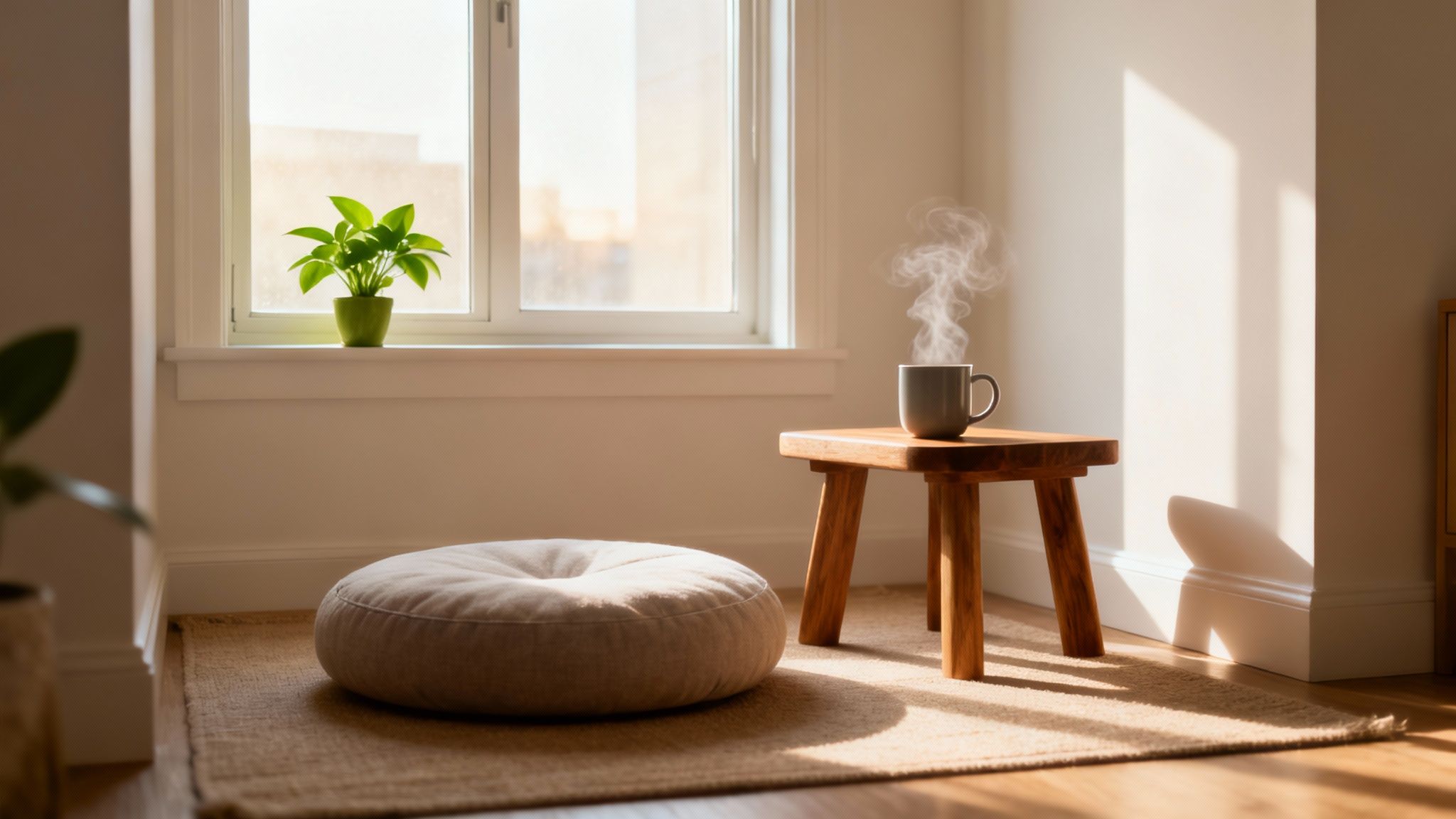
This space could be a specific chair in your living room or a cushion tucked into a corner of your bedroom. Consistency matters more than perfection. If you need inspiration, borrow ideas from this guide on creating a cozy minimalist bedroom with calm design tips to bring in that sense of uncluttered peace.
Find Your Consistent Time and Place
The secret to a lasting practice is consistency. When you link your session to something you already do—a technique called habit stacking—it becomes almost automatic.
Consider these simple examples:
- Morning Ritual: Meditate for five minutes right after your first sip of coffee.
- Midday Reset: Take a three-minute pause in your car after lunch before heading back to work.
- Evening Wind-Down: Sit for ten minutes just before getting into bed to let go of the day.
The exact time matters less than making it a regular appointment. This consistent slot builds a rhythm that your mind begins to anticipate and even look forward to. Your meditation spot becomes a powerful visual cue—just seeing it can trigger a feeling of calm.
Turn a Routine into a Cherished Ritual
A few simple additions can elevate your practice from a task to a cherished ritual. Think about engaging your senses to make the experience more meaningful. Building this daily habit is supported by a growing ecosystem of tools, with the global meditation market valued at over $6 billion in 2023 and still climbing.
Consider adding one or two of these elements to your space:
- A comfortable cushion or a folded blanket.
- A favorite scent, like a drop of lavender essential oil or a stick of palo santo.
- A dedicated journal and pen to capture any thoughts after your session.
These small touches transform sitting into a deeply personal and restorative experience—something you’ll truly want to return to each day.
Practical Action Point: This week, identify your "when" and "where." Will it be in your favorite armchair at 7 AM? Write it down and place that note in your designated space as a gentle reminder.
Navigate Common Hurdles with Kindness
The moment you decide to start meditating, your mind will almost certainly present a few challenges. You might feel restless, sleepy, or overwhelmed by a flood of thoughts.
Congratulations—you’re not doing it wrong. You’re experiencing the exact moments where the real practice begins. These hurdles aren’t signs to stop; they're invitations to practice being kinder and more patient with yourself.

Think of this as your friendly troubleshooting guide for the mind. Instead of fighting these feelings, we'll learn to meet them with gentle curiosity.
Taming the "Monkey Mind"
Does your mind feel like it’s jumping from one thought to another? This is the “monkey mind,” a completely universal experience. The goal isn't to silence the chatter, but to change your relationship with it.
When a thought pops up, just notice it. You can even mentally label it “thinking.” Then, gently guide your attention right back to your anchor, like your breath. Every single time you do this, you are strengthening the muscle of awareness.
The practice is not about never getting lost in thought. The practice is the compassionate act of returning, over and over again, to the present moment without judgment.
Managing Drowsiness and Discomfort
It’s common to feel sleepy when you relax, especially if you’re sleep-deprived. If you find yourself nodding off, it’s not a failure! It’s just your body signaling it needs rest.
Here are a few gentle adjustments:
- Check Your Posture: Sit upright in a way that feels alert but not stiff.
- Adjust Your Timing: Try meditating earlier in the day when you have more energy.
- Let in Some Light: Practice in a softly lit room rather than complete darkness.
If you experience physical discomfort, it’s okay to mindfully adjust your position. Acknowledge the sensation without letting it derail your practice.
Common Meditation Hurdles and Gentle Solutions
Navigating your inner world can be tricky at first. This guide helps you gently work through common challenges.
| The Challenge | What It Feels Like | A Gentle Solution |
|---|---|---|
| Restlessness | "I can't sit still! My mind is racing and my body feels antsy." | Acknowledge the energy without judgment. Bring your focus to the physical sensations of your breath or the feeling of your feet on the floor. |
| Sleepiness | "I keep nodding off as soon as I close my eyes." | Sit up straighter, meditate earlier in the day, or try a walking meditation. It's also a kind signal that you might need more rest in general. |
| Intrusive Thoughts | "I can't stop thinking about my to-do list, worries, or past events." | Gently label it "thinking" and guide your attention back to your breath. The goal isn't an empty mind, but returning to your anchor. |
| Inconsistency | "I missed a few days, so now I feel like I've failed and should just give up." | Practice self-compassion. The most mindful response is to simply begin again today, without guilt. Every sit is a fresh start. |
Overcoming Inconsistency with Self-Compassion
You will miss a day. Or even a week. This is normal. The most common reason people stop meditating is because they feel guilty about falling off track. This is where self-compassion becomes your most important tool.
When you miss a session, the most mindful thing you can do is simply begin again the next day, free of guilt. Every single session is a new beginning. Consistency is built not on perfection, but on the gentle, repeated act of returning.
Practical Action Point: If you miss a day, instead of self-criticism, say to yourself: "That's okay. I'll just begin again tomorrow." This simple phrase can rewire your approach to habit-building.
Turn Your Practice Into a Lifelong Habit
The real magic of meditation unfolds over time, when showing up for yourself becomes second nature. The key is to weave this practice into your day so seamlessly that it stops feeling like a chore and becomes a cherished ritual.
Make It Effortless to Start
One of the best ways to build a habit is to make it so easy you can’t say no. Use the “two-minute rule”: just commit to sitting on your cushion for two minutes. That's it. This tiny promise removes the mental barrier of getting started.
Another powerful approach is “habit stacking.” You link your new meditation practice to something you already do every day.
Here’s what that could look like:
- Morning Routine: "Right after I brush my teeth, I’ll sit for my meditation."
- Workday Transition: "Before I shut my laptop for the day, I’ll meditate for five minutes."
- Evening Wind-Down: "After I change into my pajamas, I’ll do my body scan meditation."
This pairing helps the new habit feel like a natural part of your daily flow. To make it last, it's worth exploring more strategies for making new habits stick.
Visualize Your Progress and Celebrate Wins
Watching your consistency grow is a powerful motivator. You're joining millions prioritizing their well-being; in fact, a 2022 CDC report found that 17.3% of U.S. adults meditated in the last year. That's a community of over 44 million people you are a part of.
Practical Action Point: Use a habit tracker to make your progress tangible. We created a simple and beautiful daily habit tracker printable to help you see your commitment. There’s something deeply satisfying about seeing those checked boxes add up—it’s a visual reminder of your dedication to yourself.
Another great option is to keep a simple journal. Jotting down a few words about how you feel after each session can help you connect the practice to its positive impact on your day, reinforcing the habit.
Answering Your Meditation Questions
As you carve out this quiet time, questions will naturally arise. See it as a sign of your growing commitment! This section offers clear, encouraging answers to common questions, helping you move forward with confidence.
Do I Have to Clear My Mind Completely?
Absolutely not. This is the biggest myth about meditation. The goal isn’t an empty mind—that’s nearly impossible. The real practice is much kinder: noticing when your mind has wandered and then gently, without judgment, guiding it back to your anchor. Each time you do this, you’re strengthening your muscles of focus and awareness.
How Soon Will I Notice the Benefits?
The answer is different for everyone. Many people feel a sense of calm after just a few sessions. But the more profound benefits, like lasting stress resilience, build over time. Scientific studies, like those reviewed by Johns Hopkins University, often show measurable changes in anxiety and stress after about eight weeks of regular practice. The best approach is to release expectations and focus on the simple act of showing up for yourself each day.
The true reward is not some future benefit, but the peace you find in the present moment of sitting. The long-term benefits are just a wonderful side effect of this daily act of self-care.
What If I Miss a Few Days?
It's not a question of if you'll miss a day, but when. Life happens. The most important meditation you will ever do is always your next one.
Instead of letting a missed day spiral into guilt, see it as a chance to practice self-compassion. This is a core part of mindfulness itself! Don't try to "make up" for lost time. Just begin again. The quiet, determined act of returning to your practice without judgment is a powerful meditation in its own right. Your journey is not about perfection; it’s about persistence and kindness.
At Mesmos, we believe that small, intentional acts of self-care can create profound shifts in your well-being. Our collection of journals, planners, and mindful gifts is designed to support you on your journey to inner peace. Discover tools that inspire consistency and turn your practice into a cherished ritual. Explore the collection at Mesmos.co.


