

That constant feeling of being underwater, with a to-do list that just won't quit and mental energy that's vanished before your morning coffee? You are not alone. It's a hallmark of modern life, but it doesn't have to be your reality.
Let’s be real: we live in a world of endless pings, where work bleeds into home life and the pressure to do more and be more is relentless. Feeling stretched thin isn’t a personal failure—it’s a completely normal response. The beautiful part is that you hold the power to change it. The key is to stop feeling helpless and start taking small, intentional steps to reclaim your calm and live a life filled with purpose, not pressure.
The Truth About Modern Overwhelm (And How to Actually Cope)
If you feel like you're drowning in responsibilities, you're in good company. That sensation of being submerged by tasks, deadlines, and expectations is an increasingly shared experience. But understanding it is the first step to overcoming it.
This pressure is especially intense when it comes to our careers. A staggering 90% of employees report feeling stressed on the job, a statistic that highlights a collective cry for a better way to work and live. This exhaustion is real, and it’s a direct path to burnout if we don’t have the right tools.
The good news? Relief isn't about finding some magic, one-size-fits-all cure. It’s about building a personal toolkit of sustainable habits that empower you. By implementing actionable self-care strategies to prevent burnout, you can start protecting your energy and finding your footing again.
Overwhelm doesn’t come from how much we have to do—it comes from how we think about what we have to do. The path to peace begins with a simple, powerful mindset shift.
Before we dive in, let's look at the big picture. Think of this as your roadmap from chaos to calm.
Your Quick Guide to Finding Calm
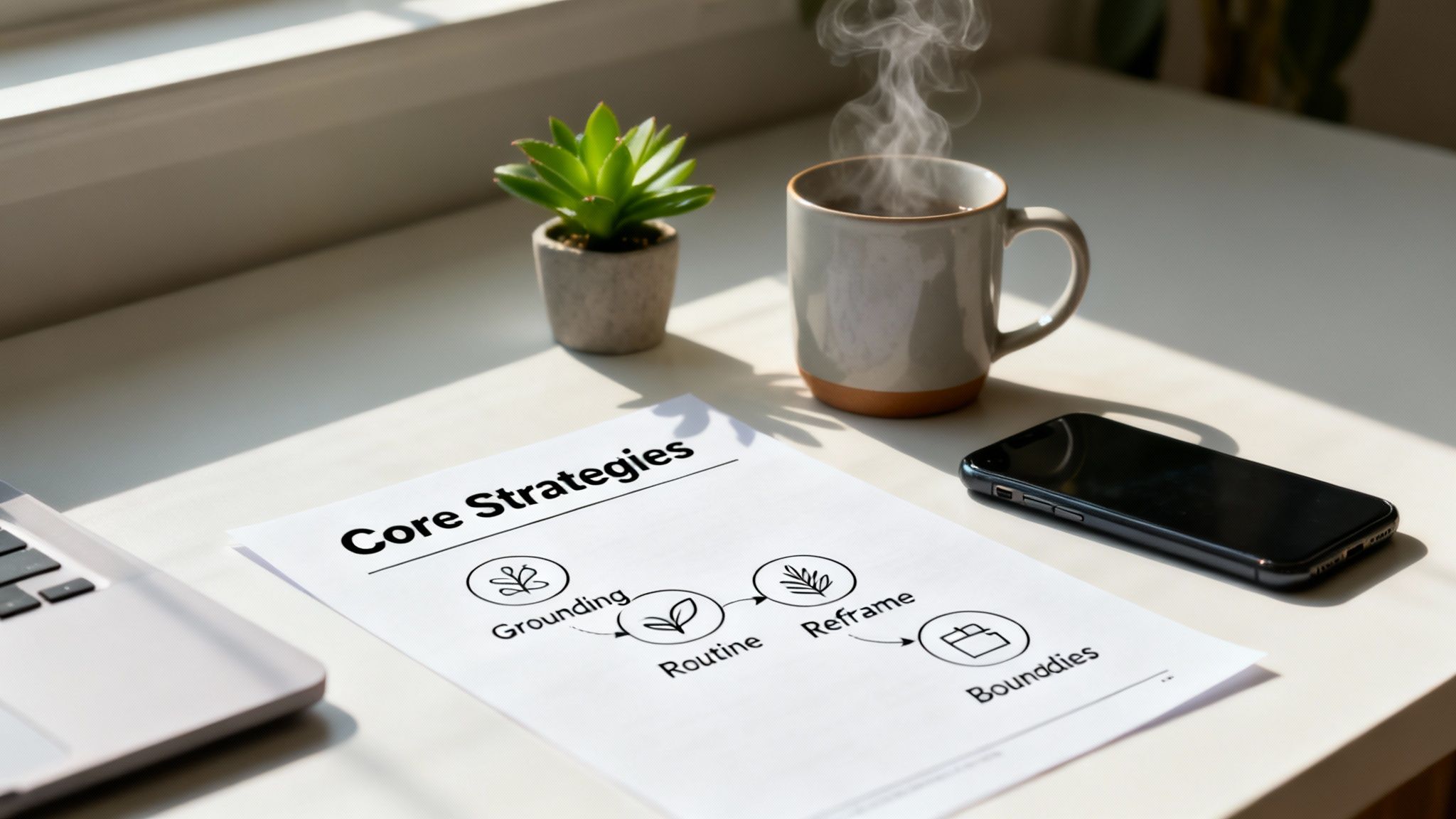
Here’s a snapshot of the core strategies we're about to explore. They’re designed to give you a sense of control, both in the moment and for the long haul.
| Strategy Area | Core Action | Immediate Benefit |
|---|---|---|
| Instant Relief | Use grounding exercises to calm your nervous system. | Reduces anxiety and brings you back to the present moment. |
| Daily Habits | Build structured morning and evening routines. | Creates predictability and prevents decision fatigue. |
| Mindset Shift | Reframe overwhelming thoughts into empowering ones. | Regain a sense of control and personal agency. |
| Energy Protection | Set and maintain clear personal boundaries. | Protects your mental resources and prevents burnout. |
Each of these areas builds on the others, creating a powerful framework for a more centered and intentional life. Let's begin.
Find Immediate Calm with Simple Grounding Techniques
When a tidal wave of overwhelm crashes down, you don't need a complicated escape plan. You need an anchor—right now.
Grounding techniques are your secret weapon. They are simple, science-backed tools that pull you out of the chaotic storm in your head and plant you firmly back in the present moment. They work by shifting your focus from anxious thoughts to your physical senses, which can calm your nervous system in just a few minutes.
The best part? You can do them anywhere, anytime. Stuck in traffic? Waiting for a high-stakes meeting to start? These mini-rituals can bring you back to center.

Use Your Senses with the 5-4-3-2-1 Method
This technique is a go-to for stopping a spiral of overwhelming thoughts because it’s so beautifully simple. It gently forces your brain to notice the world around you instead of getting lost in the chaos inside.
Action Point: Pause and gently identify:
- 5 things you can see: Look around and name five objects without judgment. A crack in the pavement, the green leaf on your desk plant, the pattern on your sleeve. Just notice.
- 4 things you can feel: Bring your awareness to physical sensations. It could be the solid ground beneath your feet, the soft fabric of your sweater, or the cool surface of your water bottle.
- 3 things you can hear: Listen closely. Can you pick out three distinct sounds? Maybe it's the distant hum of traffic, the ticking of a clock, or the simple sound of your own breathing.
- 2 things you can smell: Take a gentle sniff. Is there a faint scent of coffee in the air? Rain on the asphalt? The soap on your hands?
- 1 thing you can taste: Focus on the taste in your mouth. You could take a sip of water, or simply notice the lingering taste of your morning tea.
Master Your Breath with Box Breathing
When we're stressed, our breathing becomes shallow and rapid, signaling danger to our brain. Box breathing is a way to intentionally slow it all down, sending a powerful message of safety back to your nervous system. Research from institutions like the National Institutes of Health confirms that controlled breathing can significantly lower cortisol, the body's primary stress hormone.
This isn't just about breathing; it's about reclaiming control. By consciously directing your breath, you are telling your body and mind that you are safe and in charge, even when everything around you feels chaotic.
Action Point: Try this now:
- Breathe in slowly through your nose for a count of four.
- Hold your breath gently at the top for a count of four.
- Breathe out slowly through your mouth for a count of four.
- Hold your breath at the bottom for a count of four.
Repeat this cycle four or five times. The rhythmic pattern is deeply calming. If you find this helpful, you can explore other powerful breathing exercises for anxiety relief to add to your daily practice.
Build an Anti-Overwhelm Daily Routine
Lasting peace isn't built on grand, sweeping changes. It’s forged in the quiet consistency of small, intentional habits you practice every single day. Creating a sustainable daily rhythm is one of the most powerful ways to prevent overwhelm before it even has a chance to take root.
This isn’t about adding more to your already packed schedule. It's about consciously designing a life that supports your well-being, one small choice at a time. By building structure, you cut down on decision fatigue and create a predictable foundation of calm you can always return to.

Design a Morning Routine That Sets the Tone
How you start your day often determines how you live it. A rushed, reactive morning spent scrolling through emails immediately puts your nervous system on high alert. A mindful, intentional morning, however, sets a tone of calm and focus for everything that follows.
Action Point: Create a 15-minute morning ritual.
- Avoid the Phone: For the first 15-30 minutes of your day, resist the urge to check your phone. This creates a sacred pocket of time free from external pressures.
- Hydrate and Move: Before anything else, drink a full glass of water. Follow it with five minutes of gentle stretching to wake up your body.
- Practice Gratitude: While your coffee brews, think of three specific things you are grateful for. As neuroscience shows, this simple practice shifts your brain toward a more positive outlook.
Your morning routine is your anchor. It's a non-negotiable act of self-respect that reminds you—before anyone else does—that your well-being is the top priority.
Create an Evening Ritual for Restorative Sleep
Just as important as how you begin your day is how you end it. Chronic overwhelm is often fueled by poor sleep, which impairs our ability to think clearly and regulate our emotions. An evening ritual signals to your body and mind that it's time to wind down and prepare for deep, restorative rest. You can learn more about understanding sleep and enhancing sleep quality.
Try Habit Stacking to Make it Stick
Building new habits from scratch is hard. The easiest way to make them stick is to attach them to routines you already have. This technique, known as habit stacking, removes the friction of trying to remember something new.
Action Point: Look at your current routine and find a place to insert a new, tiny action.
- Example for a busy parent: "After I pour my child's cereal, I will take five deep breaths before sitting down to eat."
- Example for a teacher: "When I close my laptop at the end of the school day, I will spend two minutes tidying my desk to create a sense of closure."
By anchoring these new, calming actions to established parts of your day, you make them automatic. This is how you stop feeling overwhelmed—not by magically finding more time, but by infusing the time you already have with intention and peace.
Reframe Your Thoughts to Regain Control
It’s a feeling we all know: the relentless weight of a to-do list that feels like a mountain. But here’s a powerful truth—the list itself isn’t the problem. The true source of overwhelm is the story we tell ourselves about the list.
Your mindset is the most powerful tool you have to reclaim your peace. When you learn to consciously shift your internal narrative from stressed to empowered, you can transform that mountain of tasks into a series of manageable, meaningful steps.
This isn’t about toxic positivity; it’s about choosing your response. The mental toll of modern life is real. A recent report found that 1 in 5 workers feel 'always' or 'often' stressed by their job, which is a major contributor to burnout. You can discover more insights about workplace mental health on oshaoutreachcourses.com. These numbers show how badly we need tools that empower us from the inside out.
From “I Have To” to “I Get To”
This tiny change in wording can make a world of difference. When you say “I have to,” you frame your tasks as heavy burdens. It’s a perspective that breeds helplessness and resentment.
Action Point: Try flipping the script. Reframe your tasks with “I get to.”
- “I have to make dinner” becomes “I get to nourish myself and my family.”
- “I have to go to work” becomes “I get to use my skills and create financial stability.”
- “I have to finish this project” becomes “I get to see this idea through to completion.”
This subtle shift reminds you of the privilege and opportunity hidden within your responsibilities. It infuses your day with purpose and gratitude, turning obligations back into choices.
Overwhelm is not an identity or a badge of honor. It’s a temporary state created by our thoughts, and you have the power to choose a different way of thinking.
Use the Circle of Control
Borrowed from Stoic philosophy, this exercise is a mental lifesaver for moments when you feel completely powerless.
Action Point: Grab a piece of paper and draw two circles, one inside the other. In the center circle, write down everything that is 100% within your control.
This list is often surprisingly short. It usually includes things like:
- Your actions and your responses
- The words you choose to use
- Where you direct your focus and energy
- The boundaries you decide to set
Next, in the outer circle, list everything that is outside your control—other people’s opinions, the traffic, a surprise deadline.
The goal is simple: pour all your precious energy into the things in that inner circle and practice letting go of everything in the outer one. This powerful exercise helps you reclaim your mental and emotional space. For more on this, check out our guide on how to let go of negative thoughts.
Protect Your Energy with Loving Boundaries
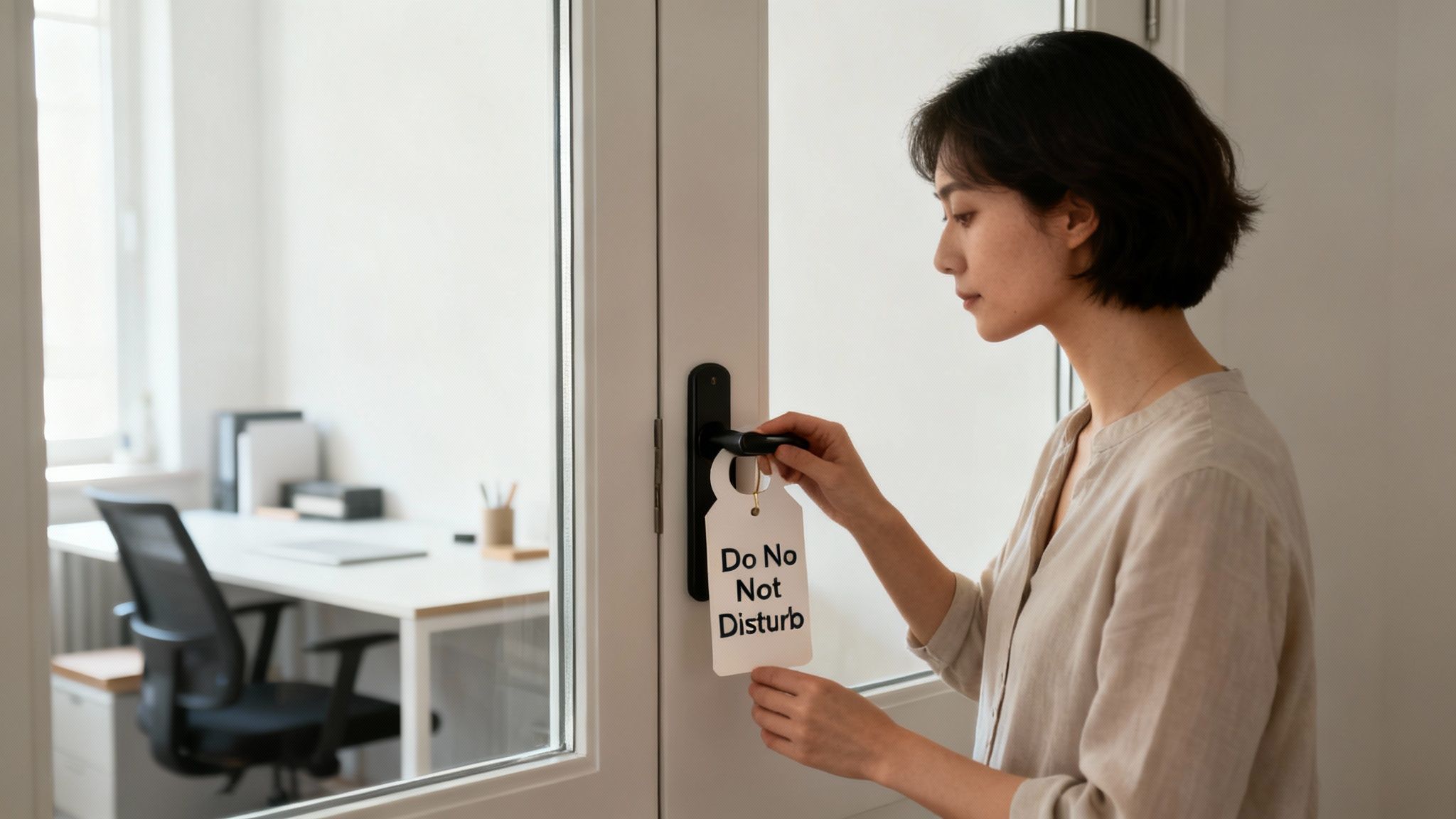
Think of your personal energy like a bank account. Every time you say "yes" when you mean "no"—to an extra project, a social event you're dreading, or listening to gossip—you're making a withdrawal. Keep overdrawing that account, and you'll find yourself bankrupt and completely overwhelmed.
Setting boundaries is how you become a wise investor of your own energy. It’s about consciously deciding where your precious resources go. This isn't selfish; it's a powerful act of self-care. It protects your mental and emotional well-being so you can show up as your best self for the people and things that truly matter.
Define Your Non-Negotiables
Before you can communicate your limits, you have to know what they are. What do you absolutely need to feel centered and sane?
Action Point: Grab a journal and ask yourself:
- What activities truly recharge my battery? (A walk, reading a book, silence?)
- What times of day are most sacred to my peace? (Maybe the first 30 minutes in the morning or my lunch break.)
- What kinds of interactions consistently leave me feeling drained?
Your answers are the foundation for your boundaries. A non-negotiable might sound like, "I will not check work emails after 7 PM," or "I need 20 minutes of quiet time alone every day."
Boundaries are not walls to keep people out. They are fences that protect the beautiful garden of your inner world, ensuring you have the energy to let the right things flourish.
Communicate Your Limits with Grace
The hardest part of setting boundaries is often the fear of letting someone down. The secret is to be clear, kind, and firm—without over-explaining. You don't owe anyone a dissertation on why you need to protect your peace.
Action Point: Try these scripts for real-world moments:
Scenario 1: Your boss asks you to take on another project when you're already drowning.
- Instead of: "Yes, I guess I can try to fit it in."
- Try: "Thank you for thinking of me for this. My plate is full with my current priorities right now, but I'd be happy to help with the next one."
Scenario 2: A family member asks for a last-minute favor that will derail your day.
- Instead of: "Ugh, fine, I'll cancel my plans."
- Try: "I'm not available to help with that today, but I'd be happy to schedule a time to assist you next week. Does Tuesday work?"
These simple shifts in language communicate respect for the other person while still honoring your own limits. Learning to say "no" with grace is one of the most empowering skills you can build.
Knowing When You Need Deeper Support
The strategies we’ve talked about are incredible for managing day-to-day overwhelm. But sometimes, that feeling is a sign of something deeper, like chronic burnout or a mental health condition that needs professional care.
There is incredible strength in knowing when to ask for help. It’s a brave act of self-love and a powerful step toward finding your way back to yourself.
Signs It Might Be Time to Reach Out
If you feel like you've been stuck in a fog for several weeks or longer, it might be time to speak with a professional. See if any of these feel familiar:
- Losing Your Spark: A persistent lack of interest in the people and activities you once loved.
- Constant Emotional Turmoil: Feeling intensely irritable, anxious, or hopeless most days.
- Bone-Deep Tiredness: A kind of fatigue that even a full night's sleep doesn't seem to touch.
- Pulling Away: Actively avoiding friends, family, and social events you used to enjoy.
Reaching out for professional help isn't a sign of weakness; it's a testament to your strength and your commitment to your own well-being.
Taking that step is a powerful choice you can make for yourself. Resources like therapy or counseling can offer a safe space and strategies designed just for you. You don’t have to carry this weight alone—there’s a world of support ready to help you find your footing again.
A Few Common Questions About Overwhelming Feelings
Walking away from overwhelm is a journey, and it's totally normal to have questions pop up. Think of this as your go-to guide for those moments you need a little extra clarity.
Here are some of the most common things we hear from people trying to find their calm.
"How Do I Actually Stay Consistent with New Habits?"
It's one thing to feel a burst of motivation, but another to stick with it. The secret? Start so small it feels almost silly not to do it. This isn’t just a nice idea; it's backed by behavioral science. It’s all about building momentum.
Instead of aiming for a 30-minute meditation session right away, try for just one minute. Instead of filling a journal page, just write a single sentence. Celebrate these tiny wins! Consistency isn’t about being perfect; it’s just about showing up, even when it’s messy.
The goal isn't to be perfect from day one. The goal is to be just a little bit better than you were yesterday. Progress, not perfection, is what builds lasting change.
"What if I Slip Back into Old Patterns?"
First, take a deep breath. Slipping up doesn't mean you've failed—it's a completely normal part of making any meaningful change. Meet yourself with compassion instead of criticism. Don't let one off-day snowball into a week of giving up.
When you notice an old habit creeping back in, just acknowledge it without judgment. Ask yourself, "What can I learn from this?" Maybe the new routine was too ambitious, or a stressor knocked you off balance. That's okay. Just gently guide yourself back to your plan, one small step at a time.
"How Can I Manage Overwhelm When My Schedule Is Out of My Control?"
Life gets hectic, and sometimes our schedules are driven by things we can't change, like a demanding job or caring for little ones. When you can't control your time, shift your focus to what you can control: your tiny pockets of peace.
-
Focus on Micro-Resets: You might not have an hour for self-care, but you probably have 60 seconds. Use that minute for box breathing between meetings or while waiting for the kettle to boil. These little moments add up.
-
Guard Your Energy Fiercely: When your schedule is packed, your energy is your most valuable asset. This is when setting boundaries becomes absolutely non-negotiable. Saying "no" to small, draining requests frees up the mental space you need to handle the big things you can't avoid.
Remember, you have what it takes to handle this. It’s not about finding more hours in the day, but about bringing more intention and calm into the moments you already have.
At Mesmos, we believe that small, intentional moments can create profound peace. Discover our collection of mindfully designed stationery and gifts to support your journey from overwhelm to calm. Find your moment of peace with Mesmos.


