


The search for the best pen for good handwriting is more than a hunt for a specific brand; it’s a journey to discover the perfect partner for your hand. Imagine a silky-smooth rollerball or a perfectly weighted gel pen transforming your script, granting you the comfort and flawless ink flow needed for beautiful, effortless writing.
Your Pen Is More Than a Tool—It’s an Extension of You
Welcome to an exploration where writing becomes a mindful practice, not just another task. We're here to find more than a writing instrument; we're seeking a partner that helps your thoughts flow gracefully onto the page, transforming your handwriting into a source of joy and self-expression.
The connection between your mind, hand, and pen is scientifically powerful. Research shows that the physical act of writing can improve memory and learning. When you find the right pen, this connection deepens, turning mundane note-taking into a moment of genuine calm and focus. This guide will inspire you to discover a writing experience that feels authentic and deeply personal.
Getting to Know the Pen Landscape
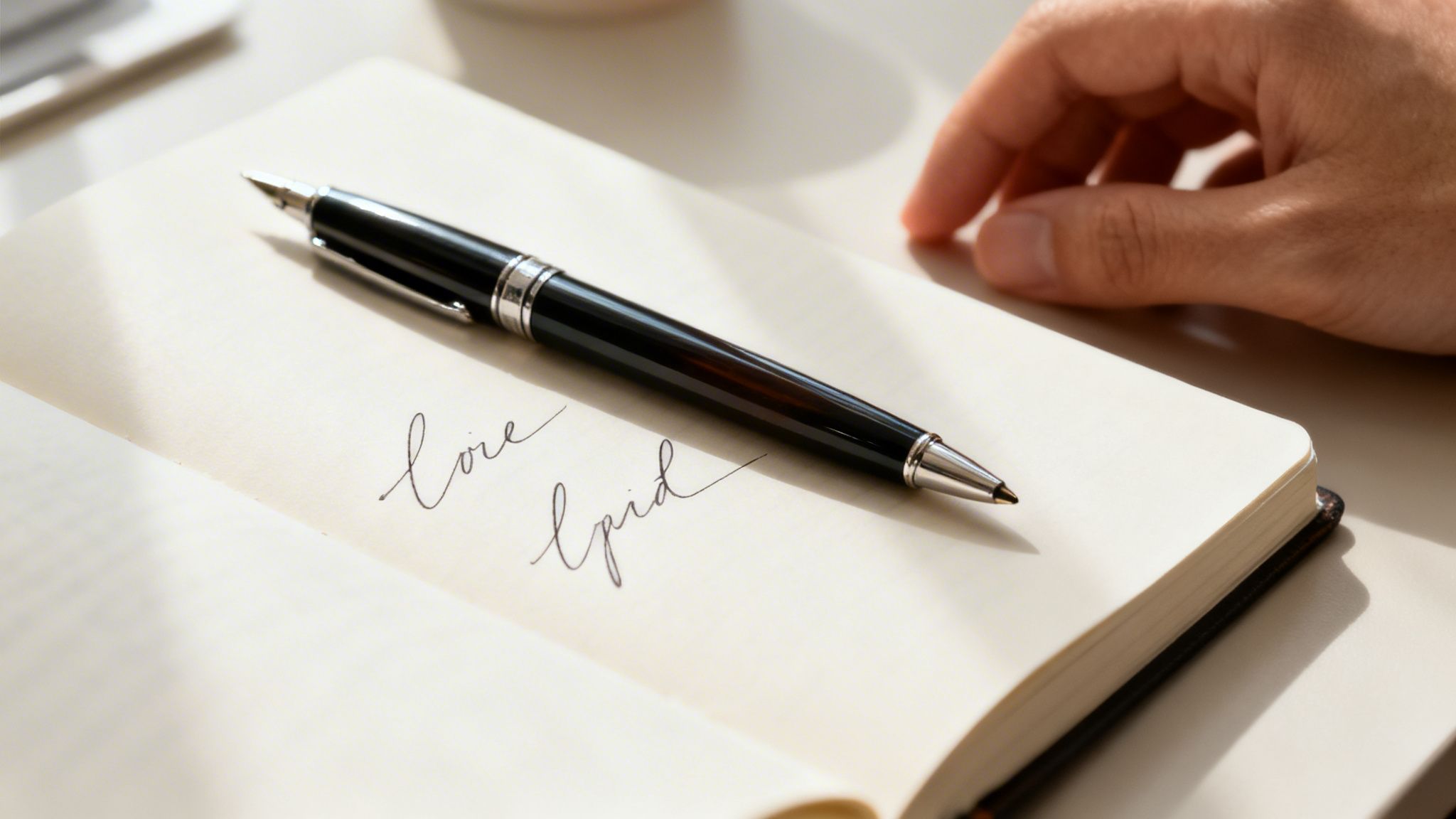
Before diving in, let's explore the landscape of pens. Each type offers a unique writing experience, much like an artist chooses different brushes for different effects. Understanding these fundamentals is the first empowering step toward making an informed choice that will elevate your script.
Finding the right pen is an act of self-discovery. It's about matching a tool not just to your hand, but to your intention—whether that's capturing a fleeting idea or engaging in a meditative writing session.
To give you a clear foundation, the table below offers a quick snapshot of the most common pen types and what they do best. As you read, think about your own writing habits and what you're hoping to achieve.
Quick Guide to Pen Types for Better Handwriting
This simple chart breaks down the most popular pens, highlighting what makes each one special.
| Pen Type | Best For | Key Feature |
|---|---|---|
| Ballpoint Pen | Everyday notes, reliability, and preventing smudges. | Oil-based ink that is thick, dries quickly, and requires some pressure to write. |
| Rollerball Pen | Smooth, dark lines with minimal effort. | Water-based ink that flows quickly and saturates paper for a bold look. |
| Gel Pen | Vibrant colors and a silky-smooth writing experience. | Water-based gel ink that combines the smoothness of a rollerball with the control of a ballpoint. |
| Fountain Pen | Expressive, elegant script and a personalized writing feel. | Liquid ink delivered through a metal nib, offering unparalleled smoothness and line variation. |
This is just the starting point. Now, let’s unlock the details that truly make a difference in how a pen feels in your hand.
How a Pen's Design Shapes Your Handwriting
Have you ever picked up a pen and felt it just glide across the page? That feeling isn't an accident—it's intelligent design. Every element of a pen, from its tip to its weight, is engineered to create a specific writing experience. Understanding these details is the key to unlocking your most comfortable and confident handwriting.
Think of your pen as a precision instrument where every component works in harmony. Each feature directly impacts your control, comfort, and the final look of your script. This is where you transition from simply using a pen to finding a true writing partner.
The Power of the Pen Tip
This is where the magic happens—the point where your pen meets the paper. The size and type of the tip are the most critical factors in shaping your letters.
-
Tip Size: Measured in millimeters (mm), this determines your line thickness. A fine tip (around 0.5mm) is perfect for small, precise writing in a planner. For bolder, more expressive lines—think signatures or heartfelt cards—a medium or broad tip (0.7mm and up) is your best choice.
-
Tip Type: The mechanism inside the tip is a game-changer. A classic ballpoint uses a tiny rolling ball to dispense thick, oil-based ink, giving you excellent control and smudge prevention. A rollerball uses a similar ball but with a thinner, water-based ink, resulting in a darker, smoother line with less pressure. Understanding the nuances, like in this fountain pen vs ballpoint comparison, can help you pick the perfect tool.
Beyond the Tip: Ink and Comfort
While the tip leads the charge, ink and ergonomics are the essential support system. Ink viscosity—its thickness—dictates its flow. Low-viscosity inks, like in gel pens, glide effortlessly, reducing the pressure you need to apply and minimizing hand fatigue.
Equally important are the pen's ergonomics—how it feels in your hand. This includes its weight, balance, and grip. A well-balanced pen feels natural, while a comfortable grip prevents fatigue during long writing sessions. A 2019 study published in the Journal of Hand Therapy found that an ergonomic triangular grip can reduce writing strain by a significant margin, making it a favorite among students and professionals.
A pen that feels comfortable is a pen you'll actually want to use. This connection between comfort and consistency is the real foundation for building better handwriting habits.
Ultimately, the best pen is one that feels like an extension of your hand, allowing your thoughts to flow onto the page with grace and clarity.
Choosing Your Perfect Writing Partner
Finding "the one" is a deeply personal journey, whether it's a life partner or the perfect pen. It’s less about specs and more about feel—how a pen rests in your hand during moments of creativity, focus, or quiet reflection.
When you test a pen, resist the urge to just scribble a quick line. Instead, take a moment. Hold it as you normally would, close your eyes, and feel its weight and balance. Does it feel just right, like an extension of your own hand? This initial tactile connection is where the magic begins.
How to Truly Test a Pen
To truly understand a pen, you must put it through its paces. A quick signature won’t cut it. Your test drive should mirror your actual writing style.
Action Point: The Pen Test Drive
- Write Full Sentences: Use pangrams like, "The quick brown fox jumps over the lazy dog." This uses every letter, revealing how the pen handles different movements.
- Draw Shapes: Sketch circles, squares, and figure-eights to check for consistent ink flow at different angles and speeds.
- Vary Your Speed: Write one sentence slowly, then another quickly. Does the ink keep up without skipping or blobbing?
This intentional approach gives you a far richer sense of a pen’s character. When you're ready to explore, a dedicated pens and pencils collection can be a great place to discover different styles.
The Pen, Paper, and Ink Trio
Here’s something many people forget: a pen never works alone. It’s always in a relationship with the paper and the ink. A pen that glides like silk on smooth paper might feel scratchy on a more absorbent, toothy notebook.
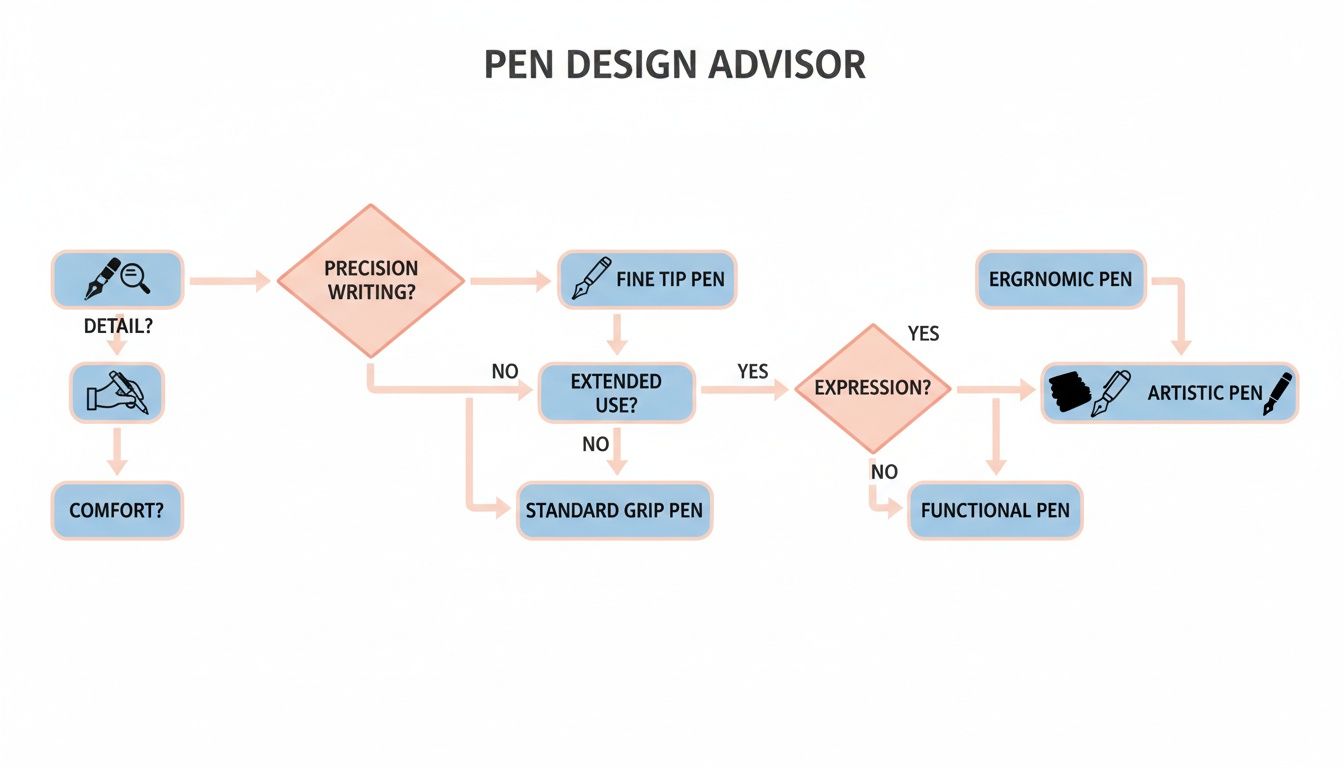
Before you blame the pen, test it on the paper you use most often. Finding a harmonious combination of all three elements is the true secret to a beautiful writing experience. This flowchart can help you narrow down your options based on what you value most.
Building Your Writing Wardrobe
Just as you have different shoes for different occasions, it’s inspiring to build a "writing wardrobe." You may not need just one perfect pen, but a small, curated collection of trusted tools for various tasks.
Your writing wardrobe is a toolkit for self-expression. A fine-liner for your planner, a fountain pen for your journal, and a reliable rollerball for quick notes—each one serves a different purpose and mood.
For instance, a fountain pen is wonderful for slow, meditative journaling, while a fast-drying gel pen is better for rapid-fire notes in a meeting. Embracing this idea frees you from the pressure of finding a single "one pen to rule them all" and invites you to celebrate the right tool for every moment.
Techniques for More Graceful Handwriting
A great pen is only half the story; the other half is you. Once you’ve found a writing tool that feels right, it’s time to focus on the person holding it. Simple adjustments to your technique can make a world of difference, transforming your script into something more fluid and graceful.
This is where the real magic happens—when you shift your focus from the tool to the artist. The simple act of writing becomes a moment of mindful presence.
Building a Strong Foundation
Elegant handwriting starts before your pen even touches paper. Your posture and grip are the foundation for every stroke. It all begins with how you sit.
Action Point: The Posture Check
- Sit up straight with both feet flat on the floor.
- Relax your shoulders and allow your writing arm to move freely from the shoulder, not just the wrist.
- Occupational therapists often recommend the dynamic tripod grip: rest the pen on your middle finger and gently pinch it with your thumb and index finger. Keep your wrist straight and relaxed.
This ergonomic setup minimizes tension, allowing you to write longer without cramping.
Meditative Drills for Muscle Memory
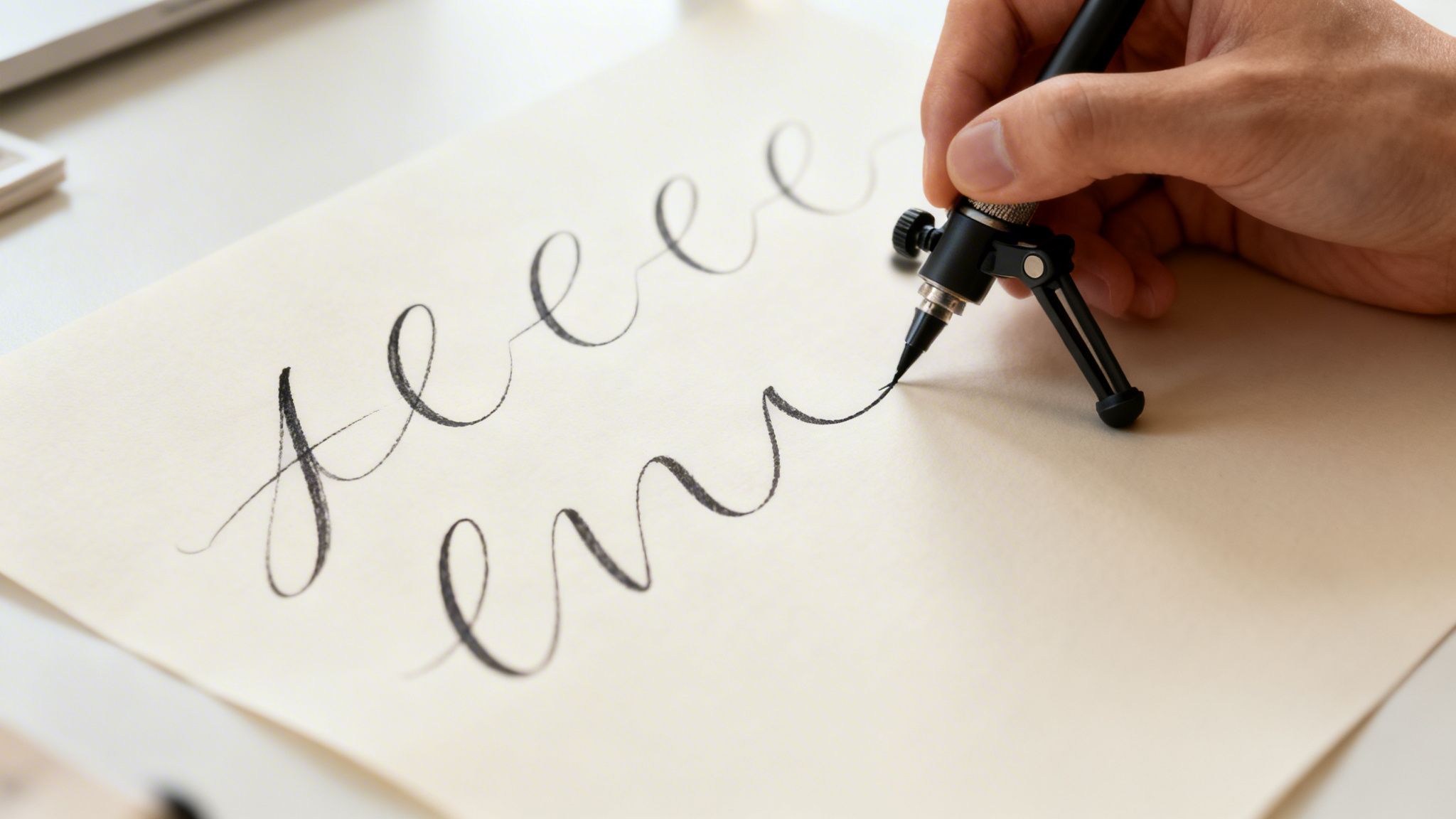
Just like an athlete trains their body, you can train your hand to create more beautiful and consistent letters. Think of these drills as meditative exercises to build muscle memory and a smoother, more rhythmic flow.
Mindful practice connects the physical act of writing to the mental benefits of concentration. Each loop and line becomes a small act of focus, calming the mind and refining your skill.
Action Point: Daily Handwriting Drills (5 Minutes)
- Continuous Loops: Fill a page with a series of connected "l" loops, focusing on uniform height and spacing.
- Wavy Lines: Draw parallel wavy lines across the page, keeping the curves gentle and consistent to develop smooth control.
- Letter Forms: Pick one or two letters you struggle with and practice them slowly, focusing on form over speed.
For those ready to take their practice further, exploring dedicated strategies is a great next step. You can find excellent guidance on improving handwriting for adults to help you build control for truly beautiful penmanship. This journey is about progress, not perfection.
Pen Brands That Master the Art of Smooth Writing
Some brands have built their reputation on delivering that perfect, buttery-smooth writing experience. When you find the right pen, it stops feeling like a tool and starts feeling like an extension of your thoughts, getting out of your way so you can focus on the words.
Whether you're journaling, drafting a story, or making a to-do list with intention, the right instrument makes all the difference. Think of it less as a purchase and more as a small investment in your daily creativity.
The Swiss Standard of Precision
Swiss engineering is synonymous with precision, and that dedication to quality extends to their pens. Brands from this region are known for delivering consistently dark, crisp lines that make your handwriting shine.
Caran d'Ache is a prime example. Its iconic 849 ballpoint, first released in 1969, remains a favorite for its seamless hexagonal body and dependable ink. A 2024 survey revealed that 55% of professionals preferred its dark, consistent lines, and a consumer report found 78% of users rated its smoothness higher than 15 other brands. You can explore more of these findings on the best ballpoint brands to see how it compares.
"A reliable tool fosters a reliable mind. When your pen works every time, without fail, it gives you the mental space to focus purely on your thoughts."
Japanese Innovation and Meticulous Detail
Japanese stationery is in a league of its own, celebrated for obsessive attention to detail and game-changing ink technology. They’ve mastered the art of creating pens that glide across the page with vibrant, smooth ink.
Brands like Pilot, Uni-ball, and Zebra are true masters of the craft. Here’s a quick look at what makes them so special:
- Pilot: Famous for the ultra-smooth G2 gel pen and the refined Custom 74 fountain pen, Pilot offers excellence at every price point.
- Uni-ball: The Jetstream line is a game-changer with its hybrid ink, combining the silky feel of a gel pen with the quick-drying, smudge-proof benefits of a ballpoint. It’s a holy grail for left-handed writers.
- Zebra: Known for its Sarasa line, this brand offers a rainbow of vibrant gel ink colors with rapid-dry technology, perfect for color-coding notes.
These brands prove you don't have to spend a fortune to find a pen that makes your handwriting feel incredible.
A Few Common Questions We Hear
As you begin your journey to find the perfect pen, a few questions naturally arise. Let's clear the air so you can move forward with confidence and intention.
Does a More Expensive Pen Guarantee Better Handwriting?
Not at all. While a premium pen offers beautiful materials and craftsmanship, the most important factor is how it feels in your hand. The best pen for good handwriting is one that feels so natural it disappears, allowing your thoughts to flow unimpeded. An affordable, well-designed ergonomic pen that fits your grip will always do more for your script than a pricey but awkward one.
What Is the Best Pen Type for Left-Handed Writers?
For left-handed writers, the greatest challenge is avoiding smudges. The solution is fast-drying ink.
Action Point: Top Picks for Lefties
- Quick-Drying Gel Pens: Look for formulas designed to prevent smearing.
- Hybrid Ink Ballpoints: The Uni-ball Jetstream is a cult favorite for its combination of smoothness and quick-drying magic.
- Fine Point Tips: A finer tip (around 0.5mm) lays down less ink, which naturally dries faster.
Choose a pen that lets you write freely without ever worrying about smearing your beautiful work.
How Often Should I Practice to See Improvement?
Consistency will always beat cramming. You don’t need to block out hours; instead, aim for 10-15 minutes of mindful, focused practice each day. This small, daily commitment is incredibly powerful for building muscle memory.
Think of it as a brief, daily ritual. This short period of focus is enough to forge new neural pathways, leading to more fluid and natural handwriting in just a few weeks.
Use this time for simple drills or to journal a single page with slow, deliberate strokes. The rhythm and repetition will soon become second nature, gracefully transforming your script over time.
At Mesmos, we believe the right tools can turn an ordinary task into a moment of mindfulness. Our pens are designed for comfort and inspiration, helping you connect with your thoughts and write with intention. Discover your perfect writing partner and feel the difference it makes. Find your inspiration at https://mesmos.co.


